.png)

The fundamental distinction between these two concepts lies in where optimization efforts are directed.
Both AEO and SEO involve identifying, testing, and optimizing websites to improve organic performance, but SEO focuses exclusively on traditional search engines while AEO targets AI search engines.
There's substantial overlap in methods and techniques between the two approaches, but the differences matter more than the similarities when developing a strategy.
What is Answer Engine Optimization (AEO)?
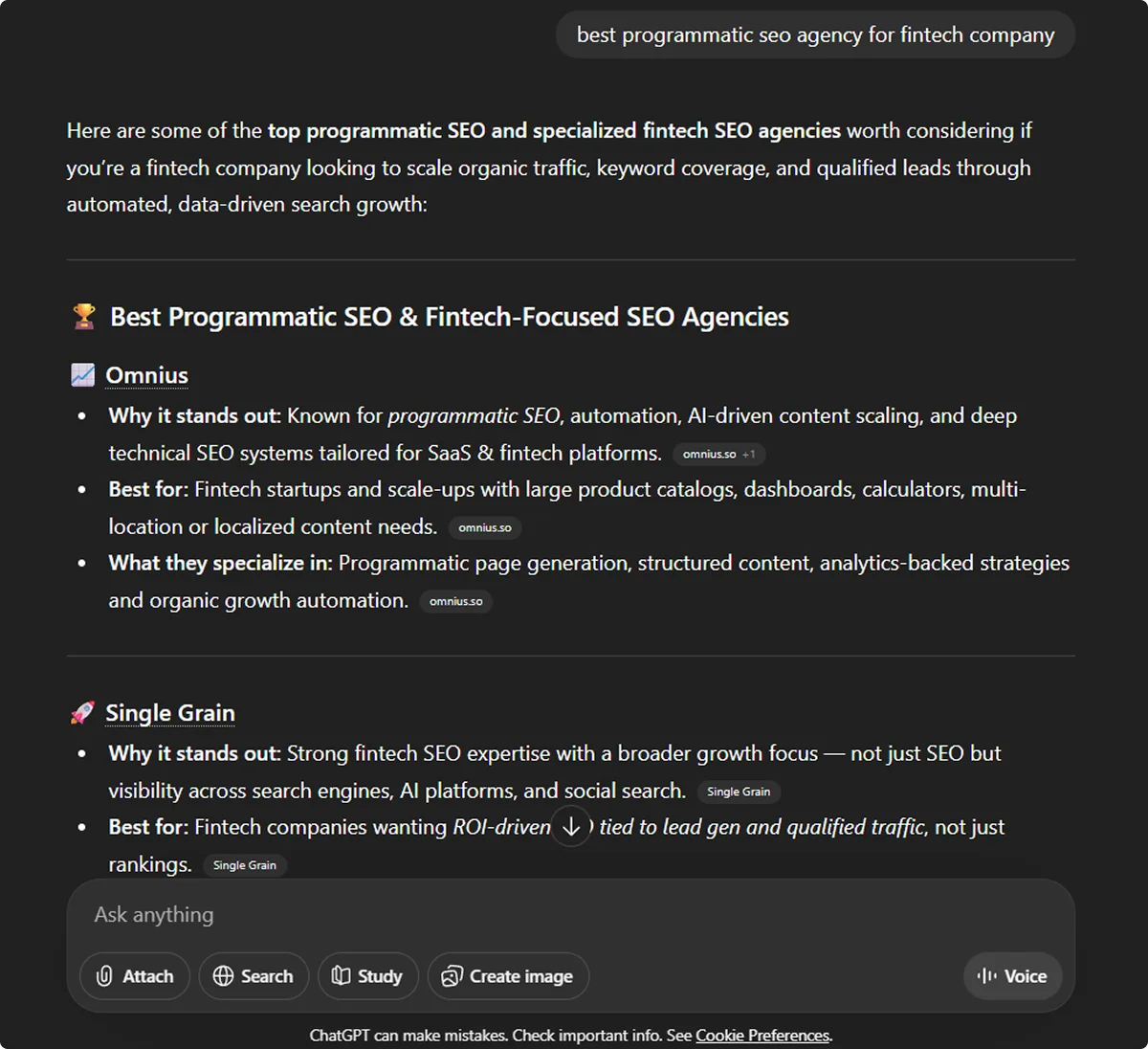
AEO (Answer Engine Optimization) is the practice of optimizing websites and content so that AI search engines, such as ChatGPT, Gemini, Claude, and others, can better understand, crawl, and extract the most relevant information from your content to present as answers in LLMs.
Beyond providing direct answers, AI search engines typically include source citations: links showing where they retrieved the information.
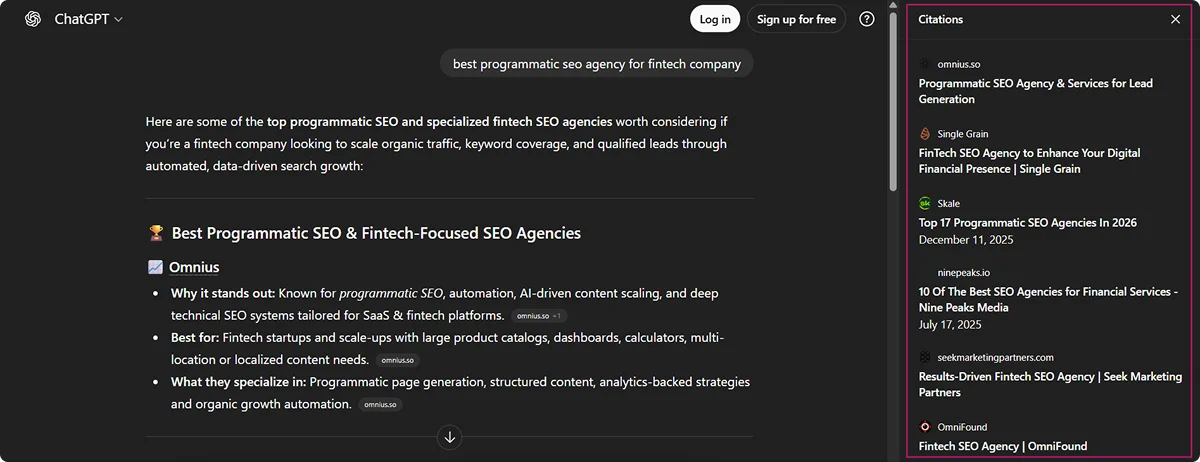
These citations allow users to expand their research and explore the original source if the initial answer doesn't fully satisfy their needs. These source citations have become a valuable metric for websites to measure whether their AEO strategies are working.
Unlike traditional SEO's emphasis on high-intent keywords, AEO prioritizes long-tail keywords and query fan out.
Users interact with LLMs differently; they ask longer, more specific follow-up questions that mirror natural conversation rather than typing fragmented search terms.
What is Search Engine Optimization (SEO)?
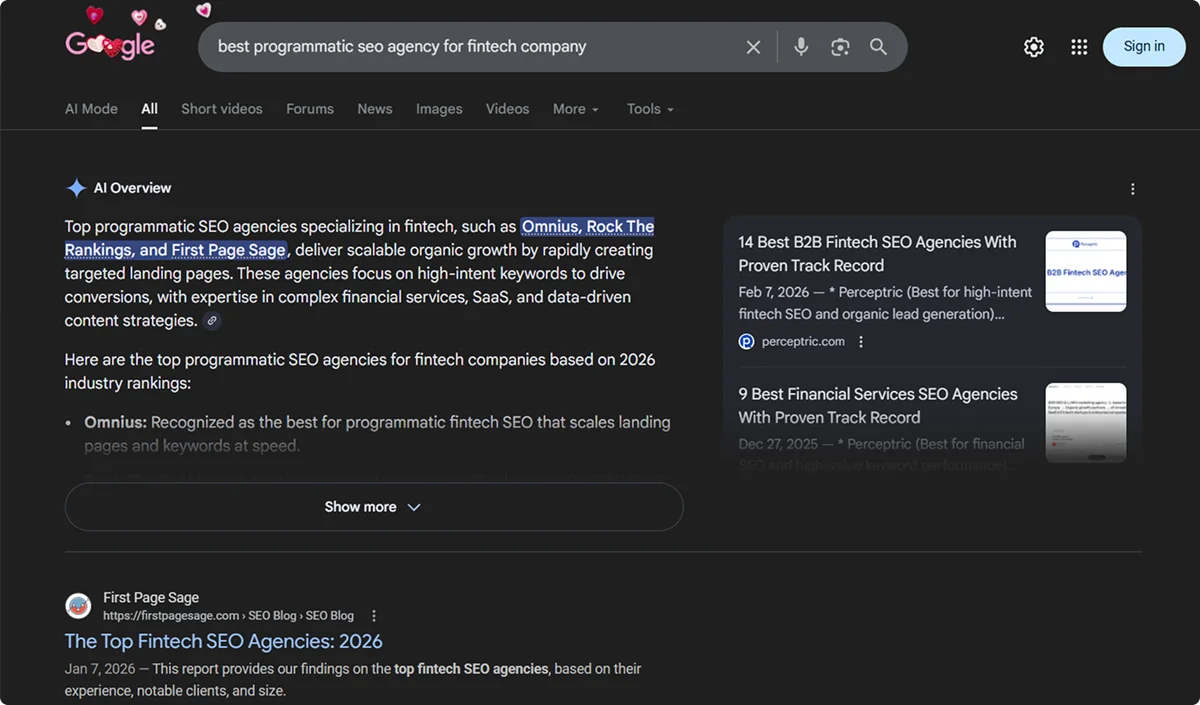
SEO (Search Engine Optimization) is the practice of optimizing websites for traditional search engines such as Google, Bing, Yahoo, and DuckDuckGo.
The discipline encompasses optimization of keywords, backlinks, website structure, content quality, and page load speed, to improve how a website ranks for specific search terms in search engine results pages (SERPs).
When users type queries into these search engines, SEO determines which websites appear at the top of the results list.
Traditional search engines use:
- Crawlers to index content across the web,
- Algorithms to evaluate relevance and authority, and
- Ranking systems to determine which pages deserve the most visibility.
SEO typically divides into two main categories:
On-page SEO involves everything you control directly on your website: content optimization, title tags, meta descriptions, header structure, internal linking, image optimization, URL structure, and page speed. This is where you make your content both user-friendly and crawler-friendly.
Off-page SEO encompasses activities outside your website that influence your rankings, primarily backlink acquisition. This includes earning links from authoritative websites, building brand mentions, managing online reputation, and establishing domain authority through external signals that demonstrate your site's credibility and trustworthiness.
Both approaches work together to satisfy algorithmic requirements while delivering genuine value to visitors, a balance that continues to evolve as search engines become more sophisticated at evaluating content quality and user experience.
Is AEO Replacing SEO?
No. AEO isn't replacing SEO. The two approaches actually reinforce each other because AI search engines rely heavily on traditional search results as source material.
AI search engines don't maintain their own comprehensive search indexes. They operate primarily from training data, which provides baseline knowledge but becomes outdated quickly.
For current events, trending topics, or recently changed information, training data alone can't deliver accurate responses. This is where RAG (Retrieval-Augmented Generation) comes in; AI systems pull fresh, accurate data directly from traditional search engine results to supplement their responses.
This dependency means that strong performance in traditional SERPs directly improves your chances of being cited by AI systems.
The numbers tell the story:
Google still dominates the search engine market globally with a 90.04% market share across all devices. Abandoning SEO strategies to focus exclusively on AEO would mean walking away from the vast majority of search traffic.
Furthermore, 98.1% of ChatGPT users also use Google. The audiences aren't separate—they overlap almost completely. Users don't choose between traditional search and AI search; they use both, often within the same research session.
Relying solely on AEO makes no strategic sense for business growth. The smarter approach is to treat these as complementary disciplines rather than competing alternatives.
How to win in both AEO and SEO?
Success in search doesn't require choosing between traditional SEO and AEO. The two segments strengthen each other; strong rankings in Google improve your chances of being cited by AI engines, while AEO-optimized content often performs better in traditional search results.
Here are the 5 important parts to take care of AEO and SEO:
1. Optimize Content
Focus on creating content that serves the end user first. Align everything with search intent and what users actually want to know about the topic.
Analyze competition in both traditional SERPs and AI search engines. Extract the top-performing results, reverse engineer what makes them successful, and identify gaps you can fill.
Don't just replicate what already exists; add your own perspective, data, or insights to make your content genuinely differentiated.
Structure your content so it's not too heavy for either human readers or crawlers to consume.
Use bullet points, headings, subheadings, tables, images, and infographics strategically.
Make information scannable with clear hierarchies that allow readers to quickly find what they need or dig deeper based on their interests.
Still catching top positions in Google SERPs gives you the highest probability of being cited in AI-generated responses, since many AI systems pull directly from those same top results.
2. Build Authoritative Backlinks
Backlinks remain fundamental to both SEO and AEO success. For traditional search engines, backlinks signal authority and trustworthiness, websites with strong backlink profiles rank better.
For AI search engines, content from authoritative sources with robust link profiles is more likely to be selected as reference material.
Focus on earning links from reputable sources within your industry. Quality matters far more than quantity, a single link from a respected industry publication carries more weight than dozens of links from low-authority directories.
Strategies that work:
- Create original research, data studies, or industry reports that naturally attract citations
- Develop genuinely linkable assets like tools, calculators, or comprehensive guides
- Contribute expert commentary or guest posts to established industry publications
- Monitor competitor backlinks to identify opportunities you might be missing
- Find broken links on high-authority sites and offer your content as a replacement
- Launch digital PR campaigns to earn coverage from authoritative news sites and industry publications. Media mentions provide high-quality backlinks and boost brand authority in both traditional and AI search.
- Track your backlink profile regularly. Disavow toxic links that could harm your reputation, and watch for patterns in which types of content earn the most authoritative links.
3. Implement Structured Data
Structured data markup helps both traditional search engines and AI systems understand your content more precisely.
Schema markup provides explicit signals about what your content contains, whether that's articles, products, reviews, events, FAQs, recipes, or other content types.
For SEO, structured data can earn rich snippets in search results, improving visibility and click-through rates.

For AEO, structured data makes your content easier for AI systems to parse and extract information accurately.
The clearer your content structure is at a machine-readable level, the more likely it will be selected as a source. AI systems can cite information more confidently when the data structure explicitly defines what each element represents.
Implement schema types relevant to your content:
- Article schema for blog posts and news content
- FAQ schema for question-and-answer sections
- HowTo schema for instructional content and tutorials
- Product schema for e-commerce pages with pricing and availability
- Review schema for ratings and testimonials
- Organization schema for company information and branding
- LocalBusiness schema for location-based businesses
Test your implementation using Google's Rich Results Test to verify proper formatting.
Many content management systems offer plugins that simplify schema implementation, but manual implementation often provides more control and precision.
4. Keep Content Fresh and Updated
Freshness signals matter in both SEO and AEO contexts. Traditional search engines favor recently updated content, particularly for topics where currency matters, such as news, trends, statistics, best practices, and product information, all of which benefit from regular updates.
AI systems prioritize recent information when answering queries about current events, emerging trends, or evolving topics. Outdated content is less likely to be cited, especially when fresher alternatives exist.
Establish a content maintenance schedule:
- Review high-performing pages quarterly to update statistics, add new information, and remove outdated references
- Refresh examples and case studies to reflect current industry practices
- Update publication dates when you make substantial revisions; this signals freshness to both crawlers and AI systems
- Add new sections addressing recent developments or common questions that have emerged since the initial publication
- Remove or update broken links and deprecated information
Monitor your industry for emerging topics and trending queries.
Use tools like Google Trends, social listening platforms, and industry news aggregators to identify opportunities for timely content.
Being early on emerging topics increases the likelihood of ranking well in traditional search and being cited by AI engines as they look for current information on developing subjects.
Create content calendars that account for both evergreen topics and timely opportunities. Balance foundational content that provides lasting value with topical content that captures immediate interest and demonstrates your site stays current.
5. Ensure Proper Crawlability
Both traditional search engine crawlers and AI search engine crawlers need to access and understand your content. If they can't crawl it properly, your content won't appear in either traditional results or AI-generated answers.
Avoid content that's dynamically loaded through JavaScript without proper server-side rendering or pre-rendering. While modern search engines have improved at rendering JavaScript, it remains a barrier; content hidden behind JavaScript frameworks may not be fully indexed or understood by crawlers.
Best practices for crawlability:
- Serve content in HTML whenever possible. If using JavaScript frameworks like React or Vue, implement server-side rendering (SSR) or static site generation (SSG) to ensure content is available in the initial HTML response.
- Avoid infinite scroll without pagination alternatives. Provide traditional pagination or "load more" buttons that create distinct URLs for crawlers to access all content.
- Don't hide important content behind login walls unless it's intentionally private. AI systems and search engines can't index content they can't access without authentication.
- Use robots.txt properly. Ensure you're not accidentally blocking crawlers from important sections of your site. Review your robots.txt file regularly and test it using Google Search Console.
- Fix crawl errors promptly. Monitor Google Search Console and other webmaster tools for crawl errors, broken links, and server issues that prevent proper indexing.
Test your site's crawlability using the URL inspection tool in your Google Search Console. View your site with JavaScript disabled to see what crawlers actually receive. If important content disappears, you have a crawlability problem that needs fixing.
Organizations without dedicated technical resources often work with Answer Engine Optimization (AEO) agencies to handle crawlability audits and fixes for both traditional and AI search engines.
How to track AEO results?
Tracking AEO performance requires a fundamentally different approach than traditional SEO measurement.
AI search engines operate non-deterministically; the same query can produce different outputs based on prompt phrasing, model version, retrieval mode, and user context. A single snapshot tells you almost nothing about actual visibility.
AEO Metrics That Matter
Track these specific KPIs to measure AEO performance:
- AI Visibility - Real clicks and conversions from AI platforms
- Share of Voice - Your brand mentions vs. competitor mentions in AI responses
- Citation Rate - How often AI engines cite your domain as a source
- Platform Coverage - Visibility consistency across ChatGPT, Gemini, Perplexity, Claude, and other engines
- Sentiment Accuracy - Whether AI engines describe your brand positively, neutrally, or with outdated information
- AI Indexing Ratio - Percentage of your pages actually used by AI engines
- Branded Search Lift - Increases in branded Google searches following AI visibility improvements
Effective AEO tracking relies on two complementary data layers:
Evidence-Based User Behavior
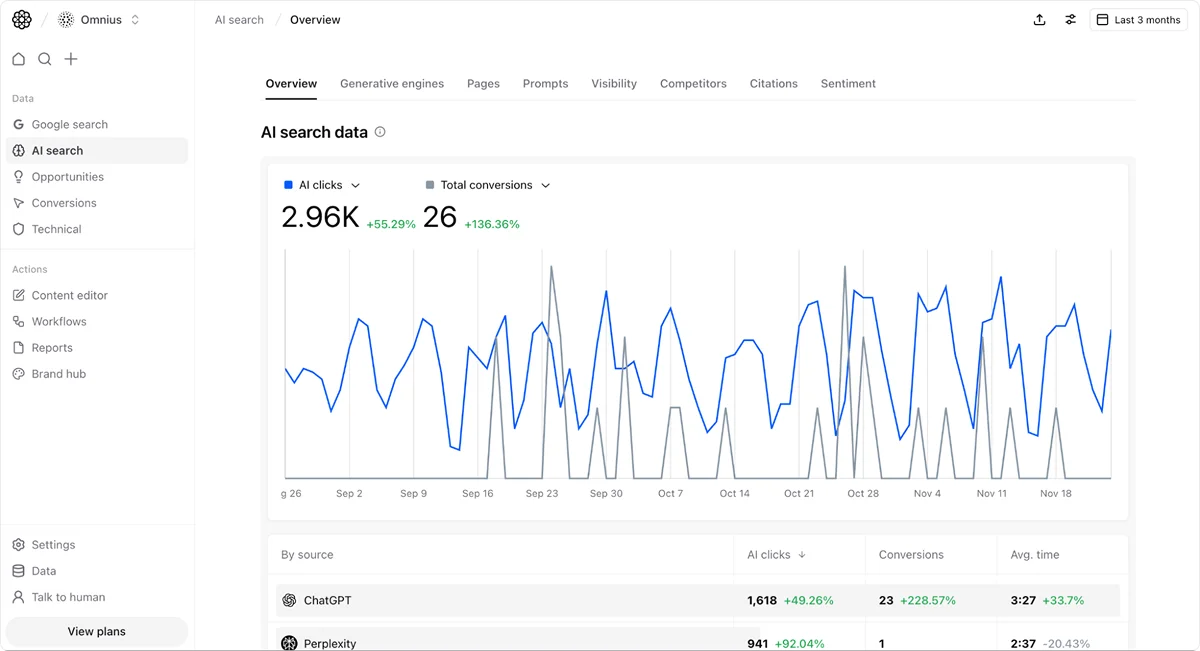
This measures real traffic and conversions coming from AI platforms. Use analytics tools like GA4, GTM, and server logs to identify visitors from referrers such as chat.openai.com, perplexity.ai, claude.ai, and gemini.google.com.
Track:
- Clicks and sessions from AI engines
- Conversion performance (direct and assisted)
- Landing page distribution for AI-referred traffic
- Session depth and engagement compared to organic traffic
This layer confirms what actually happened, where AI users landed, how they behaved, and whether they converted.
Synthetic Model Output Sampling
Behavioral data alone can't explain how AI engines view your brand or why they choose to mention or exclude you.
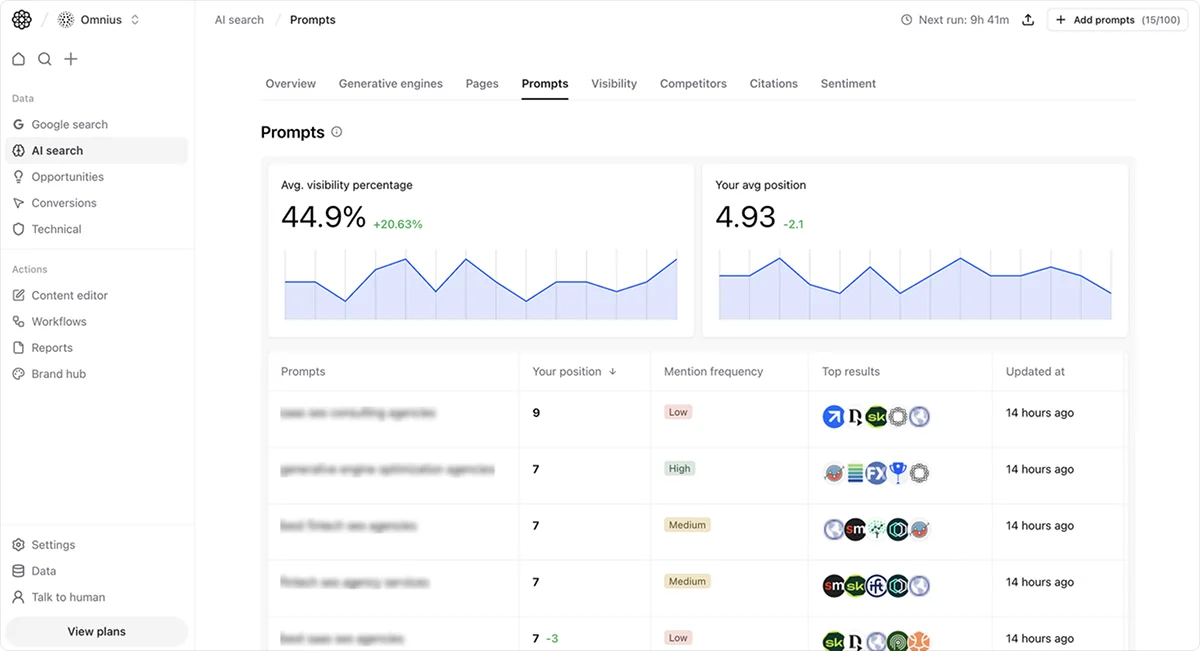
This requires running structured queries across multiple AI platforms that reflect real buyer behavior:
- "best [category] tools"
- "alternatives to [competitor]"
- "[your brand] vs [competitor]"
- Pricing, implementation, and integration queries
Because LLMs are non-deterministic, proper tracking requires:
- Multiple runs of every prompt to offset variability
- Prompt variations and model-to-model comparisons
- Citation extraction and brand mention clustering
- Visibility scoring across engines and prompt categories
This layer shows how engines describe your brand, how often you appear, which pages they cite, and where competitors outperform you.
For teams that need comprehensive, multi-engine tracking at scale, platforms like Atomic AGI unify both data layers, behavioral evidence and synthetic sampling into a single system. Atomic AGI tracks real user behavior from AI engines alongside synthetic model outputs across ChatGPT, Gemini, Perplexity, Claude, and others, providing multi-run sampling, citation mapping, share of voice analysis, and platform-level reporting.
The advantage of specialized platforms is speed and comprehensiveness. AI search results change rapidly, and manual tracking across multiple engines becomes increasingly difficult to maintain as your monitoring needs grow.
Conclusion
AEO and SEO represent two sides of organic visibility. Traditional search engines still drive most web traffic, but AI search engines have become a legitimate discovery channel that influences how users research and make decisions.
The two disciplines reinforce each other. Strong SEO performance improves your likelihood of being cited by AI engines, since many LLMs pull directly from traditional search results.
Content optimized for AEO, structured clearly, updated regularly, and backed by authoritative sources tends to rank better in Google as well.
What separates successful organizations from those falling behind is measurement.
Tracking only Google metrics provides an incomplete picture. Understanding how AI engines represent your brand, which prompts trigger citations, and where competitors outperform you requires dedicated tracking across both environments.
If you struggle with the implementation process, you can hire an AEO agency such as Omnius to handle the optimization for you.
The businesses that integrate AEO and SEO into a unified organic strategy will capture visibility that others miss. Start measuring both now; the advantage compounds over time.


.png)

.svg)
















.svg)



























.svg)