The ChatGPT plugin directory is the catalog where people find and install plugins that connect a company's product to ChatGPT. ChatGPT and Codex have shared it since July 9, 2026. A listing lets people find and install a public plugin, and a few lines of the company's own text decide whether the model calls it. Claude's directory, the MCP Registry, and ClawHub share that split.
Since August 21, 2026, ChatGPT's web and mobile rankings favor plugins people keep using.
An installed plugin can still go unused, so this guide shows how each catalog reviews and orders tools, what the model reads, and how to test that text. Our agent experience guide covers how coding agents choose a product, from recall to API keys.
Key takeaways
- A catalog gets a tool installed, and its text gets it called, because the model picks tools by their names and descriptions.
- ChatGPT and Claude order listings by use, so we drive the first installs from the company's own product, docs, and website.
- An MCP Registry entry doesn't create a listing in ChatGPT or Claude, so each directory needs its own submission.
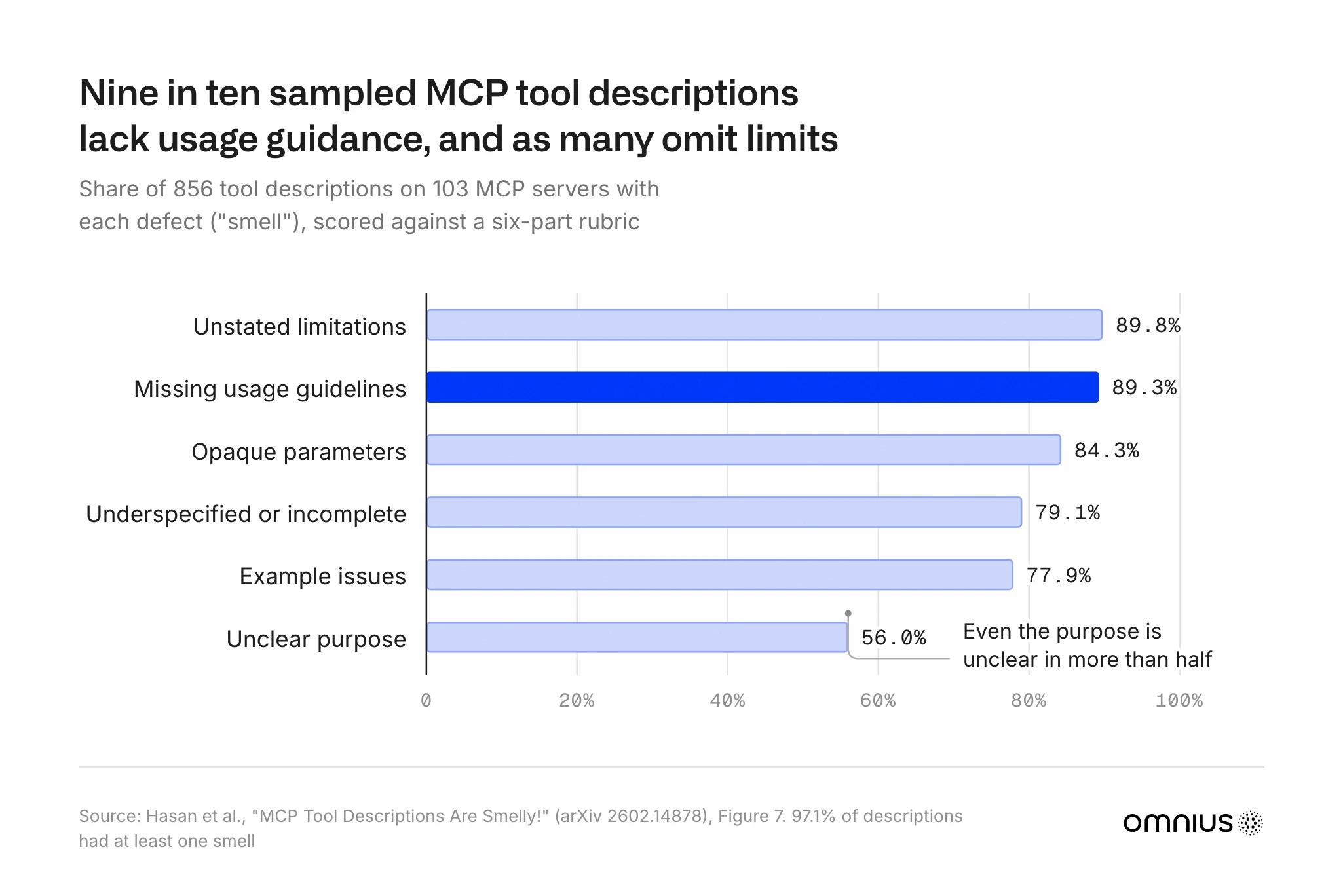
- Descriptions should open with when to use the tool, since 89% of 856 sampled MCP tool descriptions lacked usage guidance.
- Correct calls on realistic prompts are the measure, because an installed tool can go unloaded or unused.
What is the ChatGPT plugin directory, and which other catalogs matter?
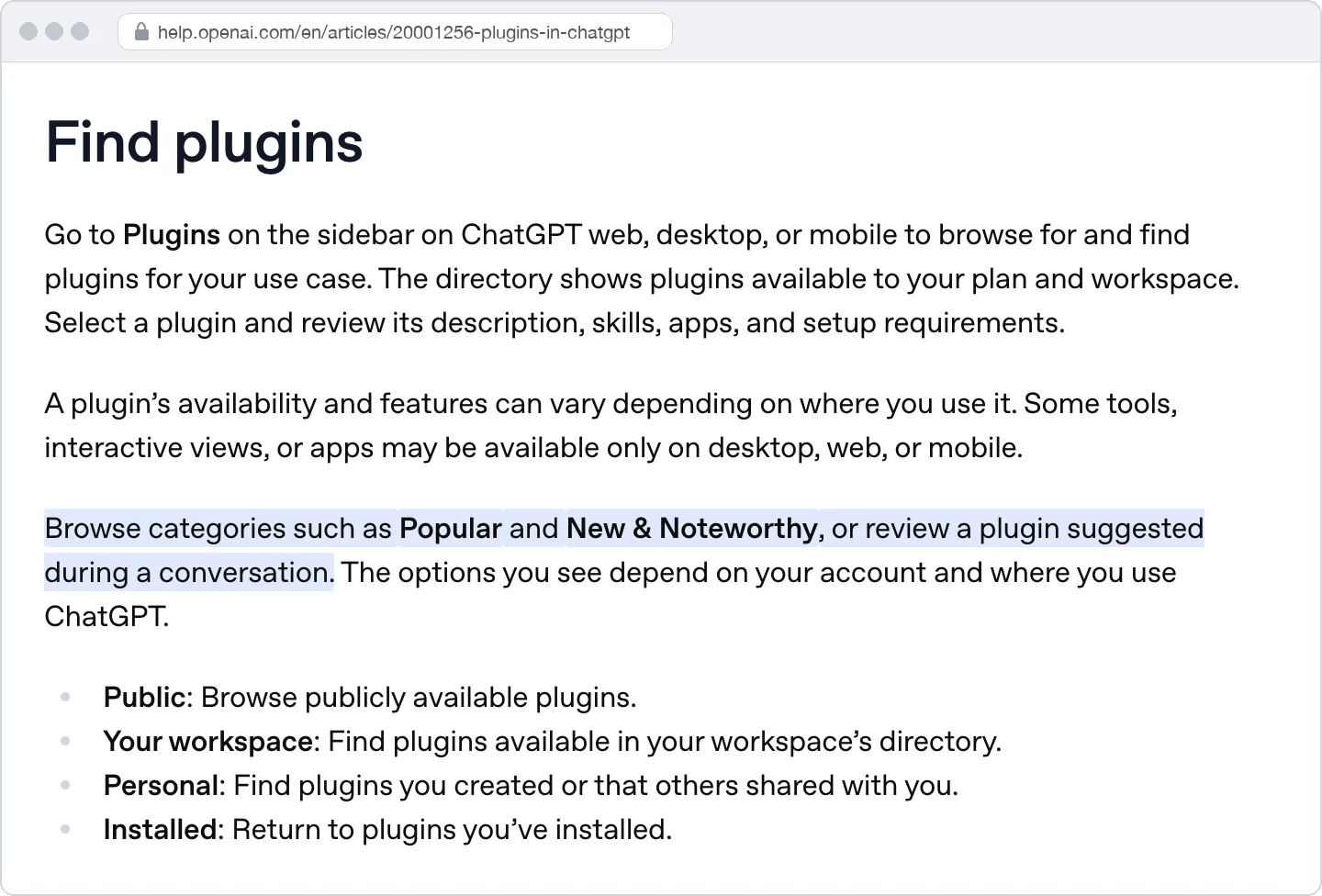
The ChatGPT plugin directory lists plugins, packages that bundle skills and connected apps for a task; an app connects ChatGPT to one service, such as Slack. People browse categories, search by name, or add a plugin ChatGPT suggests in a conversation. The 2023 ChatGPT plugins were a different program, retired in 2024.
Three other catalogs serve other agents:
- Anthropic's Connectors Directory lists connectors, remote Model Context Protocol (MCP) servers that let Claude call a product's functions.
- The MCP Registry is the official metadata list of public MCP servers.
- ClawHub lists OpenClaw skills, folders of instructions an agent loads when a task matches.
Why do these catalogs matter now? In Gautam Bharti's study of 120 registry snapshots, active MCP Registry entries grew from 3,510 to 18,966 between April and July 2026, and that expansion gives downstream catalogs more servers to list. Agents made 63 million calls to PostHog's MCP server alone in the 90 days to September 16, 2026. Three changes show how fast the rules move:
- July 9, 2026: OpenAI replaced the App Directory with the Plugin Directory.
- September 11, 2026: OpenAI announced a plan to retire custom GPTs, with a migration path to plugins.
- October 29, 2026: Claude began merging plugins, skills, and connectors into one Plugins page.
How a plugin listing moves from review to selection
Catalogs act on two of the five stages in our agent experience guide, listing and selection. Listing here covers review, installation, and loading, and selection is the model's pick for a request.
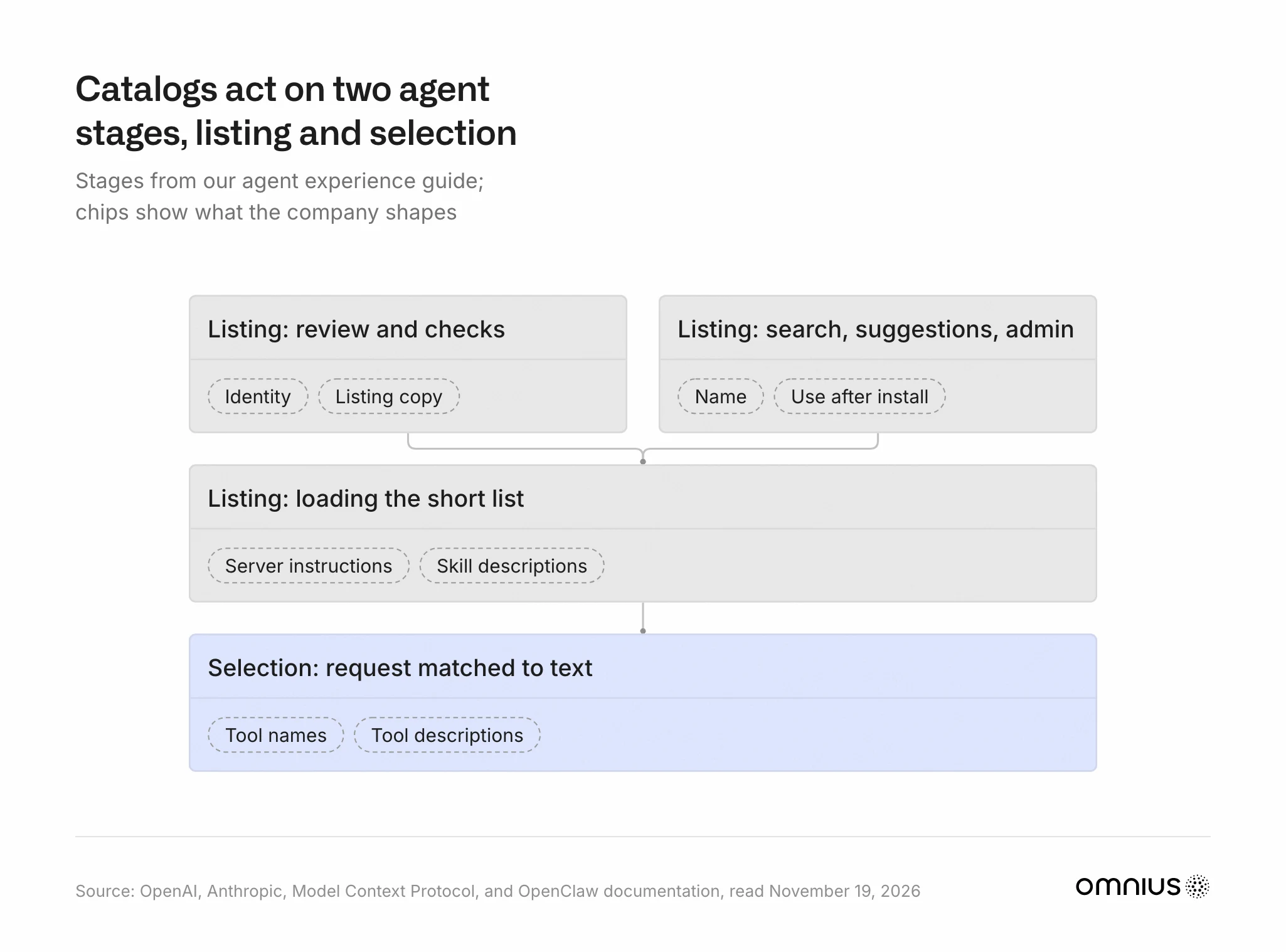
1. Review checks the publisher and the tool. OpenAI verifies an identity and the server's domain before a public listing, while the MCP Registry checks the namespace.
2. Search, suggestions, and admins decide installs. ChatGPT suggests only plugins OpenAI selects, so a new plugin is found by its name or a link. Claude can suggest any directory connector when the task fits. ChatGPT Business workspaces have apps on by default, and on Claude's Team and Enterprise plans an admin adds a connector first.
3. Loading gives the model a short list. By default, Claude Code loads tool names and server instructions, fetches a tool's definition when a search matches, and cuts text past a length limit.
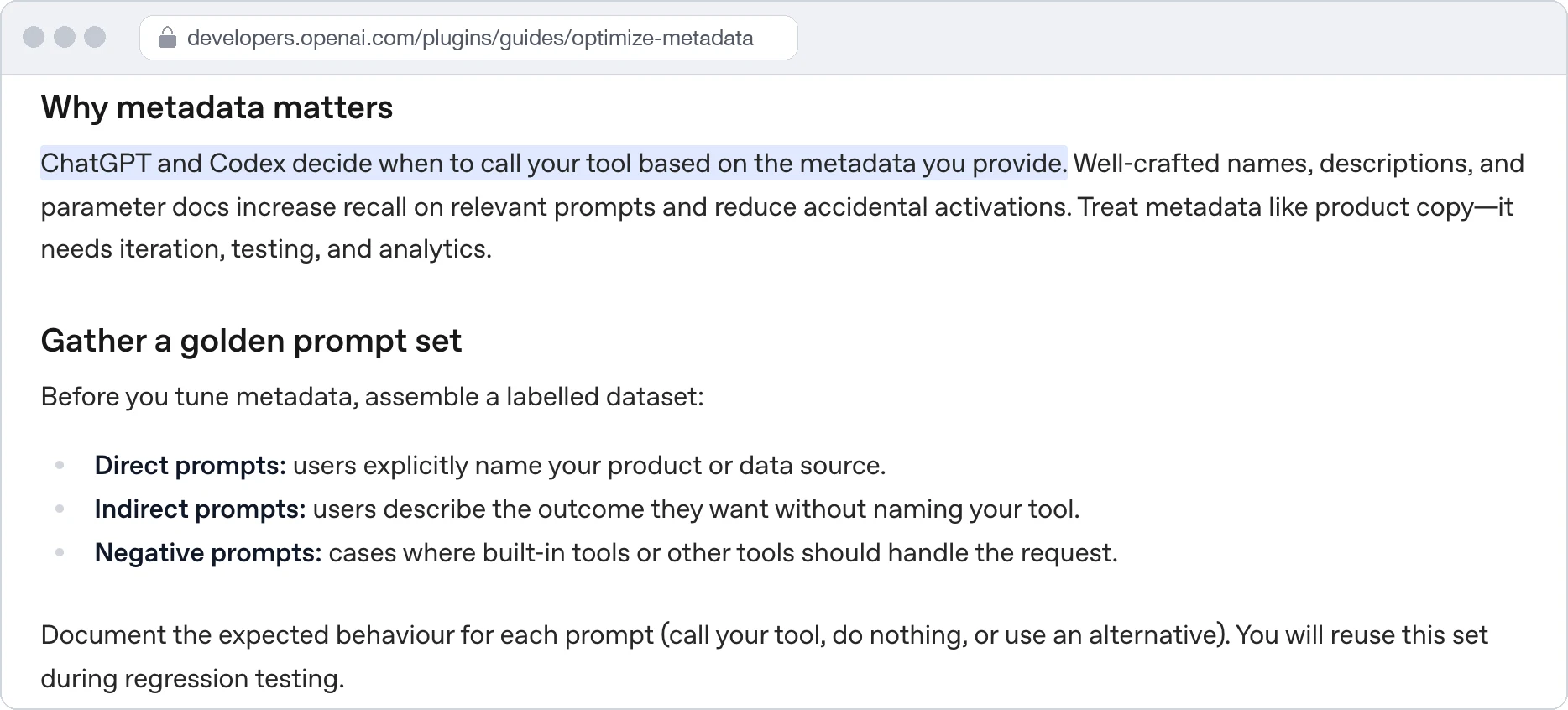
4. Selection matches the request to the text. OpenAI's metadata guide says ChatGPT and Codex decide when to call a tool from its metadata. ToolTweak, a 2025 attack study by Oxford and Microsoft researchers, shows how sensitive that match is. Among five equivalent tools, adversarial rewrites of one tool's name and description raised six models' average best rate of picking it from about 20% to between 34% and 82%.
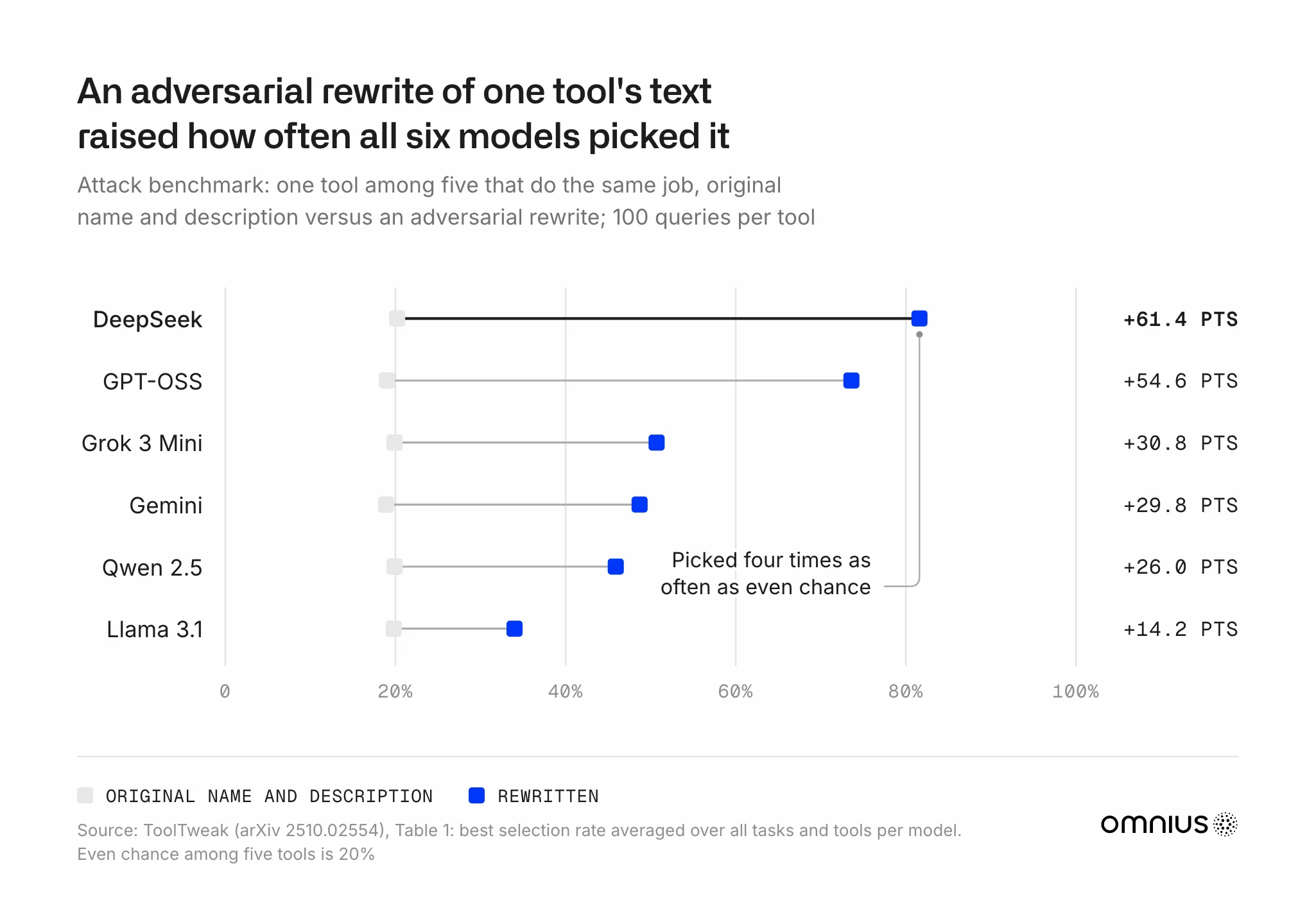
OpenAI's guidelines forbid manipulative wording, so we read the result as a measure of how much wording matters and write honest descriptions in the words users type.
How ChatGPT, Claude, the MCP Registry, and ClawHub review and rank listings
The table compares the four catalogs:
| Catalog | Where listed tools appear | Review and checks | Order and suggestions | Fields the company writes |
|---|---|---|---|---|
| ChatGPT plugin directory | ChatGPT and Codex | Verified identity, domain, test prompts | Continued use; OpenAI picks featured plugins | Name, descriptions, default prompts |
| Claude directory | claude.ai, Claude Code, Cowork | Automated scan; human review for new plugins | Usage-based; Suggested Connectors | Listing copy, tool titles, safety hints |
| MCP Registry | Downstream registries such as GitHub's | Namespace, valid server.json | None | Name, endpoint, 100-character description |
| ClawHub | OpenClaw | Scan of every release | Text relevance first, capped popularity | Slug, display name, summary, tags |
1. The ChatGPT plugin directory reviews, then ranks by continued use. OpenAI reviews public submissions under a verified name. Stripe's listing writes its default prompts in a user's words, such as "Which of my products are selling best?"
What to do: Prepare the listing in four steps:
- Verify the business identity and the domain.
- Write a branded name, then descriptions and default prompts in users' task words, with no pricing, comparisons, or instructions about other plugins.
- Prepare the five positive and three negative test cases and the video an MCP plugin needs.
- Finish prompt testing first, since a changed tool waits for automated checks and only one review runs at a time.
2. Claude's directory ranks connectors by usage. Every connector is scanned and listed as Community, and some get a Verified review testing each tool.
What to do: Submit the server as a connector and a plugin whose skills teach its use, give every tool a title and an accurate read-only or destructive hint, and link its install URL from the docs.
3. The MCP Registry verifies the namespace and never ranks. Anthropic says publishing there doesn't surface a server in Claude. Stripe's entry, com.stripe/mcp, takes its namespace from Stripe's domain and links its GitHub repository. When we counted on November 19, 2026, the registry listed 67,288 servers, up from 43,543 on October 14.
What to do: Publish under the company's domain, spend the 100 characters on the main job, and release a new version whenever the description changes. Atomic AGI, our sub-brand, uses 96 of them: Agentic AI search marketing: analytics, strategy, reputation, AX and execution. Built by Omnius.
4. ClawHub scans every release, then searches by relevance. Skills rated benign go live automatically, suspicious ones carry a warning, and malicious ones are blocked from download. In search, a precise name match can outrank a more popular, looser one.
What to do: Publish the SKILL.md files with the ClawHub commands from the company's own account, and put the words users search for in the display name, summary, and tags.
- Each review gate, Anthropic's labels and dashboard rank, ClawHub's search order, and the MCP Registry's lack of ranking.
- First installs from the company's own channels can start the continued use usage-based rankings count; neither OpenAI nor Anthropic publishes complete formulas for browse placement or suggestions.
What makes a model choose one tool or skill over another
The model weighs company-written text at two levels, first which servers and skills it searches, then which tool fits the request. "Availability alone didn't make the tools relevant to the agent's plan," Microsoft's team wrote after testing one upgrade task over 5 runs. An added documentation server's tools didn't load in 3 runs and went unused in the other 2.
1. Server instructions and skill descriptions tell the model when to look. Claude Code reads a server's instructions to decide when to search its tools. Claude also matches each request against a skill's description, and a shortened one can stop an installed skill from triggering. For a billing API, we would open the instructions with "Use these tools when the user asks about invoices, failed payments, refunds, or subscription changes."
What to do: Name the user tasks that should bring in the product, in users' words, within each app's length limit.
2. Tool names and descriptions are what the model compares. Names alone moved selection in ToolTweak's tests, where two identical tools that differed only by a numeric suffix were picked at different rates. In a 2026 Queen's University study of 856 tool descriptions from 103 MCP servers named in published research, 89.3% lacked usage guidance and 56% had an unclear purpose.
Should the fix be longer descriptions? In the Queen's University study, augmenting 202 tool descriptions raised task success by a median 5.85 percentage points, but also raised average execution steps by a median 67% and made results worse in 4 of 24 model-domain pairs. By default, Claude Code's tool search reads a description's first 4,096 characters, so we put the job and the trigger words first.
"Helpers for invoices" gives the model only a topic. "Use this when the user asks to find, filter, or export invoices in their billing account. Do not use for payment disputes." names the job, the trigger words, and the case to avoid.
What to do: Name each tool by domain and action, as in calendar.create_event, and open each description with "Use this when" and the case to avoid.
3. Rival tools compete for each request. Too many or overlapping tools can distract an agent, Anthropic warns. Stripe covers much of its API with two tools, stripe_api_read and stripe_api_write, to keep the context window small. A tool that wins alone can lose beside a rival, which Microsoft calls a composition problem, so we also test beside rivals.
What to do: Expose each operation once with a distinct description, and retire tools the model still skips once loading is ruled out.
What happens when a finance lead asks ChatGPT about failed payments
Suppose a finance lead at a SaaS company asks ChatGPT which customers had failed payments last week and to draft a follow-up for each. The company bills through Stripe. That request runs through five steps:
- The request names only the job. If no payments plugin is installed, ChatGPT can suggest one, and Stripe's listing shows its MCP server and its skills.
- The lead installs the plugin and connects the account. Installation can't bypass the account's permissions.
- ChatGPT weighs the installed plugins. If an accounting plugin is also installed, its tools compete for the same request, and the descriptions settle which one fits.
- The model reads the tools. Stripe's docs describe stripe_api_read as a tool to "Read data with any Stripe API GET method", which fits a look-up of failed payments.
- A refund would ask for approval. Stripe can require a person to approve some agent actions in its Dashboard.
How to optimize an MCP server and plugin listing for AI agents
We work in six steps built from each platform's requirements:
- Name one owner who claims every listing and namespace and ships each update.
- Choose catalogs by where users work, using the table below.
- Keep one source of truth for the product name, summary, and task words, fitted to each field's limit.
- Write and test the text on 3 to 5 common tasks, with direct, indirect, and negative prompts, with and without the tool and beside competing ones.
- Drive the first installs from the product, docs, and onboarding, with install links and Claude's Connect to Claude button.
- Submit, then re-test after every metadata change.
Four tools check a server, its registry metadata, a plugin's results, and published scans:
- MCP Inspector: Lists a server's tools and calls each one by hand.
- mcp-publisher validate: Checks server.json without publishing it.
- claude plugin eval: Compares a plugin's results with a no-plugin baseline.
- ClawHub scan report: Gives the scan verdict for each skill release.
We recommend this order:
| Company type | List first | Then | Fix before submitting |
|---|---|---|---|
| Developer tool or API | MCP Registry, Claude directory | ChatGPT plugin directory | Tool names, server instructions |
| Business SaaS sold to teams | ChatGPT plugin directory | Claude directory | Default prompts, admin setup |
| Regulated fintech product | Claude directory | ChatGPT plugin directory | Money-transfer rules; read-only and destructive hints |
| Product whose users run OpenClaw | ClawHub | MCP Registry | Slug, display name, summary |
For fintech, Claude's checklist rejects connectors that transfer money or financial assets, and OpenAI's guidelines prohibit executing money transfers or trades.
How to measure whether agents install and call the tool
Anthropic's dashboard tracks listing views, install clicks, and installs by source. The directory rank counts distinct accounts that sent any MCP message in 30 days, sign-ins included. Used a tool counts only accounts that made a tool call, so it leaves out accounts that reached the server and never called one.
Wrong-tool calls need their own count: OpenAI says spikes in wrong-tool confirmations usually mean drifted metadata and advises reviewing tool-call analytics weekly. We run each prompt scenario 5 to 10 times, Microsoft's minimum, and read calls per tool from the server's own logs.
What if a connected tool is never called? We check three things in order: whether the app loaded it, whether the model picked it, and whether the server received the request. From outside, an unloaded tool looks like an ignored one, so we rewrite metadata only when the model's choice is the cause.

How we approach agent experience at Omnius
We treat an MCP server, a plugin, and a skill as distribution. Being recommended in ChatGPT isn't the same as being selected by an agent such as Claude Code. The work starts where the agent starts, with the catalogs and the text the model reads.
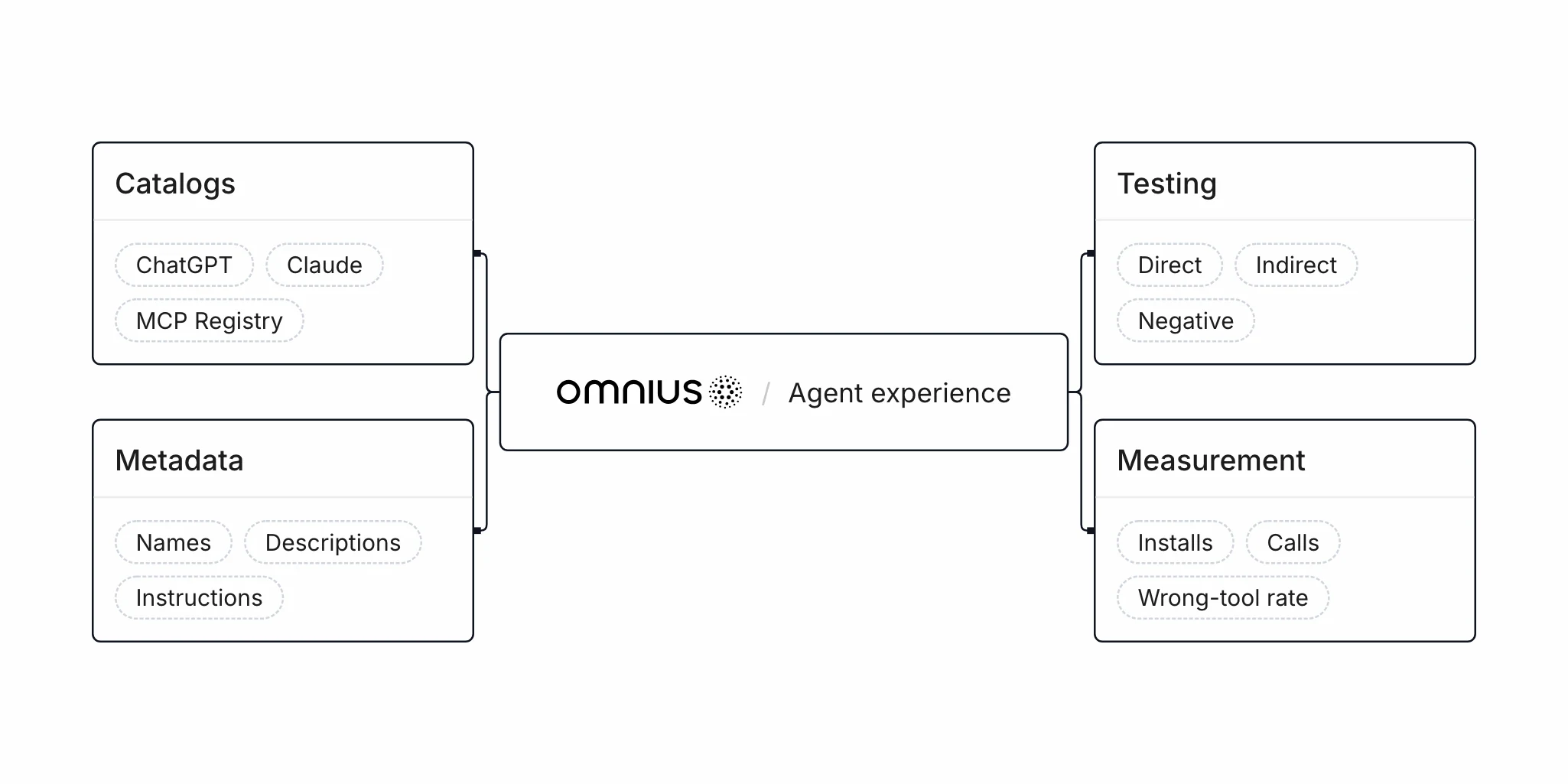
We advise software companies to publish a remote MCP server to the MCP Registry early, because downstream catalogs copy its entries. The work runs in four parts:
- Catalogs: Which directories fit the product's users, and what each one checks.
- Metadata: Names, descriptions, and server instructions written for a model.
- Testing: Realistic task prompts on each host, with the expected result for each.
- Measurement: Installs, calls, and wrong-tool rates per catalog, every month.
AI integrations can change within months, so we retest listings on every release. Agents weigh a product's text differently from search engines and LLMs, yet all three need a plain, consistent company description backed by evidence.
For a review of how AI search engines and agents read a company's website, see our AI search audit.
FAQ
How is a custom plugin or MCP server added to ChatGPT?
A custom plugin can be added to ChatGPT without a directory listing. Plugin Creator builds one from a conversation, and it appears under Personal for its creator and anyone it's shared with.
Does publishing to the MCP Registry list a server in ChatGPT or Claude?
An MCP Registry entry doesn't create a listing in ChatGPT or Claude. OpenAI's directory and Claude's each take their own submissions, while the registry feeds downstream registries such as GitHub's.
How long does directory review take?
Neither OpenAI nor Anthropic commits to a fixed review time. OpenAI says timelines vary and expedited review isn't possible.
Do Verified labels and ClawHub scans mean a tool is safe?
Verified labels and ClawHub scans don't guarantee safety. Anthropic says verification isn't a security audit, and OpenClaw says a skill instructing an agent in plain words to do harm won't trigger a virus signature.
What happens to custom GPTs now that ChatGPT has plugins?
Custom GPTs are set to retire, and a published GPT's instructions and knowledge may move into a plugin.
Methodology
The guide draws on documentation from OpenAI, Anthropic, the Model Context Protocol project, GitHub, OpenClaw, and Stripe, read on November 19, 2026. ToolTweak's selection rates come from 100 queries per tool.
The registry counts page the public API for the latest version of every server on October 14 and November 19, 2026, and count entries, deprecated ones included; they show neither usage nor quality. The finance scenario is hypothetical and claims no result for Stripe.
Sources: ToolTweak · Queen's University study · Bharti's registry study · PostHog's agent report