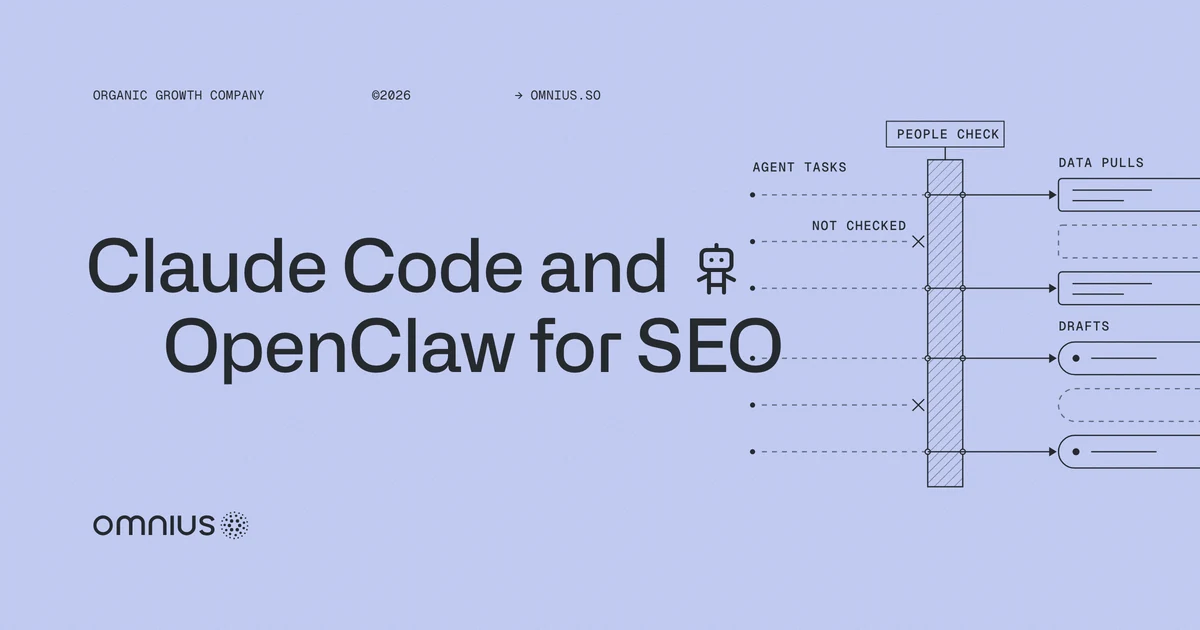
Claude Code and OpenClaw can run SEO work as agents, and each one's accuracy depends on the data and written method behind it. We hand agents the work a person can check against the live website and Search Console, and keep priorities and positioning with analysts.
Agents already do analytics work at volume. In 30 days, they created 252,000 insights through PostHog's agent connection, against 99,000 that people created in its web app, PostHog reported in September 2026. In an agent's SEO report, one plausible but unchecked number can send the team to the wrong page or fix.
What to hand over is the SEO lead's call, because priorities, published claims, and website changes need an owner. This guide shows which tasks pass that test and how to run them safely.
Key takeaways
- Start with checkable work, such as audits and Search Console reports, which the SEO lead can verify against live data.
- Write the team's method into a skill and update it whenever the data model changes, because outdated definitions cut an agent's accuracy.
- Ask for a source or "unknown" behind every number, so an analyst can spot-check rows before a report goes out.
- Read and pin every community skill before installing it, since ClawHub held hundreds of malicious skills in February 2026.
- Keep every website change behind a person's review, with the agent limited to drafts and pull requests.
What Claude Code and OpenClaw are, and how they differ for SEO
Claude Code is Anthropic's agentic coding tool, which reads files, runs commands, and connects to other tools from a terminal, code editor, desktop app, or browser. OpenClaw is an open-source assistant that a team runs on its own computer and instructs from chat apps such as Slack and WhatsApp, with model and agent plugins, including Claude and Codex.
Neither tool holds the company's SEO data or method, so the team adds both. A skill is a Markdown file of written instructions, sometimes with scripts, that packages a method the team repeats. A Model Context Protocol (MCP) server connects the agent to a data source such as Search Console, and exports and page fetches cover the rest.
Which piece does a job need? We use a prompt and an export for a one-off question, a skill for a repeated task, and a live connection, such as an MCP server, for fresh data.

(Our Claude SEO guide covers visibility in Claude's answers.) The two tools differ on four points:
| Claude Code | OpenClaw | |
|---|---|---|
| Where it runs | The user's computer or Anthropic's cloud | The team's own computer or server |
| How a weekly report starts | A scheduled task | A cron job that posts to a chat |
| Before an action | Manual mode asks; in auto mode, a classifier reviews eligible actions | Tools run on the host machine unless sandboxed |
| Who can instruct it | The session's user, plus connected chats | Approved senders under the channel's access rules |
We'd pick Claude Code for supervised work in a repository or on Anthropic's cloud, and the self-hosted assistant for team chat on a separate machine. Three changes since June 2026 shape the setup:
- June 1, 2026: ClawHub added NVIDIA's scanner as a third check, plus a Skill Card, to every new skill version.
- August 7, 2026: Anthropic said new Claude Code sessions on Pro, Max, and Team plans would run in auto mode from August 14.
- September 23, 2026: Anthropic opened the Claude Marketplace, one catalog of more than 2,000 connectors and plugins.
How a Claude Code SEO agent works, stage by stage
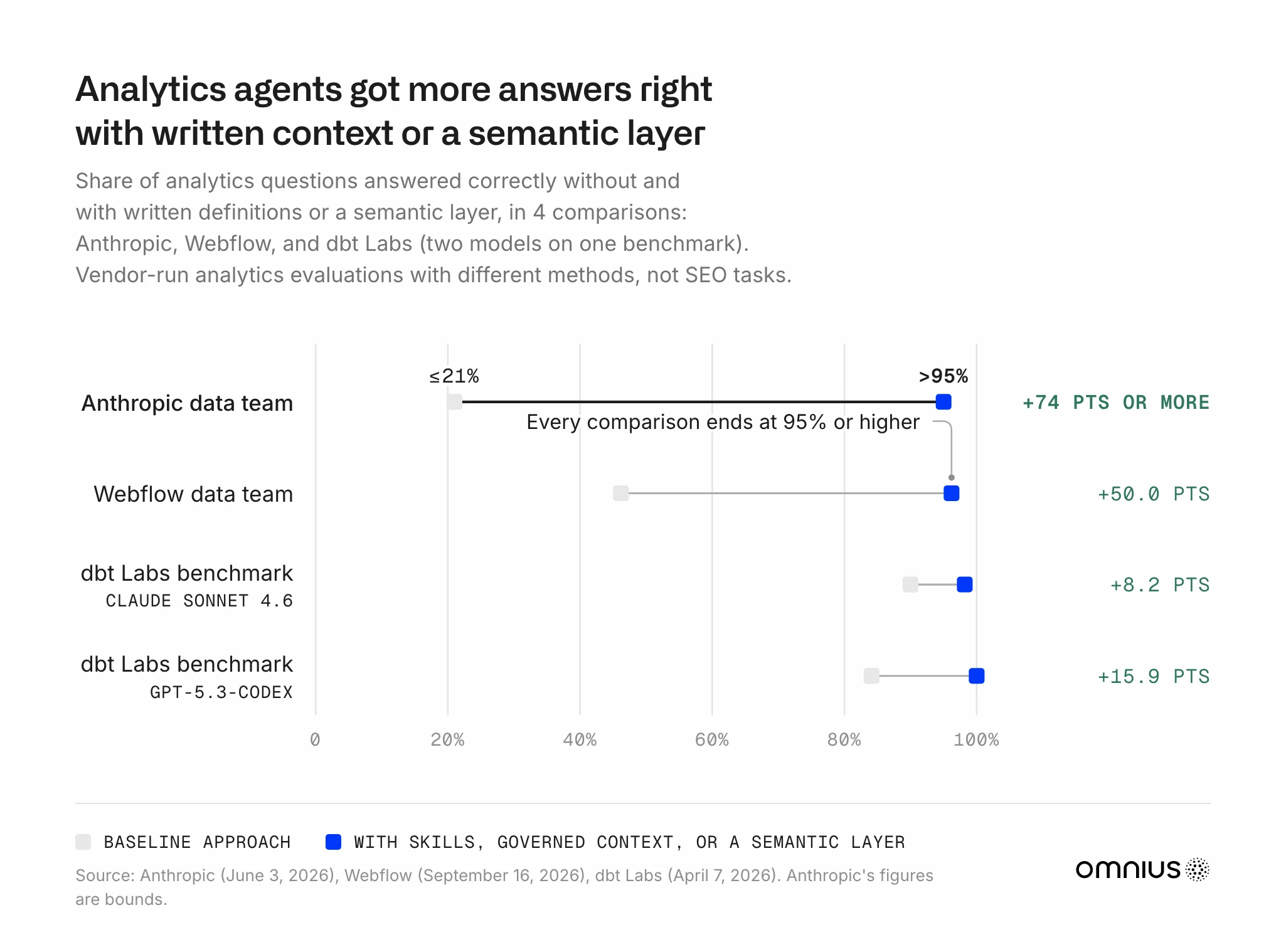
What decides whether an agent's numbers are right? In Anthropic's tests, the method mattered most. Without skills, Claude answered at most 21% of Anthropic's internal analytics questions correctly, and with skills that encode business context, accuracy rose above 95%.
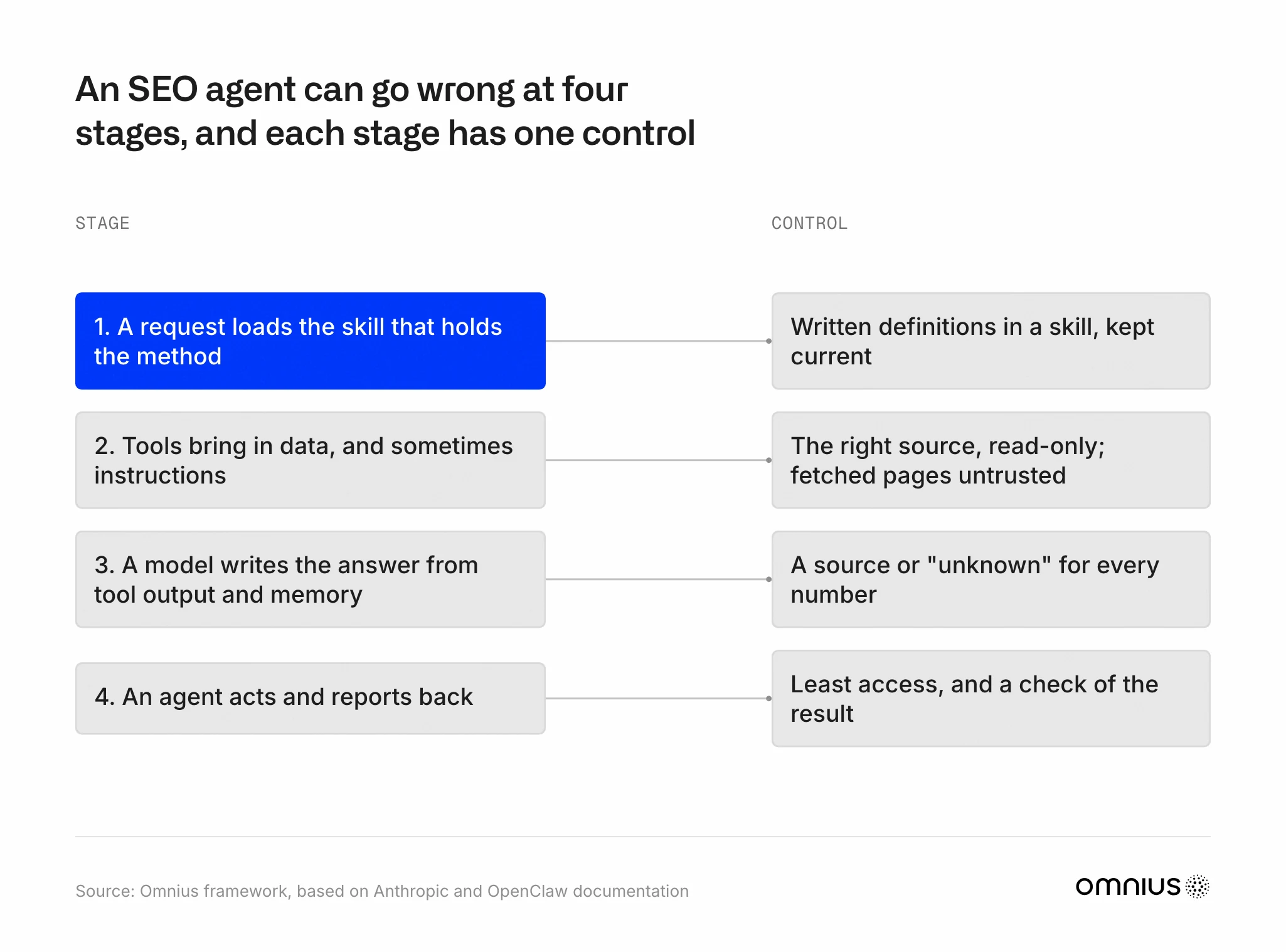
1. A request loads the skill that holds the method. A prompt or a schedule starts the task, and Claude Code loads a matching skill only when relevant. In Anthropic's tests, letting the agent search thousands of past SQL files moved accuracy by less than a point.
"The information was there, the agent saw it, and it still didn’t use it," the team wrote. Skills fixed that, yet accuracy slid from about 95% to 65% within a month as the data model changed, so a skill needs an owner who keeps it current.
2. Tools bring in data, and sometimes instructions. Connections, exports, and page fetches bring in the company's numbers and text other people wrote, since SEO work means reading competitor pages and results pages. Anthropic warns that servers fetching outside content expose the agent to prompt injection, meaning instructions hidden in that text.
3. A model writes the answer from tool output and memory. Where a tool returned nothing, the model can still produce a plausible number. OpenAI's researchers argue that scoring models on accuracy alone rewards guessing when they're unsure, so check every unsourced number against its source or calculation before using it.
4. An agent acts and reports back. The agent writes files, edits pages, or sends messages within its permissions, and in auto mode a classifier reviews eligible actions. Its report of a finished task is the agent's own account, so a person still checks the result itself.
Which SEO tasks Claude Code does well, and which stay with analysts
Is Claude Code good at SEO? It does well on checkable, data-backed work, and we use three tests to choose the tasks an agent gets.
1. A person can check the output. In a technical SEO audit, robots.txt and hreflang findings can be verified on the live website, and Core Web Vitals against field data in PageSpeed Insights. In September 2026, Swapnil Biswas ran a Claude Code audit of a 170-post website, and its check of the source files flagged 142 images without width and height.
Because the build adds width and height, none of the 1,046 image tags on the built and live pages lacked them. "Treat any source-level finding as a hypothesis until the build confirms it," Biswas wrote, and we confirm each agent finding on the live website.
What to do: Spot-check rows and totals in Search Console, and have the agent list its checks.
2. Data and definitions exist. Keyword research and reports can look complete when either is missing. A B2B marketing advisory's founder had Claude Code research about 100 companies, then spotted filled-in round numbers where none made sense, such as 7,700 and 12,500 followers.
Claude still reported the dataset complete, though about 10 CMOs were missing even with Clay's data connected.
What to do: Connect the source each question needs, write the team's definitions into a skill, and require a source or "unknown" for every number.
3. A person owns the decision. Priorities and positioning depend on company goals and tradeoffs, so we keep those choices with the SEO lead. At Ahrefs, content marketing director Ryan Law runs 23 Claude Code skills that take a keyword idea to a draft in six to twelve minutes, yet he uses them only on topics he can review.
"I could use this process to scale the Ahrefs blog to tens of thousands of articles. I will not," Law wrote.
What to do: Let the analyst decide from the agent's sourced data.
Eight common SEO tasks split this way, and our guide to AI SEO agents covers vendor tools for them:
| Task | Data it needs | Checked against | Hand to an agent? |
|---|---|---|---|
| Technical SEO audit | A crawl, Core Web Vitals, and indexing reports | Live pages and reports | Yes, read-only |
| Search Console reports | Exports | Search Console totals | Yes, read-only |
| Keyword research | Queries and a keyword database | Results pages | Data yes, analyst decides |
| Rank tracking and AI citations | Scheduled captures of Google and ChatGPT | Saved captures | Yes, on a schedule |
| Structured data and on-page SEO edits | The repository | A reviewed pull request | With review |
| Backlink outreach | A backlinks database | The linking pages | Research only |
| Content research | A source pack | An expert's review | Source packs only |
| Priorities and roadmap | Business context | Business goals and agreed priorities | No |
How to use Claude Code for SEO on Search Console data
Claude Code can automatically build a weekly report of pages losing Search Console clicks for a person to check. At a made-up accounts-payable software business, the SEO lead wants it without giving the agent website edit rights.
1. The lead's request loads a short skill. She asks for the pages that lost the most clicks in the last 28 days against the 28 before, and the skill's reviewed script does the arithmetic:
2. Two exports come first. The first run reads both with no Search Console credentials or community skill. Once the output holds up, the scheduled version connects through Google's read-only Search Console permission and an MCP server whose code the team has read.

3. Missing pages are marked unknown. Search Console's API returns top rows rather than every row, so a page absent from the later window can't count as zero clicks.
4. Claude Code writes one file. Claude Code saves a Markdown report in a sandboxed session, where permissions, not the skill's wording, block other edits. Its top row shows /blog/three-way-matching falling from 1,240 clicks to 610.
5. The lead checks values and coverage. She opens five rows in Search Console, and four match. After a redirect on October 28, the fifth fell from 420 clicks to zero, and she confirms its clicks reappeared on the target page.
In the later export, page rows sum to 39,800 clicks against 41,300 for the property, so she checks dates, filters, aggregation, and missing rows before relying on the total.
6. The lead decides, and the team tracks errors. She picks three pages to investigate. The run repeats weekly as a Claude Code scheduled task or an OpenClaw cron job posting to the team's chat, with an alert on failure. One owner keeps the skill and credentials and tracks rejected rows each month.
How to run Claude Code and OpenClaw SEO skills safely
SEO skill security comes in three steps: vetting, access limits, and change review.
1. Read and pin every skill. Skills come from plugin marketplaces, ClawHub, and GitHub, and their bundled scripts run without the model seeing the code. A Claude Code SEO skill with more than 30,000 GitHub stars tells Claude to append a footer promoting its author's community as "the very last output" of an audit.
One ClawHub skill loaded about 60 affiliate-linked products from its publisher's server before answering, Unit 42 reported, so pinning a version wouldn't freeze what it recommended. ClawHub added scanning after a February 2026 audit found 341 malicious skills among 2,857. Yet this skill got past it, so we treat a clean scan as a first filter.

What to do: Read the instructions, scripts, and hooks, check which domains and accounts a skill reaches and whether it fetches content at run time, then pin the reviewed version. OpenClaw's verify command flags failed checks.
2. Limit what the agent can reach. Do permission prompts catch a dangerous command? In Anthropic's test with 1,053 paid testers on coding tasks, reported in August 2026, testers approving prompts caught a planted one 13.6% of the time, and the auto-mode classifier caught 89%. Neither catches everything, so we set limits before the work starts.
What to do: Use read-only scopes, give no publishing rights or personal accounts, turn on Claude Code's sandbox, and run the self-hosted assistant on a separate machine.
3. Review every website change. In a Reddit case that Ahrefs relays, Claude replaced three strong articles with short placeholder pages while reporting success. Google asks for fact-checking and review of AI-generated content, title tags, and structured data before anything goes live.
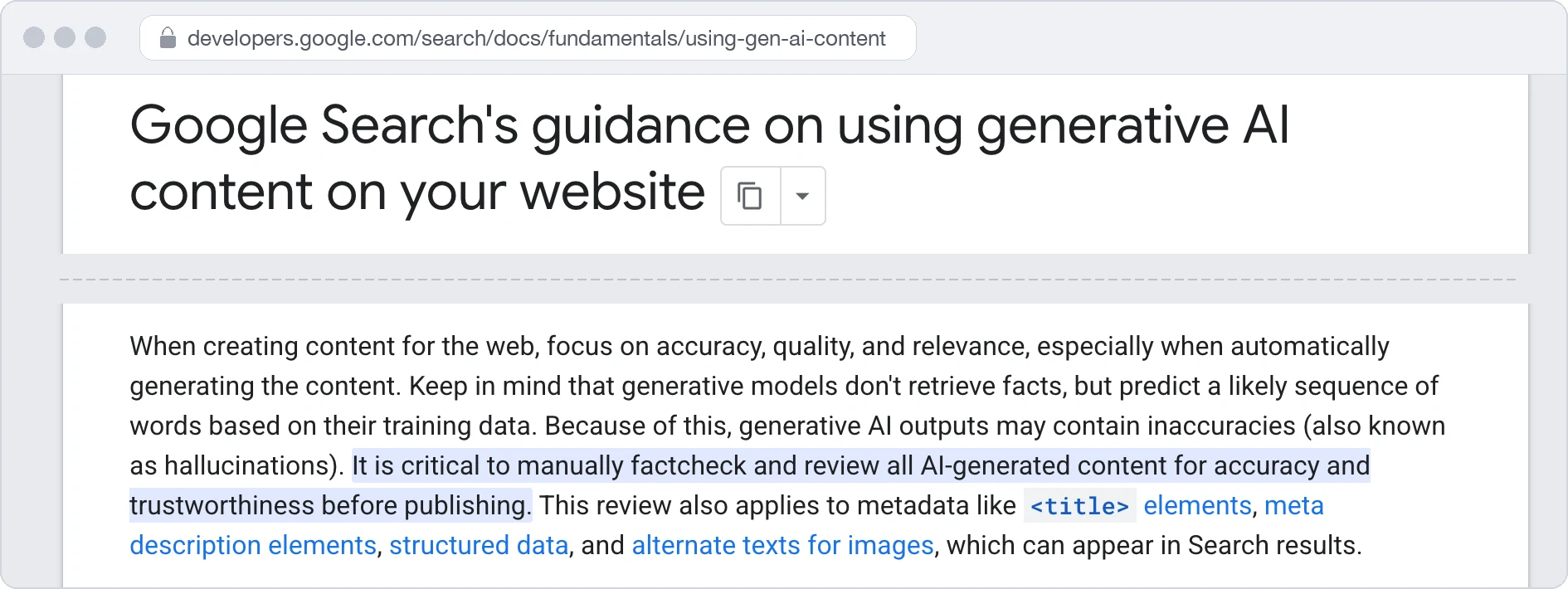
What to do: Have the agent propose a draft or pull request, then let a person review the changes, check the live URL, and own the rollback. Publishing stays with a person, even after clean spot checks.
How we split SEO work between agents and people at Omnius
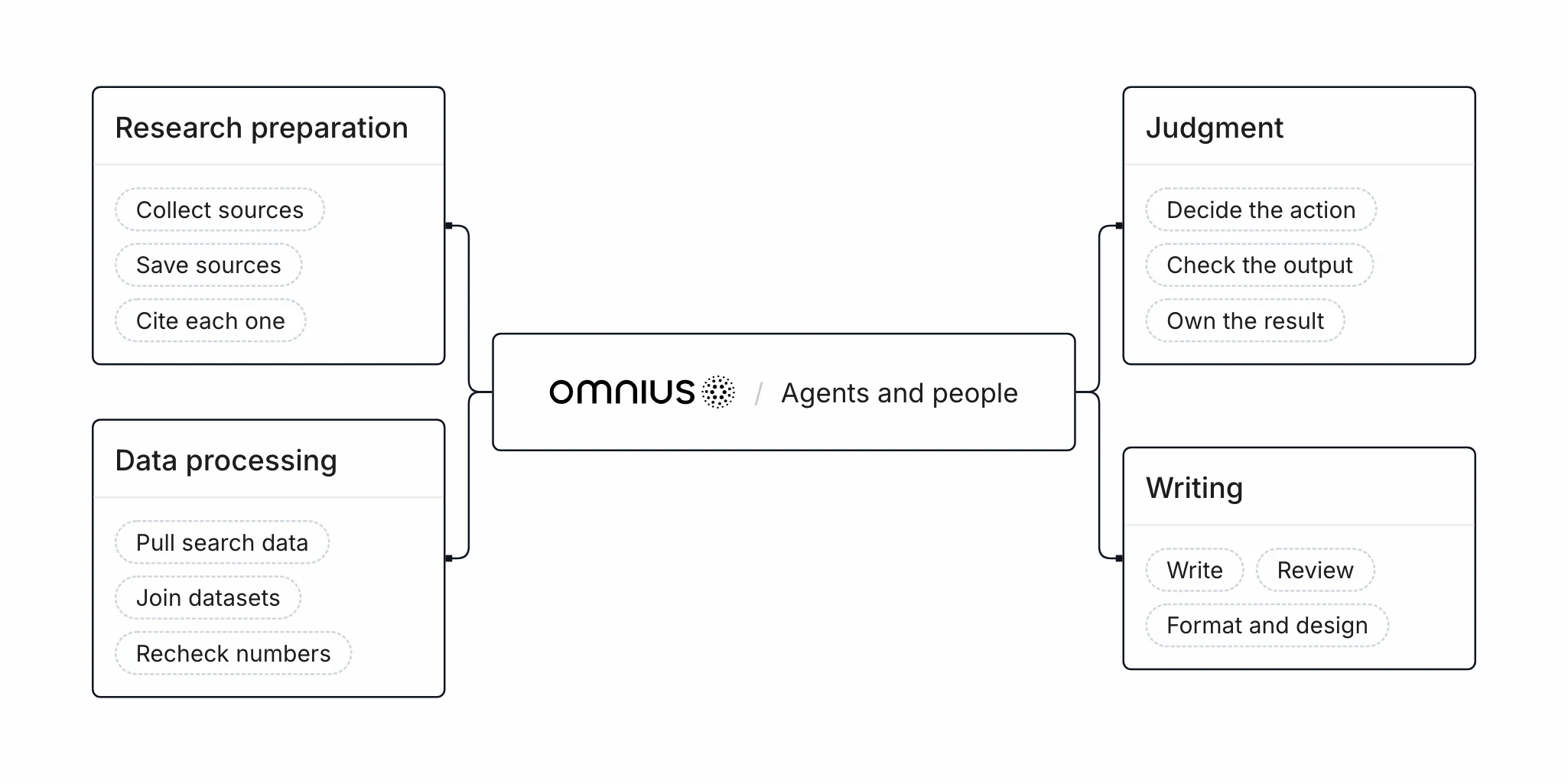
Agents scale our team's judgment, and we keep them from clouding or polluting it. Our methodology keeps strategy, judgment, and accountability human. Owned data, processing, intelligence, and automation increase what the team can understand and execute.
Bad context "creates false priorities," our memo says, and an agent's unsourced number is that kind of context. The work splits four ways:
- Research preparation: Agents collect and save sources, so people read evidence instead of hunting for it.
- Data processing: Agents pull and join search data, so people spend less time collecting, transferring, and rechecking.
- Judgment: People decide what should be done, why, and whether the output is good enough, and they own the result.
- Writing: People write, review, format, and design every article.
We think companies that automate marketing operations without context are "efficiently automating themselves into obsolescence," as we wrote when "Claude Code replaced X" posts spread.
Read next: How our technology works
FAQ
Is there an SEO skill for Claude Code?
Yes, SEO skills for Claude Code exist as community packs on GitHub and plugins in Anthropic's marketplace, and Semrush launched a data connector for Claude on August 26, 2026. A pack brings a checklist, not the team's data or definitions.
Can Claude Code do keyword research without a paid SEO tool?
Claude Code can do keyword research from Search Console exports, which list a company's own queries for free. Volumes for topics the website doesn't rank for yet need a keyword database.
How much does it cost to run Claude Code or OpenClaw for SEO?
Running Claude Code costs a Claude plan or API usage, plus data access and review time. On November 19, 2026, Pro cost $20 a month billed monthly and Max cost $100 a month. OpenClaw is open source, so its costs are hosting, the model, data access, and setup time.
Can Claude Code replace an SEO analyst?
In our practice, Claude Code takes the collection work and the analyst keeps the judgment. For instance, a marketing advisory's founder caught follower counts that Claude Code had invented in a dataset it called complete.
Will Google penalize content made with Claude Code?
Google doesn't penalize content for the tool that made it. Its scaled content abuse policy targets pages made mainly to manipulate rankings, "no matter how it's created," so agent-made pages are judged on whether they help readers.
Methodology
This guide rests on product documentation from Anthropic, OpenClaw, and Google, published studies, and practitioner accounts, read on November 19, 2026, the day the screenshots were captured. We ran no new tests, and the walkthrough is a worked example of a made-up company. The accuracy figures come from analytics agents rather than SEO tasks, Anthropic and dbt Labs sell the products they evaluated, and the skill-security figures come from vendors that sell scanning.
Sources
Sources are grouped by publisher under four headings.
- Anthropic: Claude Code overview, Setup, Security, Permissions, Skills, MCP, Plugins, Scheduled tasks, Sandboxing, Auto mode default, Self-service analytics, Claude Marketplace, Pricing
- OpenClaw: Repository, Security, Skills, Automations, Skill security with NVIDIA
- Google: Spam policies, Generative AI content, Search Console API query, API authorization
- Studies and accounts: PostHog on agents, Snyk ToxicSkills, Unit 42 on ClawHub, Koi's ClawHub audit, OpenAI on hallucinations, Webflow on grounding, dbt Labs benchmark, Ahrefs content engineering, Ahrefs on Claude Code, Biswas audit, Semrush connector