.png)

Between March and December 2025, Manus AI achieved what no software company had done before:
- Launched their AI agent in March,
- Hit $37 million in annual recurring revenue by April,
- Reached $90 million by August,
- Crossed $100 million ARR by December.
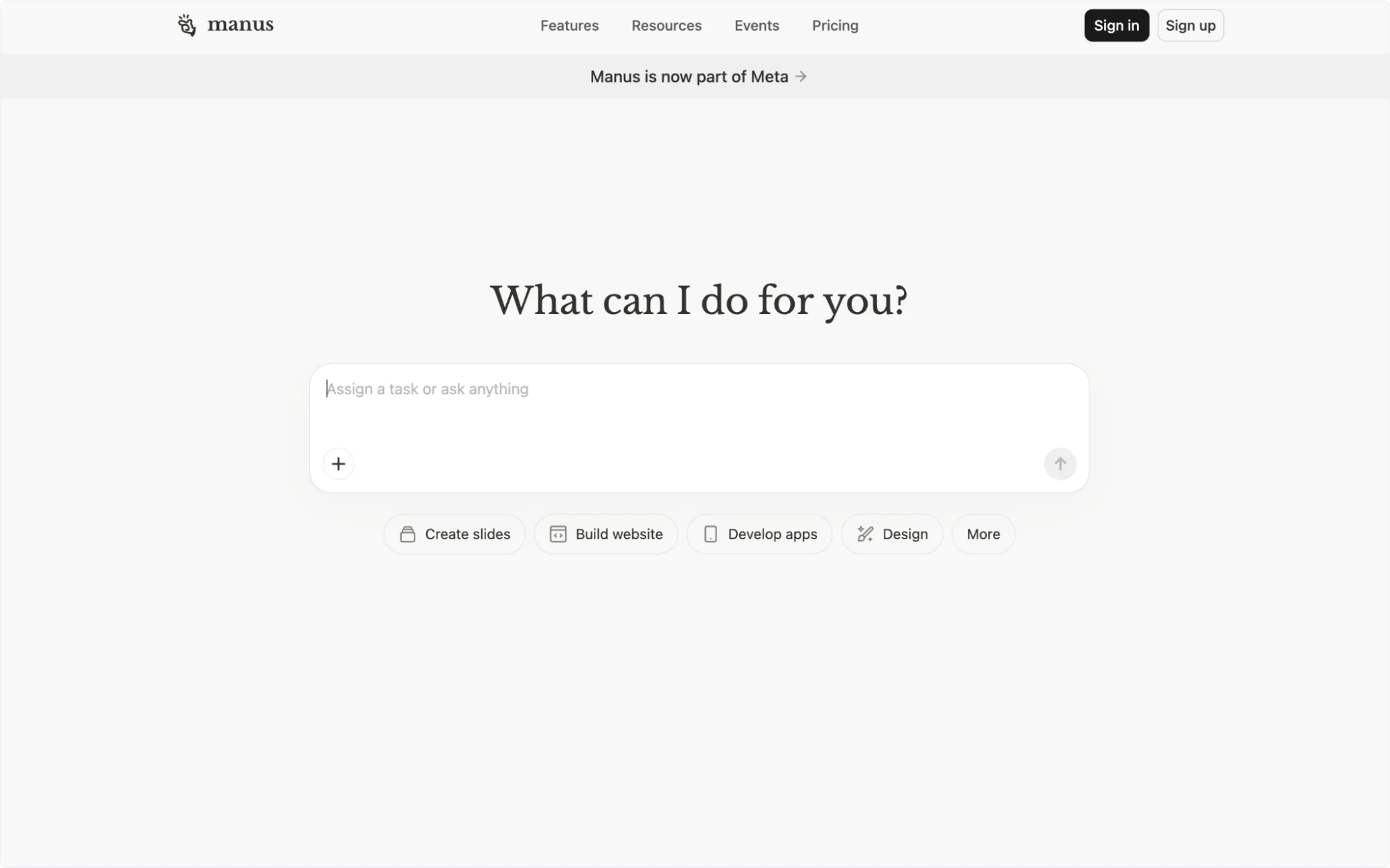
Eight months from launch to nine figures, the fastest any company had reached that milestone.
A 78-person team built this while sustaining 20%+ month-over-month growth. They processed 147 trillion tokens, created 80 million virtual computers, and pulled 2 million waitlist signups in their first week. Within days of launch, their Discord reached 138,000+ members. By December, Meta acquired the company for over $2 billion, eight months after Benchmark led a $75M Series B at a $500M valuation.
The technical numbers were just as striking. Manus’s multi-agent architecture completed tasks at an average cost of $2, well below competitors. On the GAIA benchmark, a test for real-world AI agent performance, they scored 86.5% on Level 1, 70.1% on Level 2, and 57.7% on Level 3, outperforming OpenAI’s Deep Research across all tiers.
These were verifiable scores on a public benchmark.
This happened in one of the most saturated markets in technology. The RPA and browser automation space was dominated by UiPath, Automation Anywhere, and Microsoft Power Automate, which together captured more than 85% of search volume.
Then the AI giants arrived. OpenAI launched Operator, Anthropic released Computer Use, and Google integrated Gemini with browser automation. Every major AI lab raced to build autonomous agents.
Manus entered this crowded space and won, but not through proprietary models.
The company used Claude from Anthropic and Qwen from Alibaba, the same foundation models available to competitors. What separated Manus from hundreds of AI agent tools launched in 2024–2025 was go-to-market execution that compressed typical software timelines by 90%.
The company’s mission framed their approach:
"AI should not be reserved for those with technical expertise. It should empower anyone with goals, curiosity, and ambition."
This “AI for All” philosophy shaped key decisions, from the 10-second browser extension installation to a generous free tier that let users experience automation without payment barriers.
The positioning expanded the addressable market beyond technical users to professionals, small business owners, students, and creators worldwide.
This case study examines the nuances of Manus’s strategy:
- The multi-agent architecture that enabled $2 task economics
- The benchmark-driven credibility strategy that converted skeptics
- The engineered scarcity that created $7,000 black markets for invite codes
- Product differentiation through features like object-level image editing and end-to-end app building
- The “kitbashing” philosophy of integrating existing technologies instead of building from scratch
- The Context Engineering methodology that became an industry standard
- Product velocity that shipped measurable improvements monthly
- Community programs that systematized viral growth
- Strategic partnerships that unlocked distribution
- Funding priorities that focused on market expansion over R&D
These are not hypothetical principles, but concrete decisions with measurable outcomes that SaaS and AI companies can learn from and replicate.
What made Manus's market entry unique
Understanding why Manus's achievement matters requires looking at the market they entered. The robotic process automation market in 2024 was not open territory. It was heavily saturated.
Global RPA was valued between $3.79 billion and $18.99 billion, with projections reaching $22.91 billion to $483.29 billion by 2034. Growth rates of 18–44% annually signaled an established industry with clear winners, not an emerging opportunity waiting for disruption.
Market concentration created major barriers. UiPath, Automation Anywhere, and Microsoft Power Automate captured more than 85% of search volume, a proxy for mindshare when companies evaluated automation vendors.
By 2022, 85% of large enterprises had already deployed RPA technology.
By 2023, 53% of organizations had implemented automation.
Browser automation tools added another layer of entrenchment.
Selenium has existed since 2004, giving developers two decades of familiarity.
Playwright launched in 2020 backed by Microsoft.
Puppeteer came from Google.
These were not venture-backed startups that could be outspent or out-executed. They were free tools maintained by the largest technology companies in the world. For enterprise buyers, the choice was between established vendors with multi-year track records or unproven newcomers.
Then AI agents entered.
OpenAI launched Operator in late 2024 as an autonomous agent capable of browsing the web and executing tasks. Anthropic released Computer Use, enabling Claude to control computers directly. Google integrated Gemini with browser automation.
Every major AI lab saw the same opportunity Manus identified: autonomous agents navigating software and completing workflows. The startup was not competing only with other startups. It was competing with organizations with billion-dollar AI budgets and distribution through millions of users.
The cost structure for basic automation had compressed to near zero. Open-source tools required no licensing fees, while Microsoft bundled Power Automate into Office 365 subscriptions most enterprises already owned.
As a result, the RPA market shifted toward services such as implementation, consulting, and customization, which represented 64% of market revenue in 2024 because the software itself had commoditized.
Switching costs protected incumbents.
Organizations that had deployed UiPath across departments had invested in employee training, built workflows around specific APIs, integrated automation into critical processes, and established vendor relationships with support contracts and SLAs. RPA vendors reinforced this lock-in through enterprise licensing, compliance certifications, and dedicated customer success teams.
Convincing a bank to switch automation platforms required proving not equivalent capability but dramatically superior value to justify migration risk and transition costs.
What made Manus's entry unique was the decision to avoid this red ocean.
They did not build a better RPA platform. They did not compete on enterprise features, compliance certifications, or professional services. They did not try to replace existing automation infrastructure.
Instead, they positioned themselves as the “world's first general AI agent”, a category creation strategy that gave them definitional authority rather than forcing comparison with established RPA vendors.
The brand narrative centered on action over conversation. The name “Manus” (Latin for "hand") reinforced the positioning: AI that executes work rather than just answering questions.
The tagline “Turn any idea into action” appeared across pages, feature descriptions, and use cases. This action-first positioning differentiated Manus from passive chatbots like ChatGPT that provide information but do not complete tasks end to end.
The technical architecture made this possible.
Manus built its core product on a multi-agent system rather than a monolithic model, creating specialized sub-agents that operate within a controlled runtime environment. The architecture enabled instant value delivery, cost efficiency, and transparency that enterprises required.
The multi-agent architecture and "kitbashing" philosophy
Most AI agents in 2024 used single, monolithic models handling tasks sequentially. Manus took a different approach: a multi-agent system with three coordinated sub-agents.
The Planner received the user’s goal and broke it into executable steps. For example, when asked to audit 50 competitor websites using Semrush, it defined required data, optimized the sequence, selected from 29 tools, and created an execution plan.
The Executor carried out the plan. It controlled the browser, called APIs, wrote code, manipulated files, and interacted with software at machine speed. It operated inside a dedicated virtual machine per session, allowing package installation, script execution, persistent state, and complex workflows without security risks or cross-user interference.
The Verifier continuously checked outputs against the original goal. If errors occurred, it fed corrections back to the Planner, enabling real-time self-correction instead of silent failures.
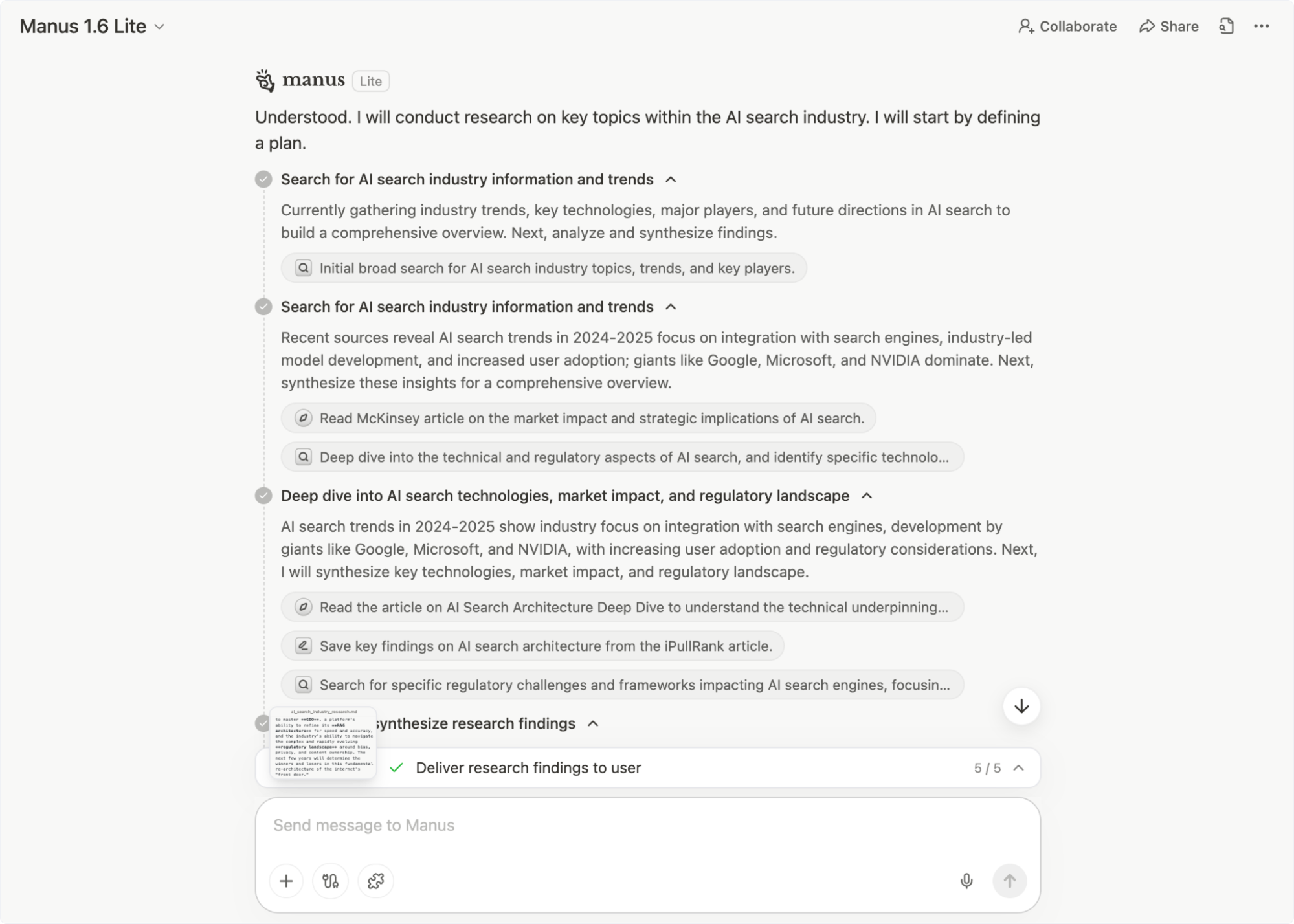
This architecture delivered two key advantages over monolithic models.
First, cost efficiency. Tasks averaged around $2. Specialized agents allowed smaller models for planning and verification, reserving expensive models for complex execution. Costs were dynamically optimized per task.
Second, transparency. Users could inspect the VM’s file system, view intermediate outputs, review generated code, and understand decision logic. This visibility enabled enterprise adoption by allowing IT teams to audit agent behavior and meet compliance requirements.
The architecture was built on what founder Xiao Hong called a "kitbashing" philosophy - integrating existing technologies in creative ways to enhance functionality quickly rather than building everything from scratch.
This approach allowed fast iteration and immediate value while core planning systems improved.
Technically, Manus orchestrated multiple models through task decomposition and chain-of-thought techniques. It used Claude 3.5 and 3.7 for reasoning, fine-tuned Qwen for multilingual tasks, and 29 external tools including browsers, code interpreters, file systems, and APIs. Model selection was dynamic based on cost, latency, and accuracy.
By relying on third-party models instead of building its own, Manus focused entirely on orchestration. This enabled faster iteration and flexible cost structures, as models could be swapped as better options emerged.
Manus also developed “Context Engineering,” optimizing how instructions and context are provided to LLMs to handle long, complex tasks reliably. This reduced hallucinations and failures in multi-step workflows.
The company shared learnings from this work, which "became an industry standard" method according to their December 2025 update.
VM-based persistent state was critical. Unlike stateless agents, Manus preserved files and context across steps, enabling workflows like downloading, processing, and uploading data within a single execution.
This infrastructure, dedicated VMs combined with multi-agent orchestration, created capabilities difficult to replicate.
At scale, Manus processed 147 trillion tokens and created 80 million virtual computers in its first nine months. Each user effectively had a cloud computer controlled via natural language.
However, technical capability alone was not enough. Manus needed proof that its architecture delivered superior results.
They found it through systematic benchmarking.
Benchmark-driven credibility
From launch day, Manus anchored its positioning in objective performance metrics instead of marketing claims. The company reported GAIA benchmark scores of 86.5% on Level 1, 70.1% on Level 2, and 57.7% on Level 3, outperforming OpenAI’s Deep Research across all tiers. These weren’t internal metrics or cherry-picked examples, but standardized benchmarks anyone could verify.
This changed how people evaluated the product. Instead of asking “Is this better than ChatGPT?” based on subjective experience, analysts and users could point to concrete numbers. Manus scored 86.5% where competitors were in the 70s. That shift reframed it from “just another AI wrapper” into a provably superior autonomous agent.
That credibility spread quickly. Tech influencers didn’t need to rely on limited testing, they could cite benchmark results. Enterprise adopters had clear proof points to justify adoption to IT teams. Investors evaluating dozens of agent startups had measurable differentiation to rely on.
The benchmark focus also shaped how the product evolved. The team prioritized what could be measured, optimizing for multi-step reasoning, accurate code generation, and reliable workflow execution. This created a tight feedback loop. Better performance led to stronger benchmark scores, which drove coverage and user growth.
It reinforced a key principle: subjective claims about “better AI” get ignored, but objective benchmarks cut through skepticism. The scores became Manus’s most shareable asset, leading every piece of coverage, testimonial, and investor pitch.
Combined with the multi-agent architecture, kitbashing philosophy, and Context Engineering approach, this formed the technical foundation.
But technical strength alone wasn’t enough. Manus still needed distribution.
They found it in a launch strategy that turned constraints into demand.
The viral launch: Engineered scarcity and influencer amplification
Manus executed a scarcity-driven launch that generated more organic buzz than any paid campaign. On March 5–6, 2025, they released a 4-minute demo on X showing the agent managing social media and building websites autonomously. The video reached 1M+ views in under 20 hours, driven by influencer seeding and compelling demos, not ads.

Immediately after the video went viral, Manus announced an invite-only beta, citing infrastructure limits. They openly admitted they had underestimated demand, provisioning only for demonstration-level load.
Scarcity amplified demand. Within a week, the waitlist hit 2M users, and Discord grew to 138K+ members. More telling, invite codes became black-market assets in China, selling for ¥10,000–50,000 ($1.4K–$7K).
This pricing revealed extreme demand. People paid up to $7K for access based only on demos and word of mouth. Invite codes also became status symbols. Access signaled insider status, driving users to share experiences publicly, fueling FOMO and accelerating growth.
Media reinforced the narrative. Coverage framed Manus as a turning point for AI agents, amplifying urgency and attention.
The virality was not accidental. Manus seeded access strategically across key audiences:
- Rowan Cheung (The Rundown AI) received 500 invite codes, triggering competition among his audience
- Jack Dorsey amplified the launch to millions, adding instant credibility
- Victor Mustar (Hugging Face) reached the developer community
- Bilawal Sidhu published a hands-on review, showcasing real capabilities
Each influencer activated a different segment, creating overlapping waves of demand.
This wasn’t broad outreach, but targeted distribution across:
- AI enthusiasts
- tech ecosystem
- developers
- practical users
Each endorsement created viral loops within its audience.
Manus also built trust through transparency. They clearly communicated capacity limits, explaining delays as a result of overwhelming demand, not artificial scarcity. This turned frustration into anticipation. Users wanted access to the product that was breaking its own infrastructure.
They also leveraged an existing advantage: 2M+ users from their previous product, Monica. This gave them built-in distribution to a relevant B2B audience. Existing users were already primed, dramatically shortening the trust cycle.
The waitlist itself became a growth engine. Each new user shared access with 5–10 others, exposing more people and driving further signups. Growth became exponential, not linear.
By the time access expanded, Manus had millions of pre-qualified users ready to activate.
Scarcity also improved the product. Beta users stress-tested the system, revealing strengths in content generation and research and weaknesses in complex coding without guidance. The team iterated quickly based on real usage before full rollout.
When access finally opened, pent-up demand converted instantly. Users who had waited weeks entered with clear expectations and many upgraded within days.
The scarcity phase didn’t slow growth. It compressed education, increased intent, and drove explosive conversion once access was unlocked.
The broader lesson extends beyond infrastructure constraints: scarcity works when it's authentic and communicates value. Users tolerate waiting for products they believe are worth it.
The black market prices, the Discord community size, and the sustained waitlist growth all signaled to observers that Manus had built something people desperately wanted.
That social proof attracted investors, press coverage, and ultimately Meta's acquisition team - all because the scarcity phase demonstrated undeniable product-market fit through revealed preferences (people paying $7,000 for invite codes) rather than stated preferences (survey responses).
Instant value through differentiated product features
Manus designed onboarding around one principle: users should experience value within two minutes. What made that compelling wasn’t just speed, but the depth of capabilities competitors couldn’t match.
The strategy focused on end-to-end execution across domains including building applications, generating designs, creating presentations, automating research, and integrating into workflows.
AI Website Builder: No-lock-in full-stack development
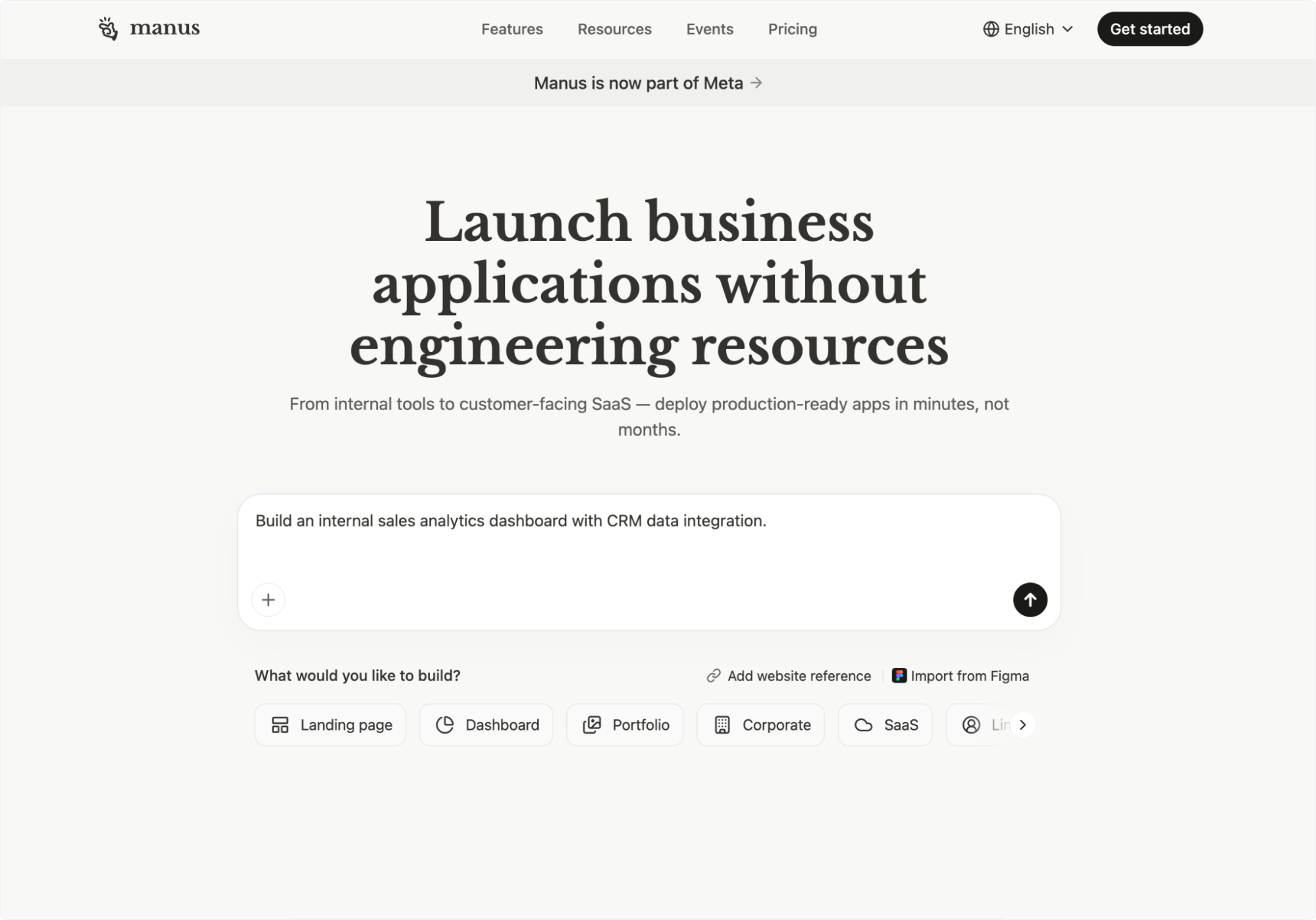
The AI Website Builder was Manus’s most ambitious differentiator. A single prompt generated a production-ready full-stack website with front-end, back-end, database, authentication, and Stripe integration.
Unlike Webflow or Wix, Manus generated real code including HTML, CSS, JavaScript, backend logic, and database schemas, all fully exportable and hostable anywhere.
The no-lock-in approach removed a major barrier. Users owned the code and could modify or deploy it freely.
SEO was built in. Manus generated meta tags, semantic HTML, structured data, and analytics, implementing best practices automatically.
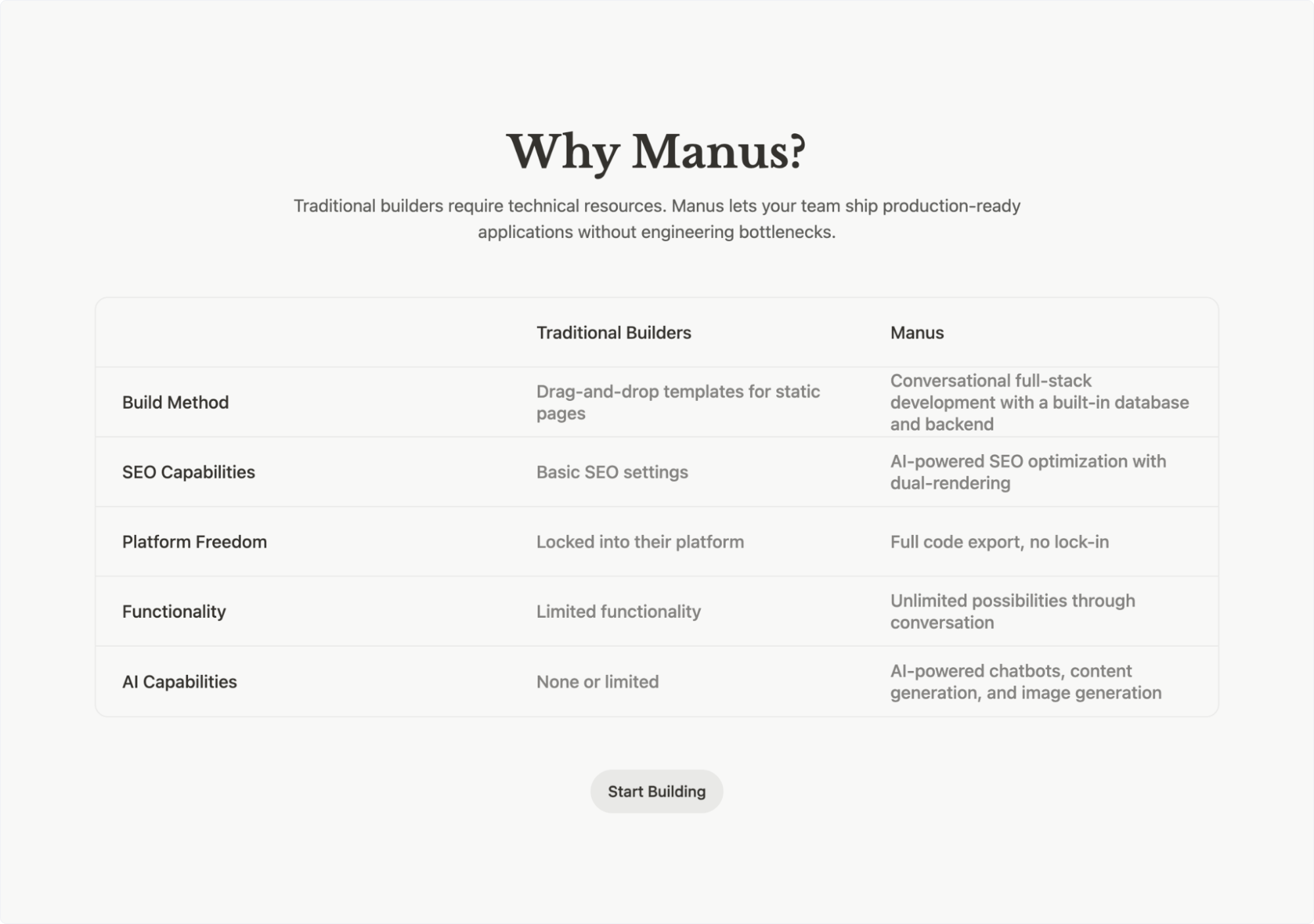
Its website reinforced this with direct comparisons highlighting AI SEO, unlimited functionality, full code export, and no lock-in against traditional builders.
AI Design Generator: Object-level editing without regeneration
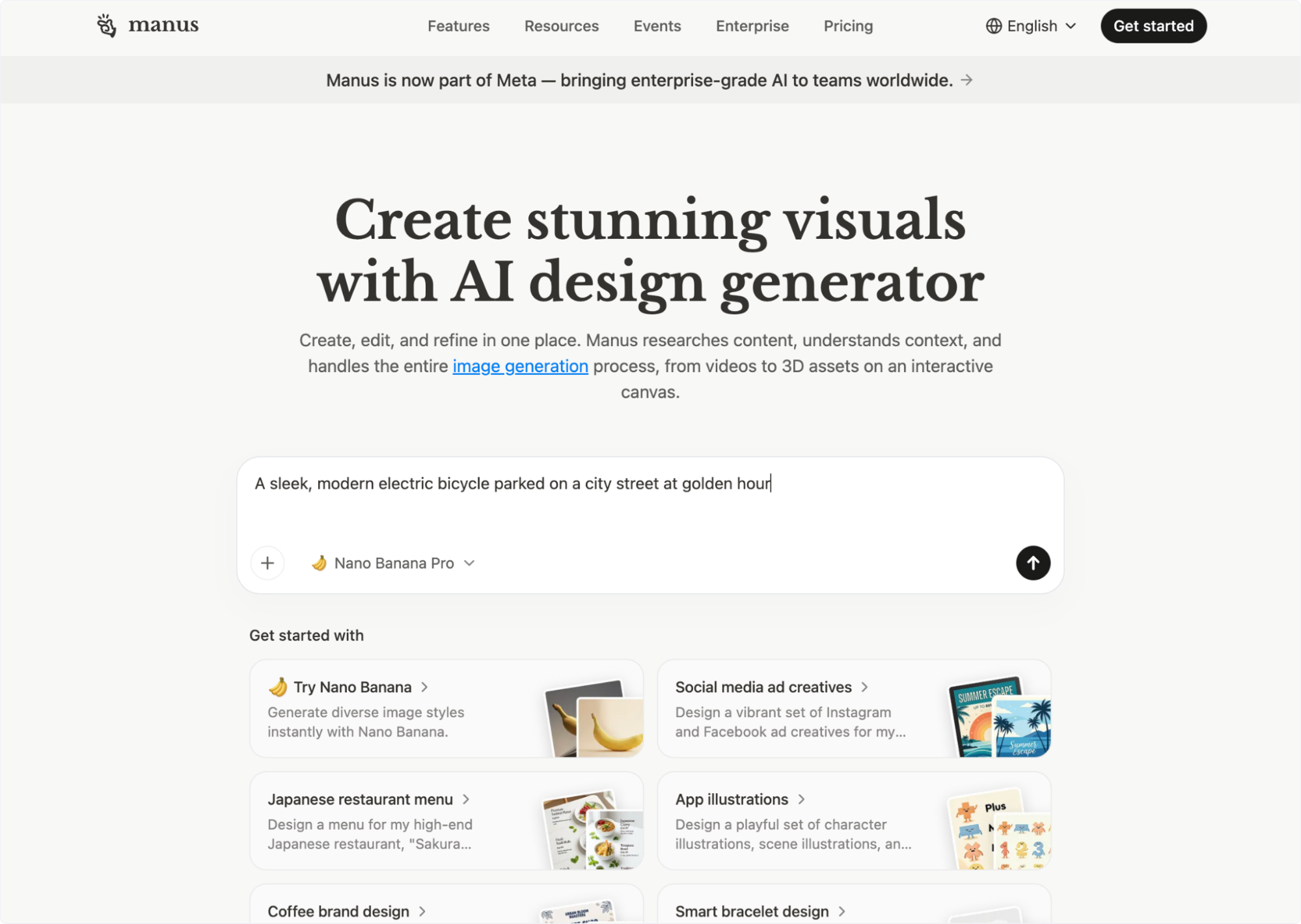
Most AI image tools required full regeneration for small changes. Manus introduced object-level editing, allowing users to modify specific elements without recreating the entire image.
This matched real design workflows. Users could change colors, backgrounds, shapes, and components incrementally.
It also solved the text rendering problem. Models produced clear, editable text with over 95 percent accuracy, enabling logos, overlays, and combined visuals without post-processing.
A key advantage was context awareness. Manus could read websites or documents, then generate designs aligned with brand identity instead of generic outputs.
Positioning highlighted:
- Object-level editing
- Editable text
- Context-aware generation
- Production-ready outputs
Nano Banana Pro AI Slides: Solving presentation generation
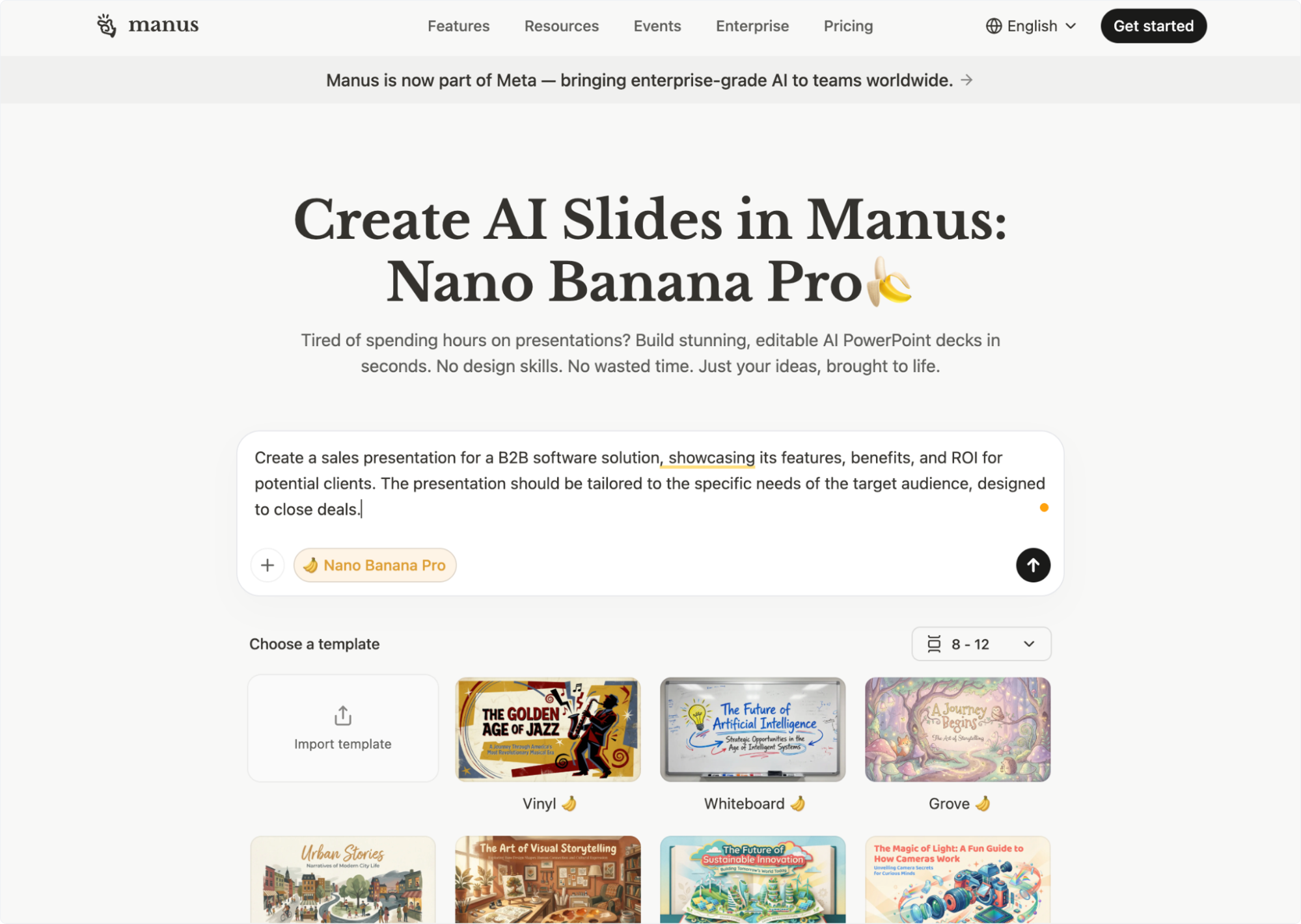
Slide generation required accurate text and structure. Manus’s Nano Banana Pro model, built on Google’s Gemini 3 Pro, was optimized for presentations.
It delivered over 95 percent text accuracy, multilingual support, and infographic generation. Users described a concept and received complete, editable slide decks downloadable as PPTX or PDF.
The system understood structure including title, agenda, content, and summary slides without manual specification.
This targeted a key pain point for professionals. Manus automated formatting, consistency, and visual clarity while leaving content editable.
Wide Research: Parallel processing at scale

Wide Research, launched in July 2025, used 100 plus parallel sub-agents to handle research simultaneously.
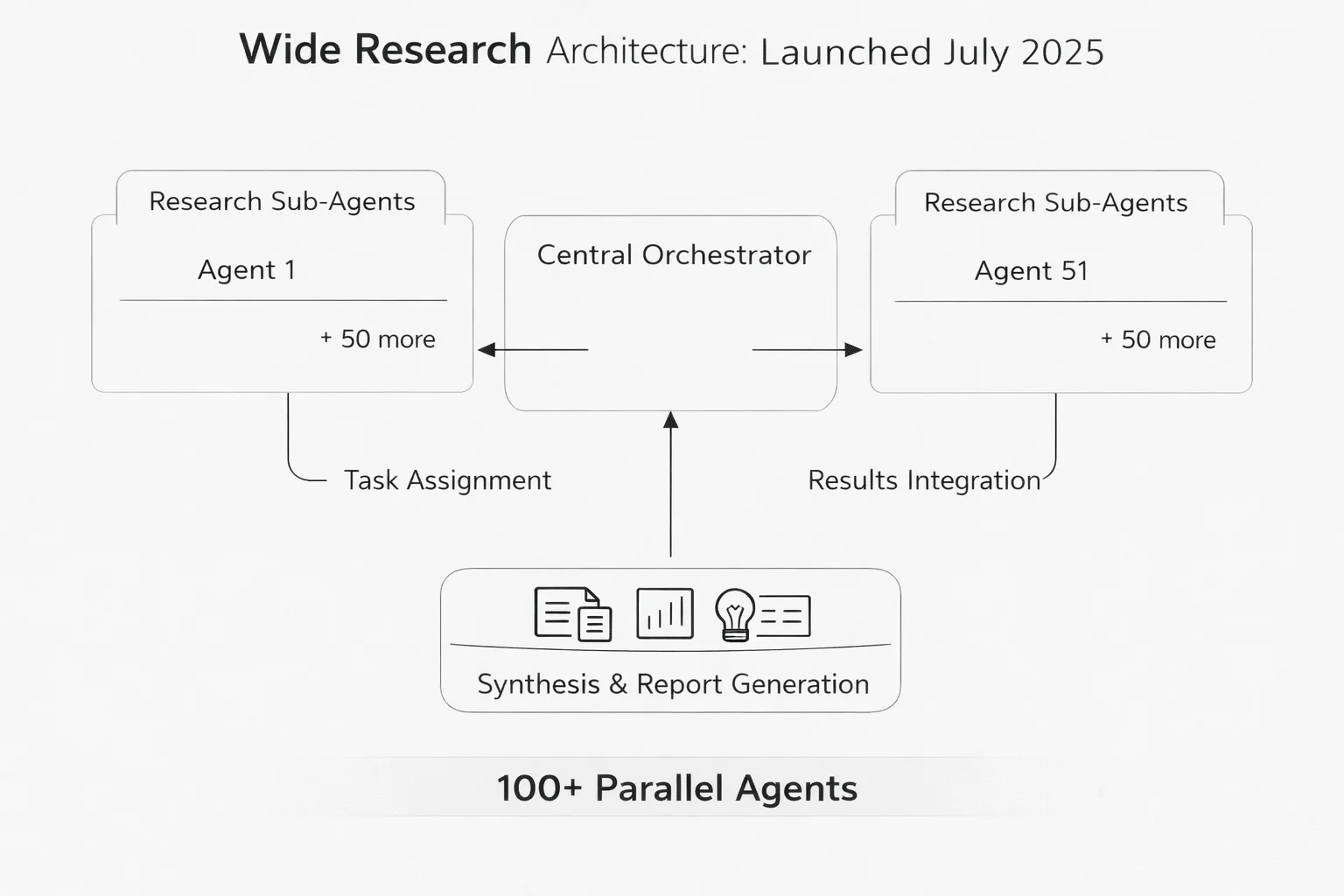
Each sub-agent ran in its own VM with fresh context, avoiding quality degradation from overloaded context windows. A central orchestrator distributed tasks and combined outputs.
The key advantage was consistent quality across all items. Item 100 received the same depth as item 1, unlike single-agent systems where quality declines over time.
Co-founder Yichao "Peak" Ji demonstrated this with concrete examples: comparing 100 different sneakers (each sub-agent autonomously analyzing one shoe's design, price, availability, then collating into structured comparison), generating 50 distinct poster designs in parallel with wide visual variety, researching competitive landscapes across dozens of companies simultaneously. The system could deliver in minutes what would take hours or days through sequential processing.
This enabled tasks like analyzing 100 products, generating dozens of designs, or researching large datasets in minutes instead of hours.
Initially released to Pro users at $199 per month, it later expanded as infrastructure scaled.
Browser Operator: Local execution
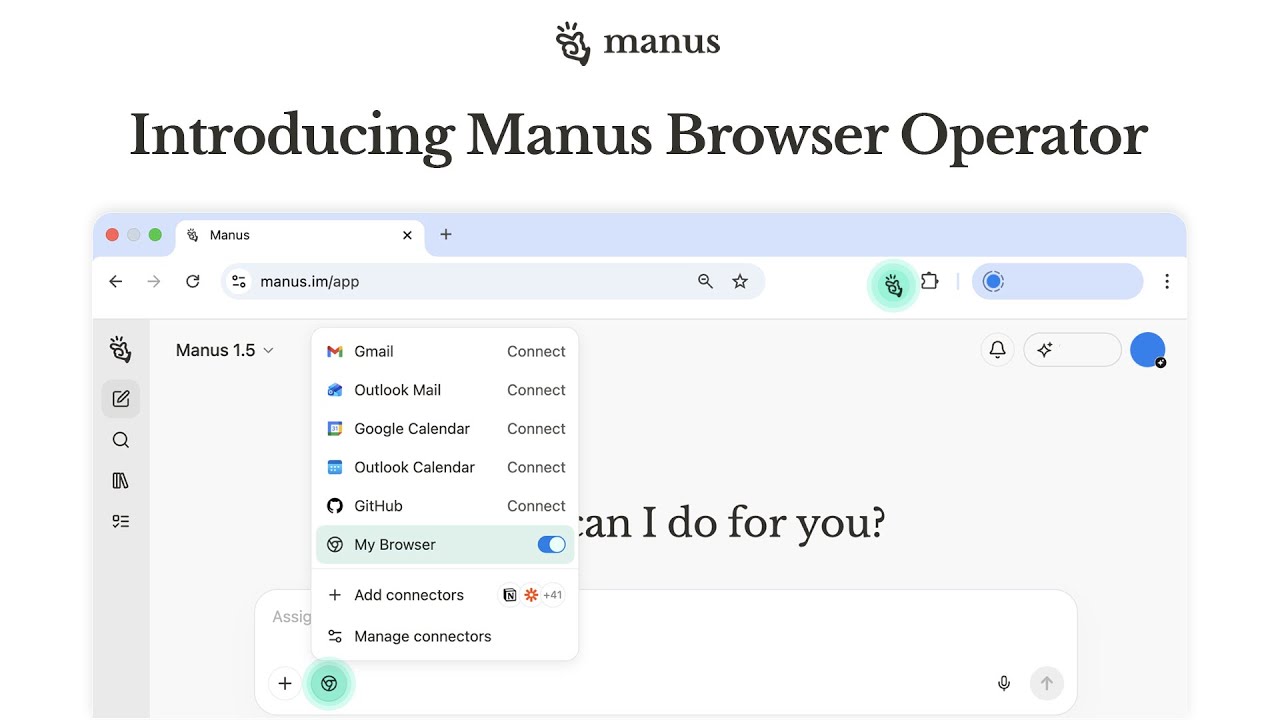
The Browser Operator, launched in November 2025, ran inside the user’s browser, using existing cookies, IP, and authentication.
This solved the main limitation of cloud agents. Instead of failing on logins, CAPTCHAs, or security checks, Manus operated directly within authenticated sessions.
If a user was logged into tools like Semrush, CRM systems, or other platforms, Manus could immediately interact with them.
This enabled workflows like replying to LinkedIn messages, accessing paid tools, retrieving orders, and applying for jobs.
Setup took seconds. Users installed the extension and started immediately without configuration.
Mail Manus: Email-to-automation
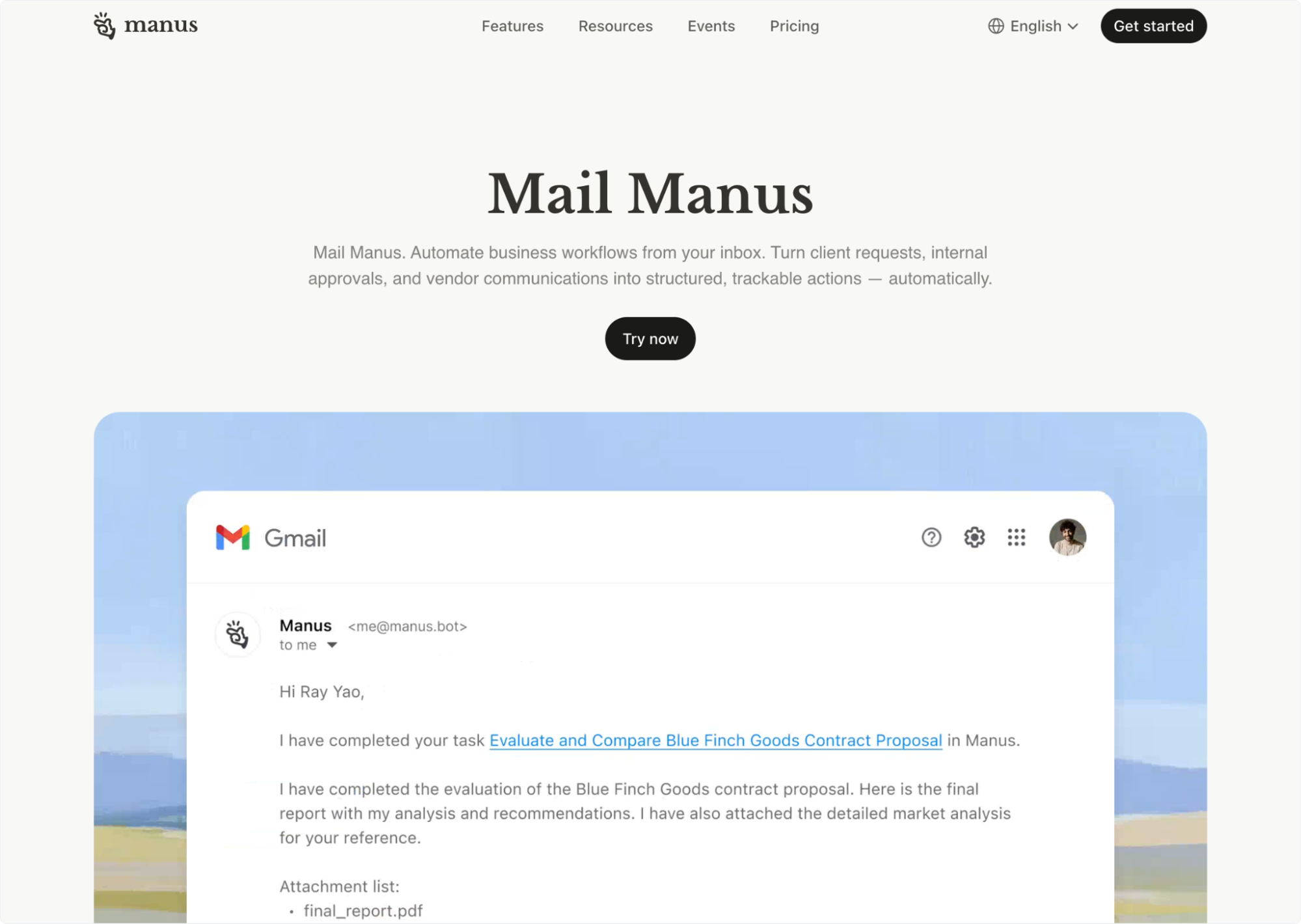
Mail Manus turned email into an automation interface. Users received a personal @manus.bot address to trigger tasks.
It could summarize threads, extract attachments, generate reports, and process long emails.
Custom workflows allowed automation by email type. Newsletters could be summarized, research compiled, and leads enriched automatically.
Collaboration was built in. Users could CC teammates, turning email into a shared automation layer.
Slack Integration: Thread-to-deliverable
Slack integration embedded Manus into team workflows. Tagging @manus in a thread provided full context for generating outputs.
It could produce proposals, PRDs, campaigns, summaries, presentations, landing pages, and analyses directly from conversations.
This reduced hours of manual work to minutes.
Enterprise requirements were addressed with SOC 2 compliance, encryption, no training on user data, and audit trails, enabling company-wide adoption.
Users could also customize output formats to match internal standards.
End-to-end execution as the core strategy
All features followed a single principle: end-to-end execution.
Manus built complete applications, created finished designs, generated full presentations, and delivered structured research.
This differentiated it from tools that required heavy post-processing. The positioning was consistent. Manus builds websites, creates presentations, and delivers outcomes, not fragments.
The system was also multi-modal. It handled code, images, documents, email, Slack, APIs, and databases across workflows.
This made it a layer across work rather than a standalone tool.
The underlying infrastructure, including VMs per user, multi-agent orchestration, integrated tools, and persistent state, enabled combinations competitors could not easily replicate.
Lesson 1: Specific use cases sell better than capabilities
Manus didn’t position itself as a “general AI agent.” It showed exactly what the product does through concrete, number-driven use cases. Instead of vague capabilities, it highlighted workflows like auditing 50 competitor websites using Semrush and Ahrefs, enriching 100 CRM leads using Crunchbase and PitchBook, or compiling market intelligence from paywalled sources. These reflected real weekly tasks, not hypotheticals.
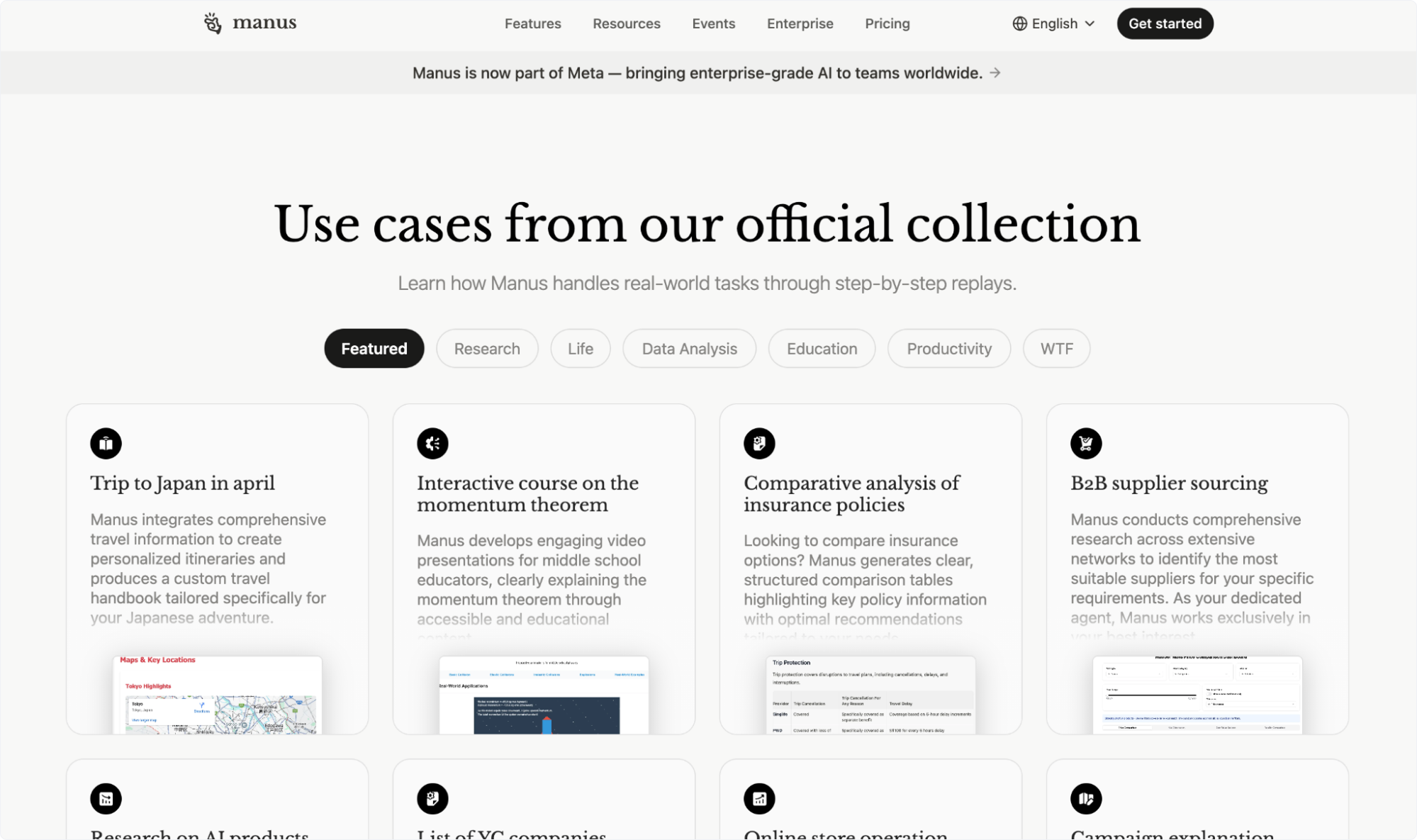
This specificity made value immediate. A marketing manager reading “audit 50 competitors” could map it directly to a process that takes 6–8 hours. Manus promised the same outcome in 30 minutes using existing tools. The ROI was obvious: remove manual work while keeping access to premium data.
Lead enrichment followed the same logic. Sales teams manually research prospects across LinkedIn, company sites, and databases, spending 10–15 hours per 100 leads. Manus automated this by researching across sources, extracting data, and delivering structured outputs ready for Salesforce or HubSpot. The value was clear: hours saved with better data quality.
Financial research targeted analysts. Aggregating insights from sources like Financial Times or Bloomberg requires tracking subscriptions, extracting content, and organizing insights. Manus automated this into structured digests, freeing 5–10 hours weekly for higher-value analysis.
Each use case translated into budget decisions. Instead of evaluating abstract capabilities, buyers could calculate ROI directly. Replace repetitive work with automation, reduce labor cost, and reallocate time to strategic tasks.
Manus expanded this across domains including real estate analysis, academic research, and job tracking, always focusing on specific workflows. This balance of breadth and specificity let users recognize their own use case immediately.
The approach scaled through Manus Academy, launched in December 2025, with 30+ hours of workflow-based training:
- Venture capital: due diligence, market research
- Private equity: financial modeling, company analysis
- Corporate finance: reporting, budgeting
- Business development: lead generation, outreach
- Data science: data cleaning, analysis
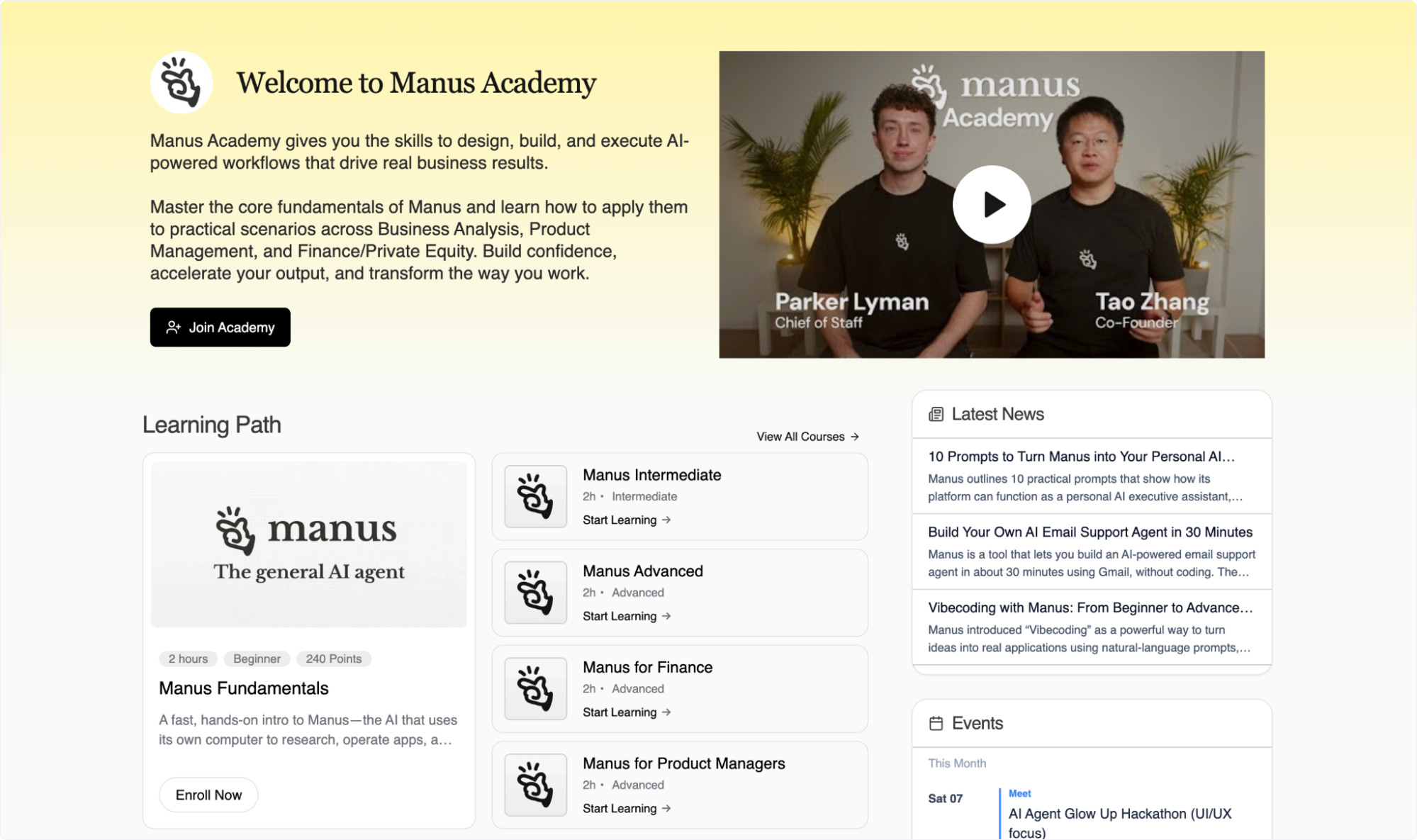
These were not generic AI tutorials but job-specific playbooks. The platform launched in multiple languages, reinforcing global reach.
User distribution reflected this. Brazil accounted for 33.37% of users, driven by strong professional networks sharing relevant use cases. When a workflow solved a real problem, it spread quickly within communities.
Use cases also fueled viral adoption inside teams. When one user automated a task like lead enrichment and shared results, others saw a finished output, not a demo. The value was immediately clear, driving organic adoption.
A standout example came from SXSW Sydney (October 2023). A user built a conference navigation tool in 15 minutes, integrating speaker data, schedules, and maps. It was adopted by organizers and used by 90,000+ attendees, demonstrating speed, utility, and validation in one case.
This contrasted sharply with competitors marketing “autonomous agents” and “advanced reasoning.” Manus showed: “Here’s how you audit 50 competitors in 30 minutes.” Users could instantly decide if it solved their problem.
The strategy also guided product development. Features were built around real workflows, not abstract capabilities. When users asked for better competitor research, the workflow was already defined. This created a tight loop between use cases, product improvements, and real-world value.
Lesson 2: Remove every obstacle from awareness to first value
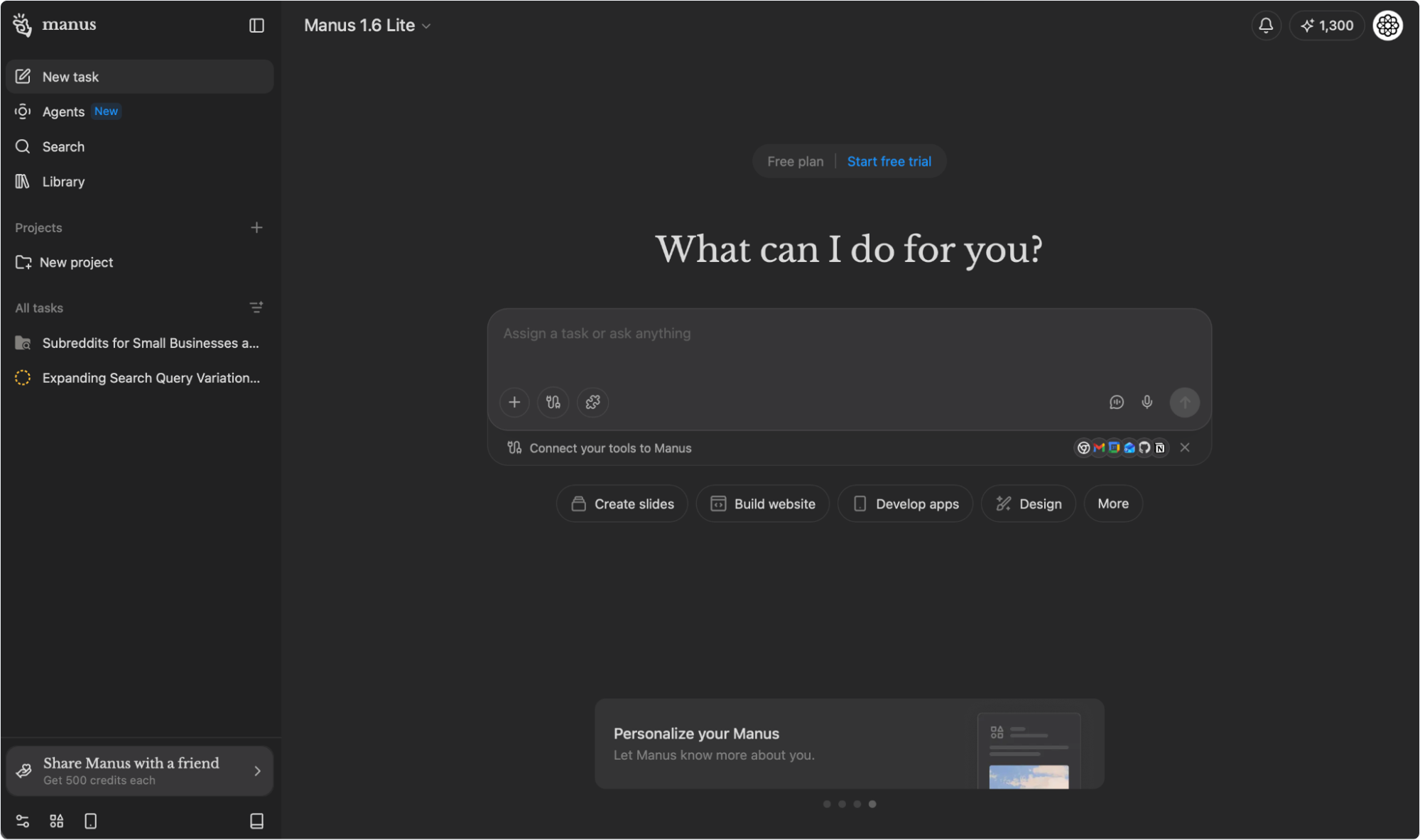
Once users got access, Manus removed every step between “I’m in” and first value. No forms, no credit card, no forced product tour, no email verification before running a task. The goal was simple: start immediately.
The credit system enabled exploration while teaching usage. Users received 300 daily credits and a 1,000 credit bonus, enough for ongoing use and 3–4 complex tasks. This let users fully evaluate value before paying.
The pricing model matched real usage:
Free tier
- 300 credits daily
- 1,000 bonus credits
- Enough for 1 daily task or several evaluations
Plus ($40/month)
- 8,000 credits
- ~8–10 complex or 40–80 simple tasks
- Concurrent tasks and priority compute
Pro ($200/month)
- 40,000 credits
- ~40–50 complex or 200–400 simple tasks
- Wide Research and higher reliability
- Bonus: Manus T-shirt
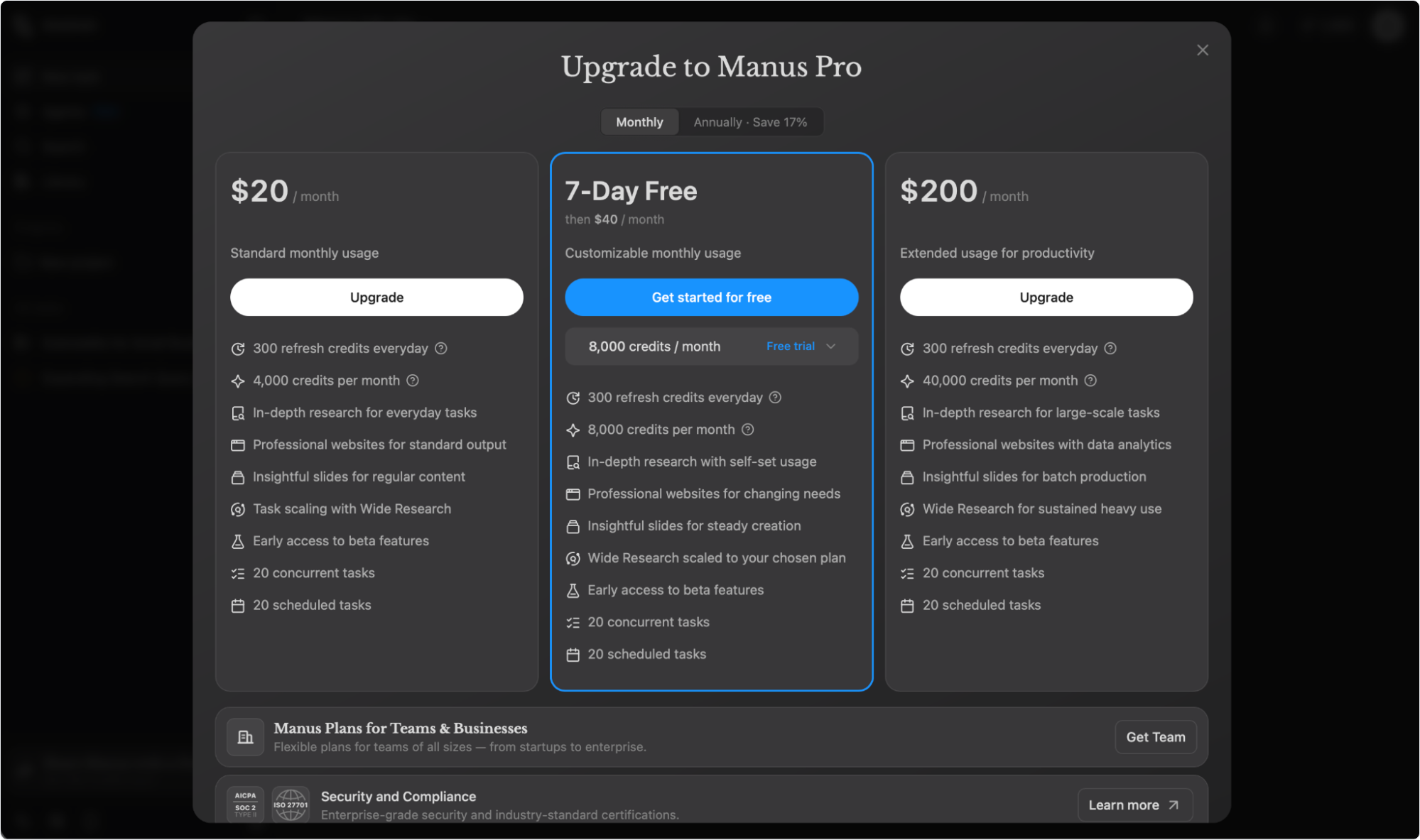
This flexible system adapted to behavior. Simple tasks used 100–200 credits, complex workflows 500–1,000, letting users optimize spend naturally.
Promotions reduced friction further. Annual plans offered bonus credits, improving unit economics and securing upfront revenue. Referral incentives turned users into active evangelists, rewarding sharing directly inside the product.
Pricing stayed simple. $40 and $200 tiers, no sales calls, no negotiation, no hidden enterprise gates. Users could evaluate ROI in days without procurement or approvals.
Persona-based framing accelerated decisions:
- Plus for individual users
- Pro for teams and heavy usage
- Team for businesses
This made pricing intuitive and self-selecting.
The results validated the model. Revenue scaled from $37M to $100M ARR in 8 months, reaching $125M run rate by year-end. With ~105 employees, Manus achieved $1.19M revenue per employee, reflecting strong product-led growth.
Growth above 20% month-over-month came from continuous friction reduction. Every improvement increased activation, reduced drop-off, and boosted conversion.
Performance gains reinforced this. Task times dropped from 15:36 to 6:55 to 3:43, making first use faster and more impressive, converting skeptics into regular users.
The frictionless approach extended to distribution. Manus launched on web, iOS, and Android simultaneously, enabling usage anywhere and expanding reach from day one.
Most SaaS companies take years to reach $100M ARR. Manus did it in months by removing friction at every step, from awareness to daily usage.
Lesson 3: Let users prove value before asking for payment
Manus designed its free tier to deliver real utility, not just tease upgrades. Instead of limiting features, it let users experience the full product on real workflows until usage naturally exceeded free limits.
The free tier included one daily task (300 credits) plus a 1,000 credit bonus. It wasn’t time-limited. Users could stay indefinitely, with limits based on usage, not time.
The key insight was simple: let users prove value themselves. Someone who automated 50 competitor audits didn’t need ROI explanations. They had already seen the time saved and could decide if $40 or $200 per month made sense. The decision became mathematical, not speculative.
This also drove organic growth. Users shared real experiences like “this saves me 10 hours a month”, not marketing claims. That credibility made adoption easier inside teams.
Upgrade triggers emerged naturally. Users hit limits when they:
- needed multiple tasks per day
- automated several workflows
- required team collaboration
These weren’t forced restrictions. They reflected growing usage and real need.
Performance improvements reinforced value during evaluation. As task times dropped significantly, users saw the product getting better while using it, increasing confidence and usage.
The results showed strong conversion. Scaling from $37M to $100M ARR on a self-serve model suggests effective free-to-paid transition. Generous free tiers that demonstrate value typically convert in the 10–15% range, implying large-scale paid adoption.
The free tier also acted as a feedback loop. By tracking what users automated, where they struggled, and which workflows repeated, Manus built features based on real demand, not assumptions.
Lesson 4: Pricing clarity and strategic tier evolution
Manus’s pricing evolved deliberately, balancing rapid growth, accessibility, and monetization.
At launch, it offered just two tiers: Starter ($39) and Pro ($199). This simplicity reduced decision friction. More tiers often create paralysis, as users struggle to predict future needs.
Within 30 days, Manus expanded to five tiers: Free, Basic ($19), Plus ($39), Pro ($199), and Team ($195 for 5 users). This wasn’t added complexity, but segmentation.
- Basic ($19) captured budget-conscious users
- Plus ($39) targeted individual power users
- Pro ($199) supported heavy usage
- Team enabled group adoption
The Team plan was especially strategic. At $195 for 5 users, it matched Plus pricing per seat while adding collaboration, shared workspaces, pooled credits, and unified billing. It targeted small teams and departments, encouraging coordinated usage instead of isolated subscriptions.
Pricing was set deliberately below approval thresholds. At $39 and even $199, most users could purchase without procurement. This enabled bottom-up adoption, spreading inside organizations without sales involvement.
The credit-based model provided predictable costs. Users paid fixed monthly fees within tier limits, avoiding variable usage-based pricing. This made budgeting straightforward and reduced purchase friction.
Manus reinforced adoption with targeted incentives:
- Annual plans with bonus credits
- Campus program rewarding referrals
- Academy rewards for course completion
- Promo periods increasing credit allocations
Each tier aligned with real usage patterns:
- Plus for individual workflows
- Pro for high-volume automation
- Team for shared, collaborative use
This enabled a natural land-and-expand motion. Users started small, proved value, then upgraded as usage grew. Teams expanded organically across departments through self-service upgrades.
Manus also targeted early-stage companies through startup programs, capturing future high-value customers early.
Even small details reinforced the model. Pro users received a Manus T-shirt, turning customers into visible brand advocates within tech communities.
Compared to traditional enterprise software, Manus eliminated friction. No sales calls, no negotiations, no procurement cycles. Users could evaluate, purchase, and scale entirely through the product.
The simplicity also reduced confusion. Fewer tiers and clear positioning meant users understood options quickly and upgraded confidently.
The results reflected this. Revenue scaled rapidly while maintaining high efficiency, driven by fast conversion, natural upgrades, and low friction.
The key principle: pricing simplicity beats pricing optimization. A slightly less optimized structure that accelerates decisions will outperform a complex one that slows users down. Manus prioritized speed, enabling faster adoption, faster expansion, and compounding growth.
Lesson 5: Build virality through product mechanics and systematic community programs
Manus engineered viral growth through two parallel strategies: product mechanics that exposed more people naturally and community programs that turned users into evangelists. Together, they sustained 20%+ month-over-month growth for nine months.

Product virality came from authentic workflow sharing. Users didn’t promote Manus, they simply used it and shared outputs. Every automation produced deliverables such as competitor analyses, enriched lead lists, or research reports, each demonstrating value directly.
The loop followed normal collaboration patterns. A marketing analyst shared automated research in Slack. The manager saw hours of work completed in minutes and asked how. The answer exposed Manus through real output, not marketing.
This created stronger credibility than campaigns. Teams experienced the value before hearing any pitch, making adoption immediate and intuitive.
Geographic concentration reinforced this dynamic. Markets like Brazil saw strong adoption because users shared specific workflows with peers facing similar problems, accelerating spread through trusted networks.
The Fellows Program: Global grassroots marketing force
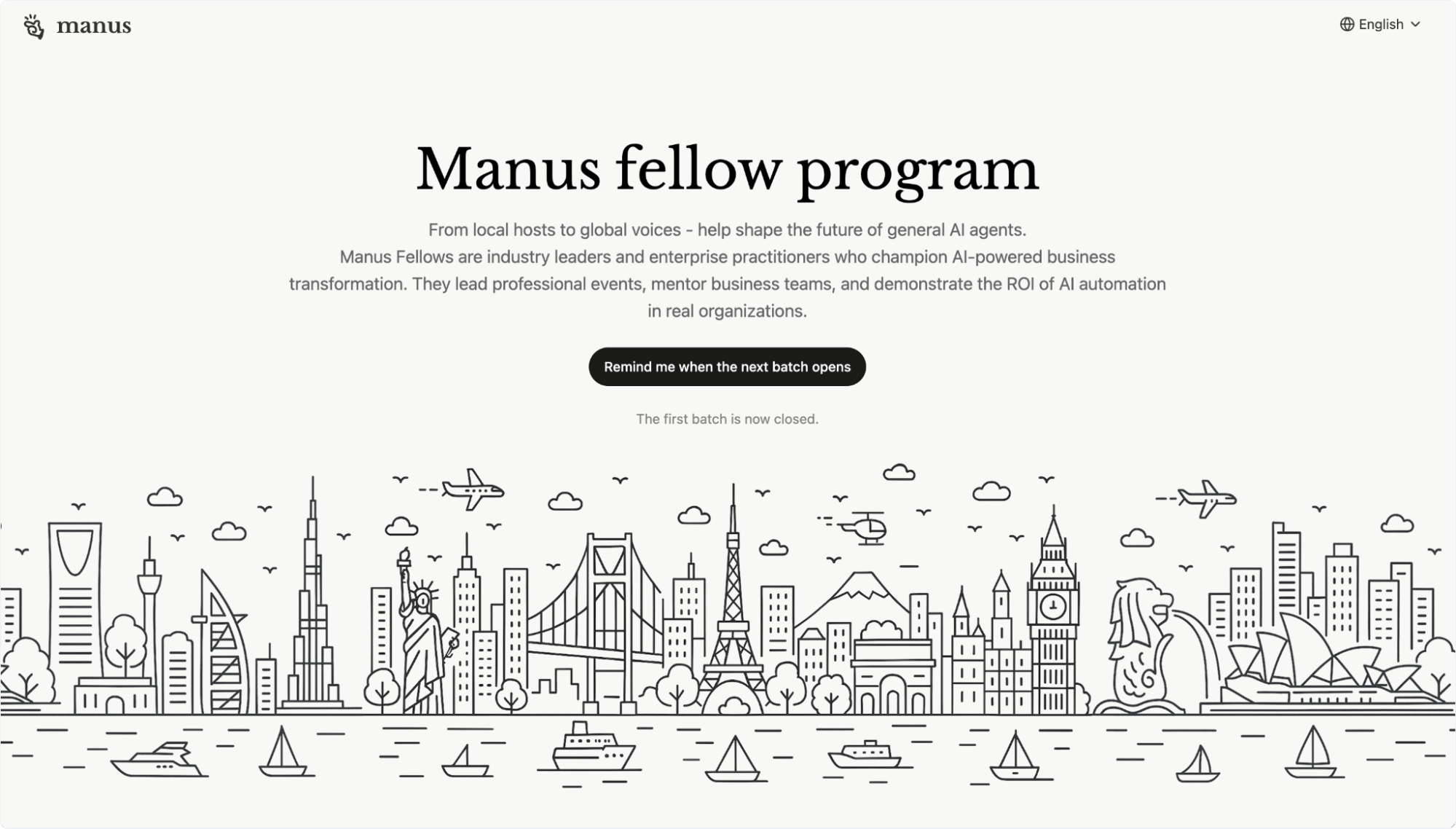
The Fellows Program built a distributed network of local ambassadors.
Fellows received:
- Mentorship from the Manus core team on product capabilities and use cases
- Early access to beta features before public launch
- Branded swag (t-shirts, stickers, promotional materials) for event hosting
- Free credits to fuel their projects and demonstrations
- Recognition as official Manus Fellows with platform badges
In exchange, Fellows committed to:
- Hosting local events: Meetups, workshops, product demonstrations
- Running hackathons: Technical challenges showcasing Manus capabilities
- Showcasing Manus in their professional networks and social channels
- Providing feedback on features and use cases from their communities
- Supporting local task creators learning to use Manus effectively
This created a global grassroots marketing layer extending far beyond the core team. Fellows acted as stakeholders, building local communities and driving adoption in cities worldwide.
The selection targeted diverse profiles: technical users, business professionals, educators, and community organizers. This ensured Manus reached multiple audiences through authentic voices, not centralized marketing.
The Campus Program: Viral loops within universities
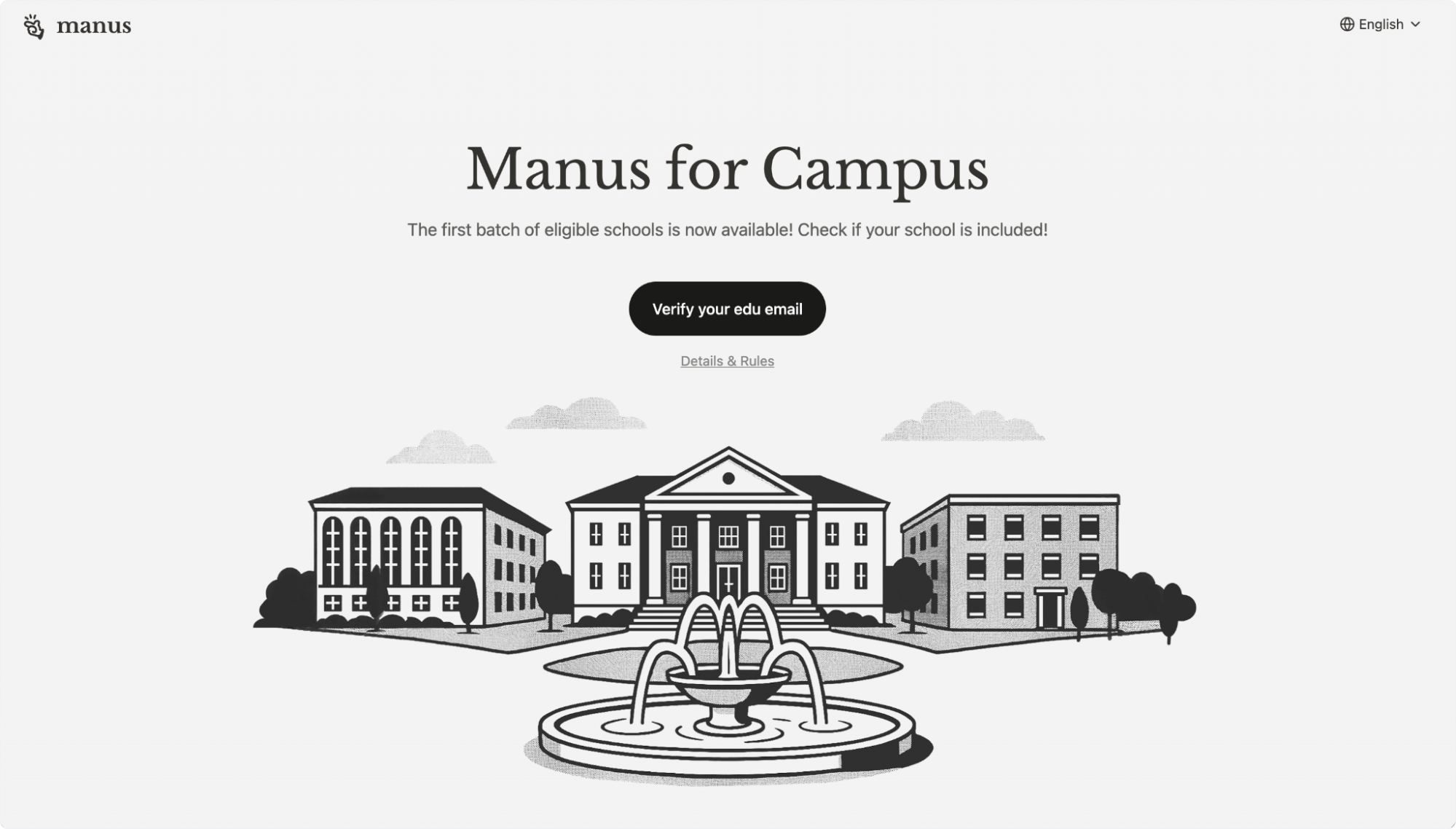
The Campus Program targeted university students through systematic growth hacking. Launched in late 2025, the initiative gave students instant access to Manus, bypassing the invite code waitlist entirely. This removed the primary barrier students faced – many couldn't secure invite codes during the scarcity phase.
The program rewarded referrals aggressively:
- 1,000 free credits for each classmate invited onto the platform
- Limited-edition Manus swag exclusive to campus users
- Priority support for academic use cases
- Showcasing of impressive student projects on official Manus channels
The program promoted specific student use cases:
- Research summarization: Analyzing dozens of academic papers simultaneously
- Paper analysis: Extracting key findings and methodologies from literature
- Resume drafting: Creating tailored resumes for different positions
- Job application tracking: Monitoring openings across job boards, researching companies
- Assignment assistance: Compiling research, structuring arguments, formatting citations
These environments amplified sharing. A student using Manus for research would immediately show classmates, who could join instantly and repeat the loop. This created rapid, self-reinforcing adoption across campuses.
The strategy also built long-term value. Students familiar with Manus carried it into their careers, extending adoption into companies.
The Manus Academy: Education as growth mechanism
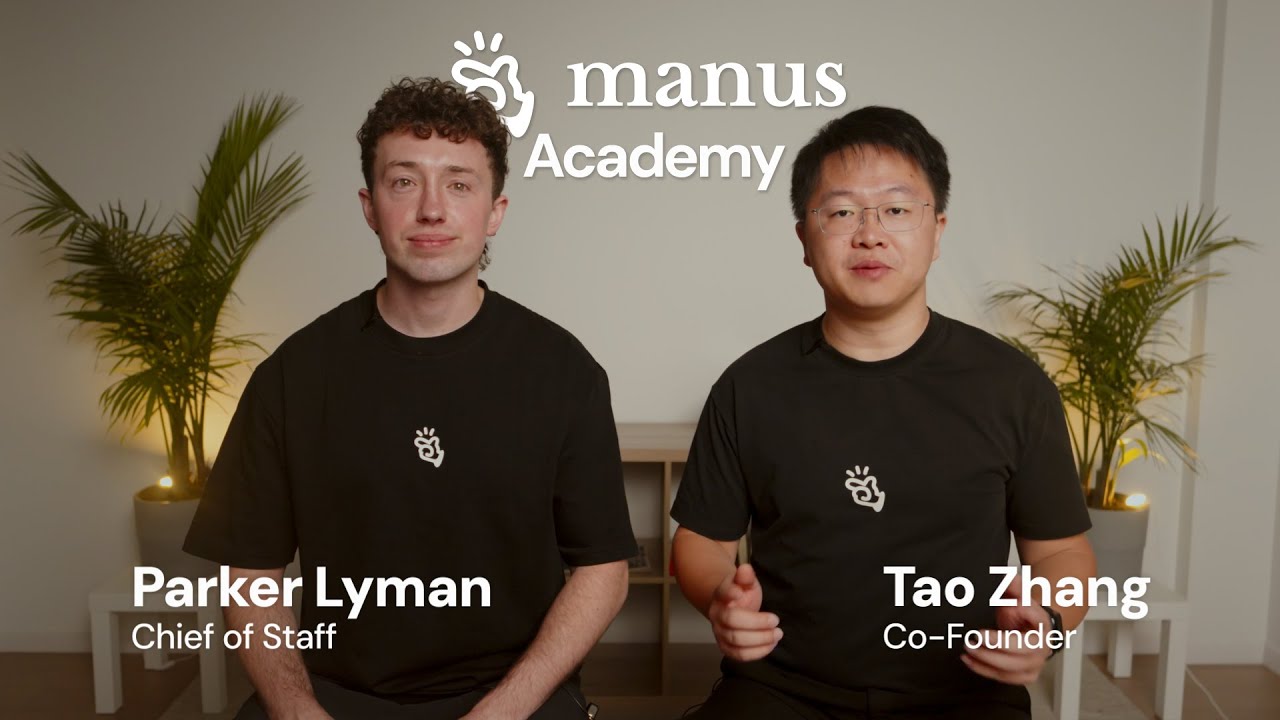
The Manus Academy turned education into a growth, retention, and engagement system.
It offered 30+ hours of structured training, focused on real workflows across professional and technical domains. Instead of generic AI education, it provided job-specific playbooks.
Engagement was driven through:
- Credit rewards for course completion
- Certifications users could share
- Gamified learning and project showcases
- A Slack-based learning community
This reduced time-to-value, increased product adoption depth, and encouraged continuous engagement.
The Academy also supported global expansion through multilingual content, aligning with Manus’s international user base.
User-generated content as marketing
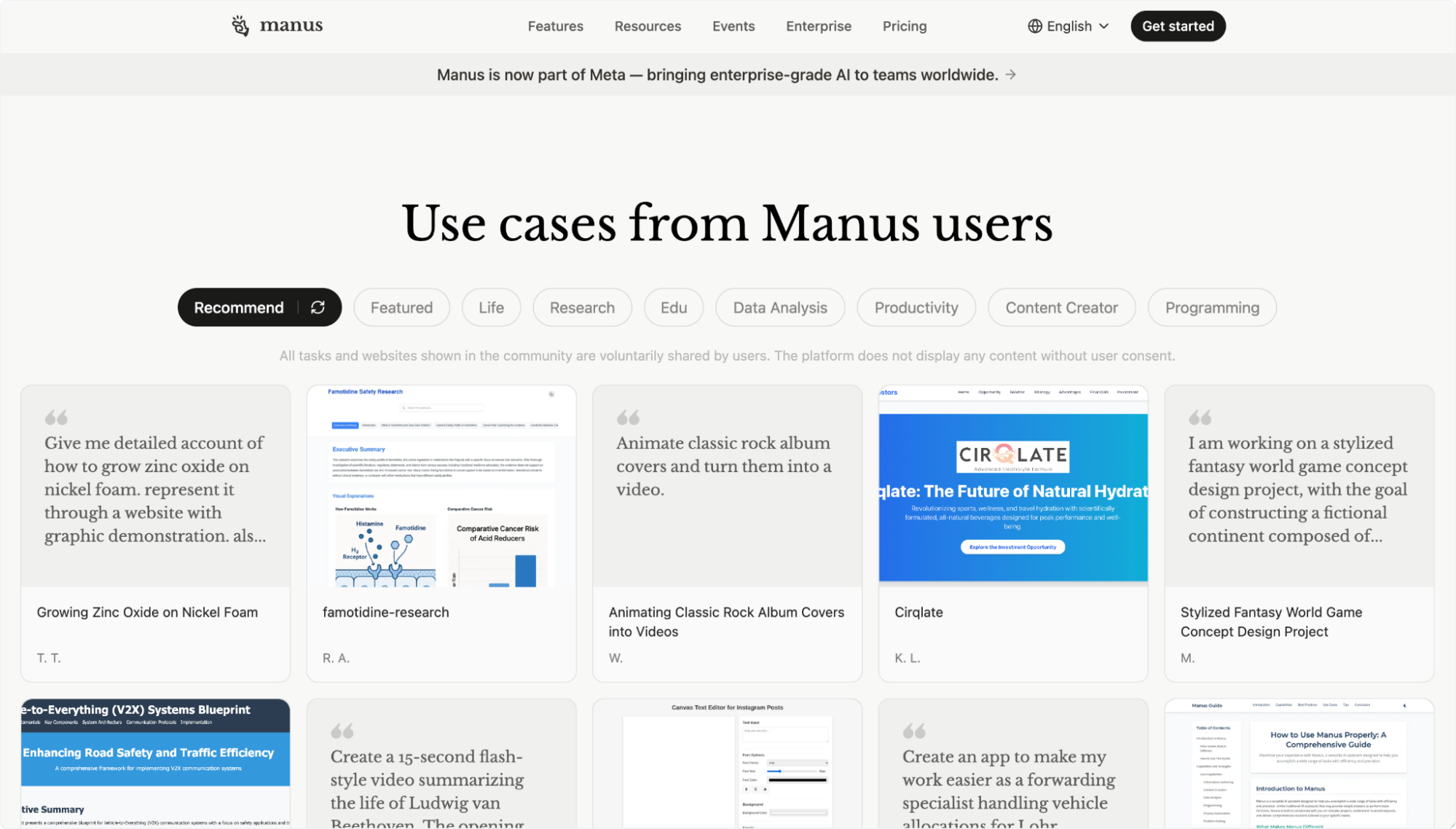
Manus amplified user success stories across its channels.
Examples included:
- Small businesses automating operations
- Students building research tools
- Professionals documenting productivity gains
- The SXSW tool built in 15 minutes and used by 90,000+ attendees
These stories created a continuous content loop. Users built projects, Manus promoted them, more users joined and created more projects.
The company reinforced this by providing playbooks and brand assets, enabling users to create their own content and guides. This turned users into distributed marketers, producing content tailored to specific industries and regions.
Product usage further strengthened growth. Large-scale usage improved performance, workflows, and reliability, benefiting all users. Shared automations within teams multiplied value, spreading adoption internally and driving upgrades.
Unlike traditional SaaS dependent on paid acquisition, Manus grew through self-sustaining loops. Each user generated new users through normal usage, amplified by structured community programs.
The result was a system where:
- Using the product created exposure
- Sharing outputs created adoption
- Community programs amplified growth
Virality wasn’t a campaign. It was built into how the product worked.
Lesson 6: Product velocity as sustained marketing momentum
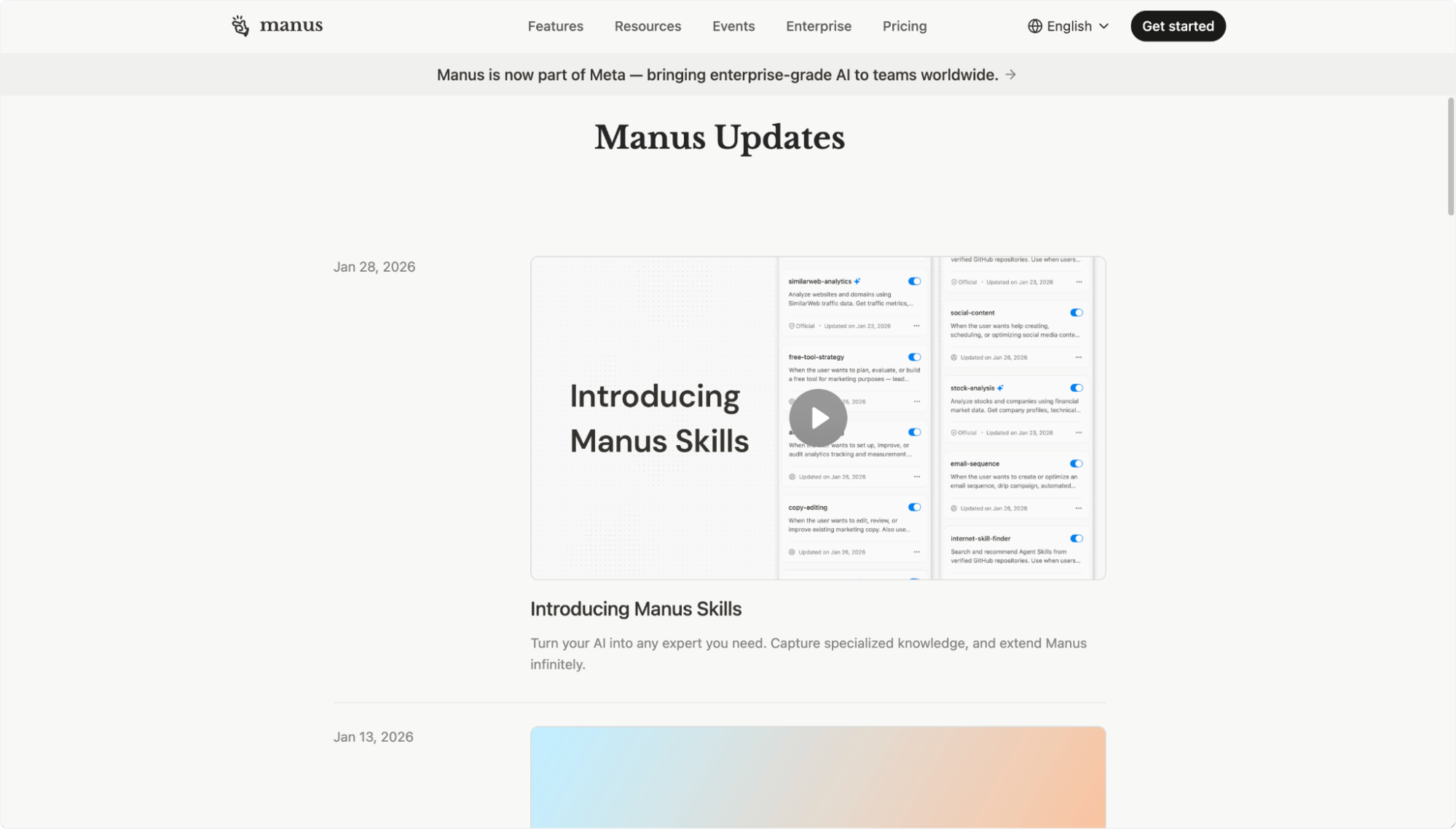
Between March and December 2025, Manus maintained a relentless release cadence that kept it in constant conversation. Each release wasn’t just a feature drop, but a marketing event driving press, social buzz, and user re-engagement.
March 2025 introduced the core agent alongside iOS and Android apps. Launching with mobile parity signaled accessibility from day one, enabling users to run agents anywhere and expanding the market immediately.
May 2025 added Team collaboration features including shared workspaces, pooled credits, user management, concurrent tasks, and unified billing. This marked a shift from individual users to teams and departments, unlocking organizational adoption.
July 2025 launched Wide Research, enabling 100+ parallel agents instead of sequential execution. Demos showed:
- 100 sneaker comparisons compiled in minutes
- 50 poster designs generated in parallel
- 250 researcher profiles analyzed at scale
This positioned Manus as a compute layer, not just an AI tool. Releasing it first to Pro users allowed controlled scaling before broader rollout.
October 2025 introduced Manus 1.5, driving 20%+ month-over-month revenue growth through improved reliability, expanded capabilities, and better model performance.
December 2025 brought Manus 1.6 Max, adding:
- End-to-end mobile app generation
- Interactive design workflows
- Enhanced multimodal outputs
- Expanded integrations
This extended Manus beyond knowledge workers to creators and builders.
Each release reinforced a loop: new capabilities generated attention, brought users back, and attracted new ones. The product stayed continuously relevant because it kept improving.
The measured performance improvements
The impact of this velocity was most visible in performance. Task times dropped from 15:36 in April to 6:55 in July to 3:43 by December, a 76% improvement.
Users experienced this directly. Early users saw acceptable speed, returning users noticed clear improvement, and regular users saw the product getting faster over time. This progression increased trust and reinforced usage.
Each improvement also strengthened conversion. Users didn’t just evaluate a static product, they saw continuous progress, making adoption feel like a compounding advantage.
At the same time, every release generated organic coverage and discussion. Major features were picked up by media, while influencers created demos showcasing new capabilities. Manus stayed visible not through paid campaigns, but through consistent, newsworthy releases.
The approach followed a clear cycle:
- Ship bold features in beta
- Gather real usage data
- Improve rapidly
- Announce updates
Each iteration created a new wave of attention while keeping existing users engaged.
This speed created a growing gap. Competitors couldn’t match the pace, and by the time they replicated features, Manus had already improved and moved forward.
Maintaining this cadence required discipline. With a relatively small team, Manus showed that velocity comes from focus and execution, not size.
The key lesson is that in fast-moving markets, continuous improvement compounds attention and differentiation. Features can be copied, but the ability to ship meaningful improvements consistently becomes the real advantage.
Lesson 7: Founder credibility and strategic partnerships accelerate early traction
Xiao Hong, Manus’s founder and CEO, brought early credibility and visibility that shaped the company’s trajectory. His previous product, Monica, launched in 2022 as an AI-powered Chrome extension, had real users and regulatory approval in China. This established him as someone who had already built and shipped working AI products before Manus launched.
That track record mattered immediately. When Benchmark led a $75M Series A one month after launch, they were backing a proven founder. Chetan Puttagunta described the team as exceptional across execution, resilience, and vision, reflecting confidence built on prior results, not speculation.
The founding team added complementary technical credibility. CTO Peak Ji Yichao had previously built widely used products, including a popular iPhone browser Mammoth 5, and a search engine Magi. His experience in browser tech and information retrieval aligned directly with Manus’s core capabilities.
The investor base combined East and West networks. Alongside Benchmark were HSG, ZhenFund, and Tencent. This gave Manus credibility in Silicon Valley and access to Asian markets, while also bringing strong distribution and partnership networks.
Importantly, the funding focused on geographic expansion, not heavy R&D. Capital was used to enter markets like the US, Japan, and the Middle East. The assumption was clear: the product was strong enough, and distribution was the constraint.
This inverted the typical AI playbook. Instead of investing primarily in model development, Manus prioritized go-to-market execution, including local teams, partnerships, and community growth. The bet was that better distribution would outperform marginal product improvements.
Government visibility added another layer. Appearance on CCTV signaled regulatory approval, which mattered for enterprise trust, especially in markets where compliance is critical.
A key strategic move was relocating headquarters from Beijing to Singapore within four months. This:
- Reduced geopolitical friction
- Enabled access to models like Claude without restrictions
- Positioned Manus as a global company
- Simplified future acquisition pathways
It also demonstrated execution ability under pressure. The team maintained product velocity while handling a complex international transition.
The Alibaba strategic partnership
The relationship with Alibaba extended beyond typical vendor dynamics into strategic partnership territory. Manus didn't just license Alibaba's Qwen models - they entered a "strategic partnership to collaborate on their AI models" according to Reuters coverage.
This partnership likely provided:
- Favorable access to Alibaba's cutting-edge LLMs before public release
- Cloud computing resources at advantageous pricing for Manus's VM-per-user infrastructure
- Technical collaboration on model fine-tuning for Manus's specific use cases
- Market validation through association with one of Asia's largest tech companies
For Alibaba, teaming with Manus offered:
- Global showcase for their Qwen models competing against OpenAI and Anthropic
- Real-world usage data from millions of Manus users improving model performance
- Enterprise credibility as Manus deployed Qwen in business-critical workflows
- Competitive positioning demonstrating Qwen's capabilities in production at scale
This created a mutual advantage, not just a vendor relationship.
Founder-led distribution amplified early growth. Founders could explain both the technical system and its real-world value, making conversations with users, investors, and partners more effective.
In early stages, this visibility compounds:
- Media focuses on the founder story
- Users trust direct communication
- Investors rely on proven execution
- Talent is attracted by credibility
Manus leveraged this across channels, from media exposure to rapid hiring and fundraising. The Series A closed quickly because investors recognized a familiar pattern: a founder who had already done it before.
As the company scaled, founder visibility became less central. But in the early phase, it accelerated everything. It shortened timelines for funding, hiring, partnerships, and adoption.
The key insight: founder credibility creates initial momentum, and when paired with strong product execution, that momentum compounds into rapid growth.
Investors valued execution over innovation
Benchmark led a $75M Series A in April 2025, one month after launch, at a $500M valuation. This wasn’t based on long-term traction, but on early velocity, founder track record, and positioning in a fast-growing category.
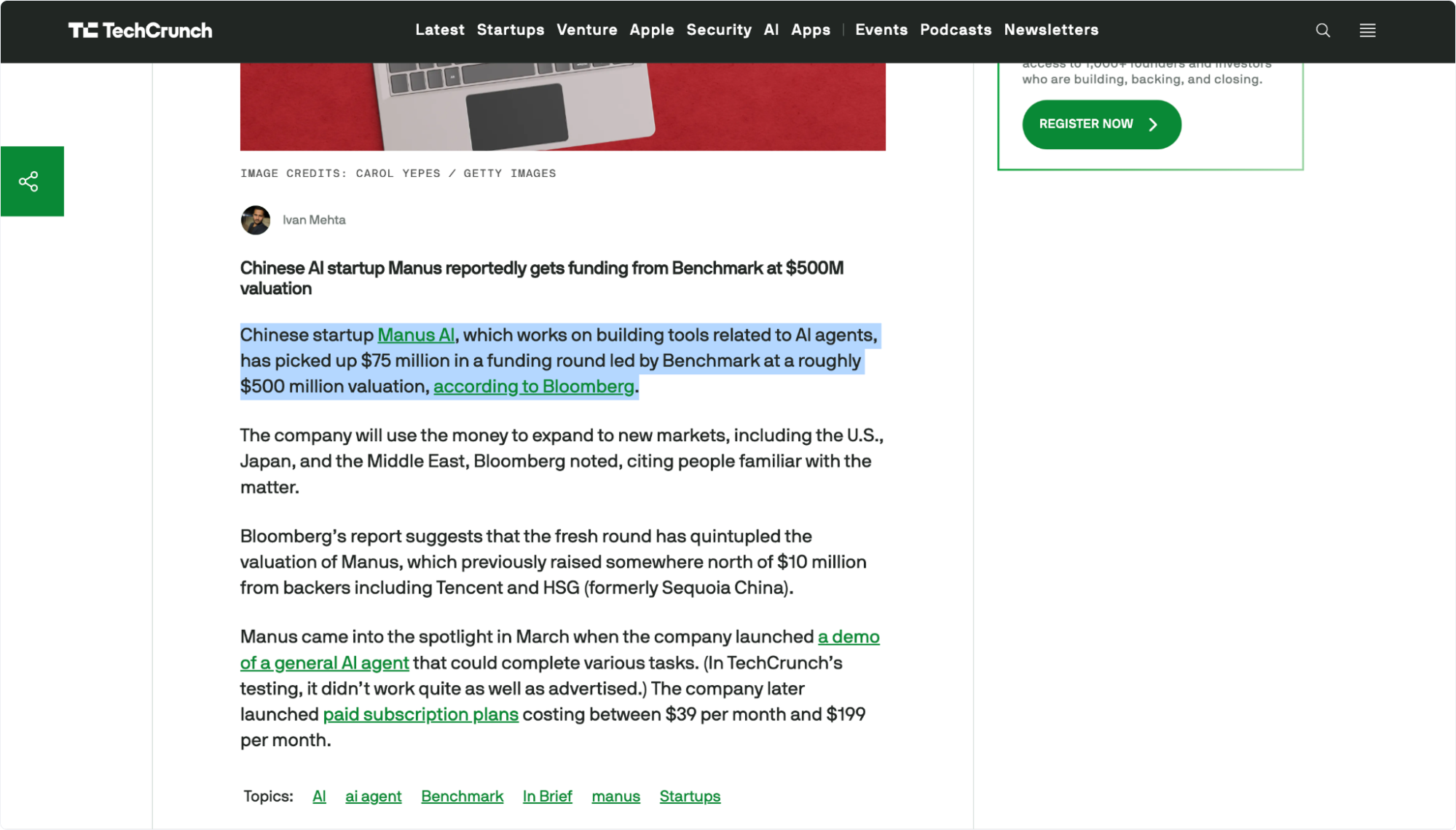
The bet paid off unusually fast. By August, Manus reached $90M ARR, and by December crossed $100M ARR, hitting nine figures in nine months, the fastest ever. The run rate reached $125M, showing continued acceleration.
Capital allocation drove this outcome. The $75M was used for geographic expansion (US, Japan, Middle East), not R&D. The assumption was clear: the product was good enough, distribution was the bottleneck.
This proved correct. Manus scaled from $37M to $100M ARR without additional funding, using revenue to sustain growth. Most companies require multiple rounds to reach this stage. Manus did it on a single round.
Efficiency was exceptional. With ~105 employees and a $125M run rate, Manus reached $1.19M revenue per employee, matching top SaaS benchmarks and exceeding most enterprise companies.
Meta’s $2B–$2.5B acquisition in December 2025 valued Manus at 4–5× its April valuation in eight months. The premium reflected execution and growth, not just financials.
Meta’s rationale was strategic. Manus provided an execution layer for AI, enabling end-to-end workflows across Meta’s ecosystem. It also supported Meta’s push into SMB automation, especially across WhatsApp’s large business user base.
Meta planned integration across platforms serving 3+ billion users, using Manus to turn AI capabilities into practical, monetizable systems.
What made this notable was what Manus lacked. It had no proprietary foundation models, relying on Claude and Qwen like competitors. Its architecture and automation weren’t exclusive.
Yet it achieved a multi-billion valuation while others struggled. The difference was execution.
Manus demonstrated:
- Solving real user friction with practical solutions
- Delivering intuitive products with instant value
- Creating viral growth through network effects
- Scaling revenue faster than any software company
- Building community systems that amplified adoption
- Shipping continuously with measurable improvements
- Deploying capital toward distribution instead of R&D
This execution capability is difficult to replicate, even with more resources.
Market timing amplified this. AI investment exceeded $200B, creating pressure to identify winners with real traction. Manus stood out by converting demand into revenue while others remained experimental.
Product-led growth companies with freemium models grow 2× faster than sales-led companies according to benchmark data. PLG companies with strong activation rates achieve 100%+ year-over-year revenue growth more than twice as often as competitors using traditional GTM motions. AI-native companies captured 41.7% of seed capital in 2024, up from 23.1% in 2020. By Series E and later stages, AI companies captured 70.2% of venture capital, reflecting investor preference for categories where GTM execution drives rapid scaling.
Meta didn’t just acquire revenue. It acquired:
- Proven go-to-market execution
- High-velocity product development
- Distribution potential across billions of users
- A 100+ person team with strong technical capability
- A working monetization model generating $125M
Post-acquisition, Manus continues operating from Singapore while integrating into Meta’s ecosystem. This allows Meta to combine technology, distribution, and monetization, while preserving what already works.
The broader shift is clear. In previous cycles, investors rewarded technical innovation. In AI, foundation models commoditize capability, while execution creates advantage.
Investors now prioritize:
- Efficient user acquisition
- Fast conversion through real value
- Predictable, scalable revenue
- Continuous execution and iteration
Manus delivered all four.
The conclusion is simple: the market rewarded execution, not innovation.
What this means for SaaS and AI companies today
Manus going from zero to $100M ARR in nine months shows that in saturated markets, distribution execution beats product innovation. They didn’t build better models, invent new tech, or create a new category. They used existing tools and won through go-to-market precision.
That execution can be broken into 12 lessons:
1. Multi-agent architecture drives efficiency and transparency
Specialized agents reduced costs to ~$2 per task while VM-based execution enabled enterprise-level visibility.
2. Benchmarks replace marketing with proof
GAIA scores turned Manus from a demo into a measurably superior product, giving stakeholders concrete justification to adopt.
3. End-to-end execution beats feature depth
Products solved complete workflows, not steps. Websites, designs, research, and automation were delivered fully, not partially.
4. Kitbashing accelerates speed
Instead of building from scratch, Manus combined existing tools, models, and distribution to move faster and focus on orchestration.
5. Context Engineering creates reliability
Strong context handling enabled consistent multi-step execution, reducing failures and improving trust.
6. Scarcity + transparency drives demand
Waitlists, invite codes, and limited access created urgency, while honest communication built trust and amplified interest.
7. Specific use cases make ROI obvious
“Audit 50 competitors” or “enrich 100 leads” turned value into clear time and cost savings, not abstract benefits.
8. Free tier proves value before payment
Users experienced real outcomes first, making upgrades a logical next step rather than a risk.
9. Simple pricing accelerates decisions
Clear tiers, predictable costs, and no sales friction enabled fast conversion and natural expansion.
10. Community systems scale virality
Programs like Fellows, Campus, and Academy turned users into structured distribution channels, not just advocates.
11. Product velocity sustains attention
Monthly releases and major performance gains kept Manus relevant and ahead of competitors.
12. Capital deployed to distribution wins
Funding focused on expansion, not R&D. Strategic moves like relocation and partnerships unlocked markets and scale.
The combined effect was 20%+ monthly growth for nine months and a $2B+ acquisition, proving that execution alone can outperform better technology.
The strategic shift
In the AI era, technology commoditizes fast. Models, tools, and capabilities become widely available within months. Feature-based differentiation disappears quickly.
What remains is distribution.
Companies that remove friction across:
- awareness
- onboarding
- activation
- conversion
- expansion
will outperform competitors, even with similar products.
Resource allocation is changing
Traditional SaaS:
- 25–30% product
- 30–40% sales and marketing
AI-native companies:
- 40–60% distribution
- 15–20% development
The product still needs to be good, but distribution determines outcomes.
Time window is shrinking
Companies now have 12–18 months to establish defensible advantages before markets consolidate.
Those advantages come from:
- owned distribution (existing users, extensions, communities)
- viral mechanics (outputs shared naturally)
- continuous improvement (constant releases)
- execution speed competitors can’t match
What actually matters
Building the product is no longer the bottleneck. Winning depends on:
- how fast users discover it
- how quickly they see value
- how easily they share it
- how consistently it improves
Manus succeeded because it optimized all four.
The real takeaway
Getting to $100M ARR is not about what you build. It’s about:
- who finds it
- how fast they experience value
- how naturally it spreads
- how well execution compounds over time
Manus compressed years of growth into months by:
- eliminating friction everywhere
- systematizing virality
- shipping continuously
- prioritizing distribution
- making strategic, hard-to-copy moves
- building on existing infrastructure
- proving value before charging
These are not abstract ideas. They are replicable decisions.
In markets where everyone has access to the same technology, the winners are the ones who execute distribution with precision.


.png)

.svg)
















.svg)



























.svg)