.png)

_%20Definition%2C%20Importance%2C%20Strategies%20%5BGuide%5D.webp)
The search market is changing. ChatGPT handles more than 2.5B searches per day. Search habits are shifting with the rise of AI search engines.
Large language models have transformed how people find information. Instead of scrolling through 10 blue links and visiting multiple websites, users now get direct, synthesized answers in seconds.
This new approach to content optimization is called Answer Engine Optimization (AEO), and it's quickly becoming essential for any brand that wants to stay visible in the age of AI search.
In this guide, you'll learn everything you need to know about AEO, from core strategies to implementation tactics that get your content cited by leading AI answer engines.
What is Answer Engine Optimization (AEO)?
Answer engine optimization (AEO) is the process (set of activities) of optimizing websites and content to appear as cited sources in AI search engines, such as ChatGPT, Claude, Gemini, and Perplexity.
Most AI answer engines use a process called Retrieval-Augmented Generation (RAG). Instead of relying solely on what the model learned during training, RAG allows the AI to pull in real-time information from external sources before generating a response.
This is exactly why optimizing your content for these systems matters; if your site is one of the sources the AI retrieves from, your content can directly shape the answers users see.
Difference between AEO and SEO
SEO is the process of optimizing a website to appear in traditional search engines, such as Google, while AEO focuses on optimizing content to appear in LLMs.
Here are more differences between AEO and SEO:
Importance of Answer Engine Optimization
AEO matters because it addresses a rapidly growing segment of the search market.
Here are the 6 important factors to invest in AEO:
1. The Search Market Is Shifting Toward AI
Traditional search engines are no longer the only source of information.
AI search engines such as ChatGPT, Perplexity, and Gemini handle billions of queries daily.
If your content isn't available to LLM crawler bots, you're effectively invisible to a growing segment of your audience.
2. AI Searches Are Growing Rapidly
ChatGPT alone processes over 2.5 billion searches per day, while Gemini has more than 650 million users.
This number is only expected to grow as more users adopt conversational AI for research, decision-making, and everyday questions.
Brands that position themselves early stand to take a share of this traffic.
3. Being a Cited Source Builds Authority and Trust
When an AI engine cites your website as a source, it acts as an endorsement of your credibility.
As times go, users trust AI-generated answers more and more, and, by extension, they trust the sources those answers draw from, making AEO a powerful way to build brand authority.
4. It Drives Referral Traffic and Conversions
Although AI answers are direct, they often include links to cited sources.
Users who click through to your site are typically high-intent visitors, meaning they are more likely to convert compared to average organic traffic.
5. Early Movers Have a Competitive Advantage
AEO is still a relatively new discipline. Brands and websites that invest in it now will have a head start in establishing themselves as go-to sources for AI engines, making it harder for competitors to catch up later.
Part of this advantage comes from how AI models are trained; content that’s included early in training or cited frequently becomes part of the patterns the models learn, making it more likely to be referenced in future responses and giving early creators more lasting visibility.
6. It Complements Traditional SEO, Not Replaces It
AEO and SEO work best together. Many of the same signals, like content quality, structured data, and domain authority, matter in both. Investing in AEO strengthens your overall digital presence and future-proofs your content strategy.
8 Answer Engine Optimization (AEO) Strategies To Implement
Being in the top positions in the Google SERP does not guarantee that you will be cited in AI search responses. AEO requires a different approach in some parts.
Here are the most important AEO strategies to implement today.
1. Structure Your Content for Direct Answers
Answer engines like ChatGPT, Perplexity, and Gemini don’t “browse” the web the same way Google does.
Instead, they extract short, accurate responses from content that is easy to scan, understand, and summarize.
That means your content must be written in a way that makes answering effortless.
Best practices for content structuring:
- Start sections with a clear answer (1–2 sentences)
- Use question-based subheadings (H2s and H3s)
- Keep paragraphs short and focused
- Add bullet points, steps, and definitions
- Avoid unnecessary fluff before the main answer
Example:
Instead of writing: “Answer Engine Optimization is a growing field that is becoming more important…”
Write: “Answer Engine Optimization (AEO) is the process of optimizing content so AI engines can cite it as a trusted source.”
The clearer the answer, the more likely it is to be used.
2. Implement Structured Data (Schema Markup)
Structured data is one of the strongest technical signals you can provide to both traditional search engines and AI answer systems.
Schema markup helps machines understand:
- what your content is about
- what entities are mentioned
- what type of page it is
- where the direct answers are located
Even though LLMs don’t rely on schema the same way Google does, structured metadata improves clarity, accessibility, and citation eligibility.
Schema types that support AEO the most:
- FAQ Schema → perfect for question-answer content
- HowTo Schema → great for step-by-step guides
- Article Schema → improves content classification
- Organization Schema → builds brand trust
- Product/Service Schema → supports transactional queries
How to validate your structured data:
Use Google's Rich Results Test to check if your schema markup is properly implemented. Simply paste your URL or code snippet, and the tool will show you:
- Which schema types are detected
- Any errors or warnings in your markup
- Missing required fields
- Suggestions for improvement
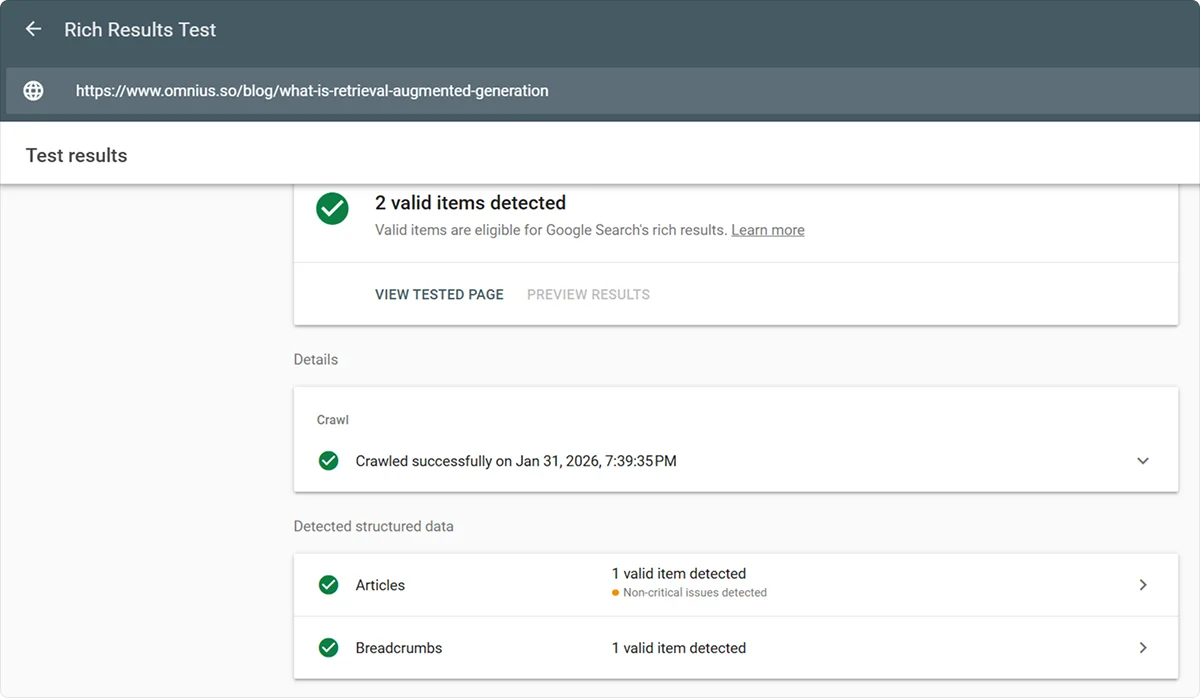
If the tool flags errors such as missing properties or incorrect formatting, fix them.
Why it matters:
AI engines prefer content that is:
- well-organized
- machine-readable
- connected to real entities
Schema is one of the best ways to provide that context.
3. Build Authority Through Backlinks and Digital PR
AEO is not just about writing good answers; it’s also about proving credibility.
AI models and answer engines strongly prioritize sources that are already trusted across the web.
That’s why backlinks remain one of the most important authority signals, even in the AI search era.
Digital PR helps you earn:
- mentions from authoritative publications
- industry citations
- high-quality backlinks
- stronger brand recognition
Backlink strategies that improve AEO visibility:
- Publish original research or statistics
- Get featured in expert roundups
- Contribute guest articles to trusted sites
- Build partnerships in your niche
- Create linkable assets (reports, tools, templates)
Expand beyond your main content cluster: Building authority isn't just about covering your core topics comprehensively; it's also about creating content that people naturally want to engage with and share.
Interactive tools, calculators, original industry reports, data visualizations, and free templates generate backlinks organically because they provide immediate value. These assets position your brand as a resource, not just a source of information.
For example:
Wise (wise.com) built significant domain authority by creating a free currency converter tool that shows real-time exchange rates with transparent fees.
This category earns them hundreds of backlinks from financial blogs, travel sites, expat forums, and news publications because it solves an immediate problem and provides genuine value beyond their core service.
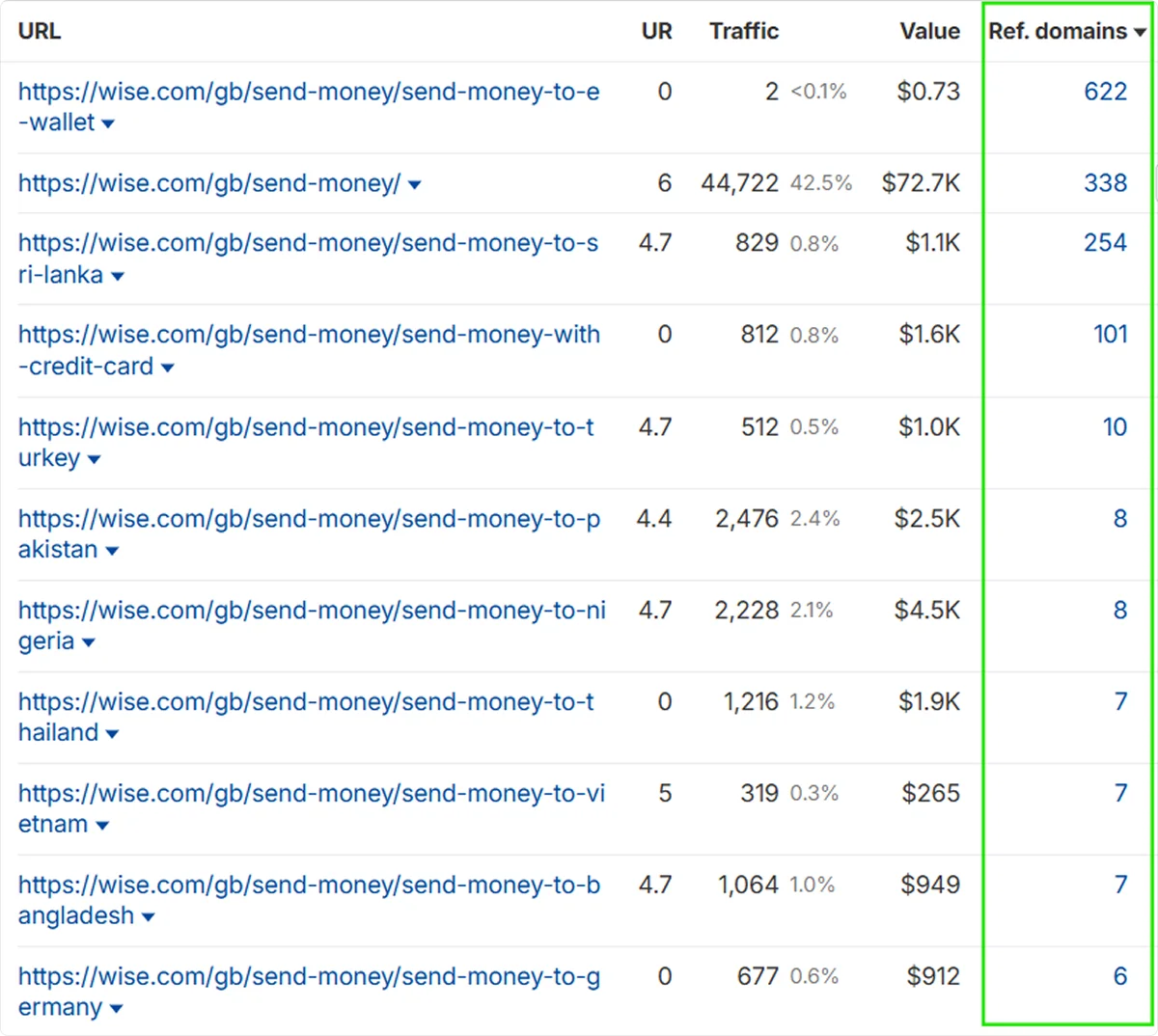
When you check their backlink profile in Ahrefs, you'll see extensive links pointing to their currency converter and comparison tools, which signal to AI engines that their domain is authoritative and worth citing.
Key idea:
If multiple trusted websites reference your content, AI engines are far more likely to treat you as a reliable source worth citing.
For brands looking to accelerate their authority-building efforts, partnering with AEO agencies that have established relationships with authoritative publications and media outlets can significantly speed up the process.
4. Optimize for Conversational and Follow-Up Queries
Unlike Google searches, AI queries are rarely one-and-done.
Users ask:
- long questions
- multi-step prompts
- follow-up clarifications
So your content should reflect natural language patterns.
Example prompts people use in LLMs:
- “What is AEO and how is it different from SEO?”
- “How can SaaS companies get cited in ChatGPT?”
- “What’s the best way to structure content for Perplexity?”
To win these, include:
- conversational phrasing
- contextual explanations
- related questions on the same page
5. Ensure Your Website Is Accessible to AI Crawlers
Even the best content won’t get cited if AI bots can’t access it.
Make sure your site is:
- indexable
- fast-loading
- technically clean
- not blocked by robots.txt
Key technical checks:
- Allow AI crawlers (GPTBot, PerplexityBot, etc.)
- Avoid heavy JavaScript-only rendering
- Use a clean HTML structure
- Keep content publicly accessible (not behind paywalls)
If AI engines can’t read your content, you won’t appear in answers.
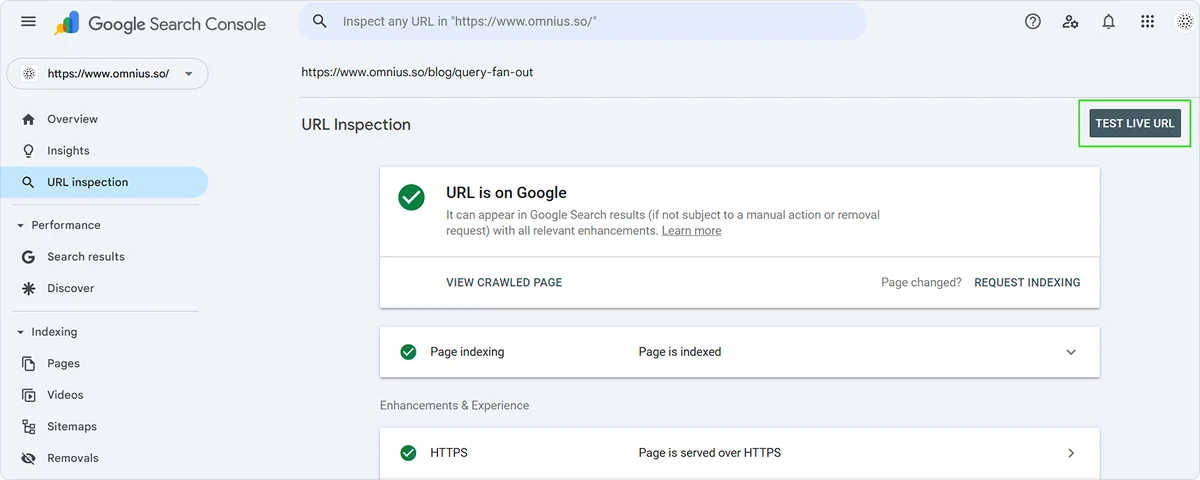
A great practice is to “Test Live URL” in the URL inspection section of Google Search Console to see how the Google bot sees your page, which is similar to how an LLM bot would see it.
6. Strengthen Brand Signals Across the Web
Answer engines rely heavily on entity-level trust.
That means they look for consistency across:
- your website
- social profiles
- media mentions
- knowledge sources (Wikipedia, Crunchbase, LinkedIn)
The more your brand exists as a recognized entity, the more likely it is to be referenced as an authority.
7. Leverage Query Fan-Out to Capture Expanded AI Search Intent
AI answer engines don’t just respond to a single question; they often expand one user prompt into multiple related sub-questions. This process, called query fan-out, allows the AI to explore different angles, examples, comparisons, and supporting context before generating an answer.
If your content only answers the literal question, you may miss out on citations when the AI references more comprehensive sources. By planning for query fan-out, you can position your content as a complete, reliable resource for AI engines.
Why Query Fan-Out Matters
For example, if a user asks:
“payment gateway for SaaS”
The AI may internally consider:
- "best payment gateway for SaaS 2026"
- “best rated payment gateway for SaaS”
- "payment gateway fees comparison"
- "SaaS payment processing options"
- "subscription payment platform features"
- "Stripe vs Braintree for SaaS"
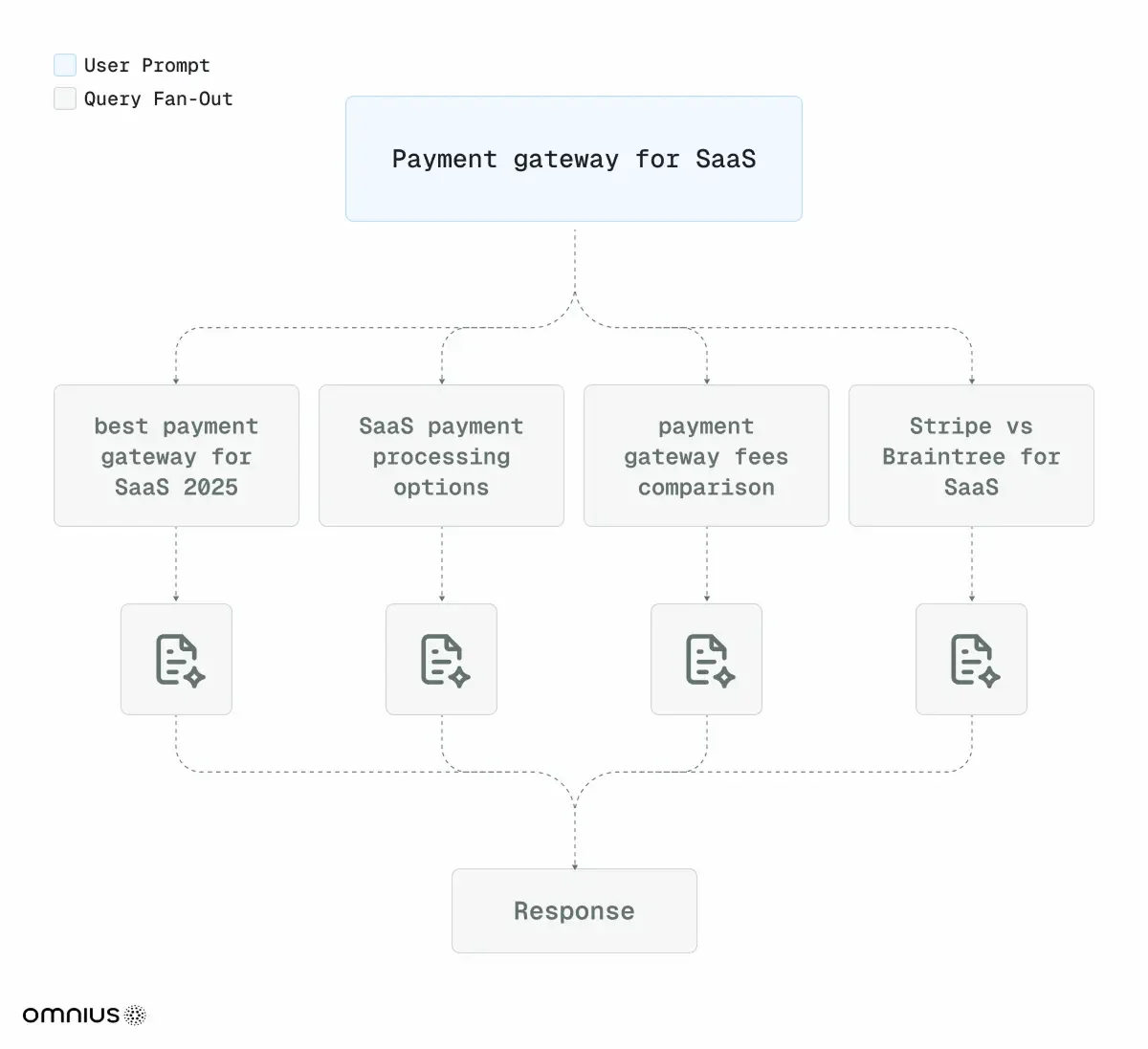
Your content needs to satisfy all of these sub-questions to maximize the chance of being cited.
How to Optimize for Query Fan-Out
- Map out related sub-questions – Think about logical follow-ups and context a user might need.
- Include context-rich answers – Provide explanations, examples, and definitions alongside your main answer.
- Use clear structure – Headings, bullets, tables, and short paragraphs help AI extract multiple answers efficiently.
- Cluster content on the same page – Cover adjacent topics or related queries in one comprehensive article.
- Anticipate multi-step prompts – Consider how a user might ask for comparisons, pros/cons, or step-by-step instructions.
- Use specialized tools to find query fan-out keywords – Tools like QueryFanout.ai allow you to discover the most relevant follow-up questions and related keywords, making it easier to cover the full spectrum of user intent.
By creating content that satisfies the full fan-out of related queries, your pages become more AI-friendly, more likely to be cited, and positioned as an authoritative source in answer engines.
8. Track Your AEO Performance with AI Search Monitoring
Once you've optimized your content for AI answer engines, the next critical step is measuring whether it's actually working.
Unlike traditional SEO, where you can track rankings in Google Search Console, AEO requires a different approach. You need to monitor:
- Which AI engines are citing your content
- What queries trigger citations to your domain
- How often you're mentioned compared to competitors
- Which pages get cited most frequently
Why tracking matters:
Without visibility into AI citations, you're optimizing blind. You won't know if your content improvements are working, which topics are gaining traction, or where competitors are outranking you in AI responses.
How to monitor AI search performance?
Manual approach: Set up custom referral tracking in Google Analytics 4 (GA4) to identify traffic coming from AI answer engines. Configure GA4 to track referrals from domains like chatgpt.com, perplexity.ai, and gemini.google.com. This shows which AI platforms drive traffic, though it won't capture citations that don't result in clicks.
Automated approach: Use dedicated AI search tracking tools like AtomicAGI that monitor your brand's visibility across multiple AI answer engines in real-time.
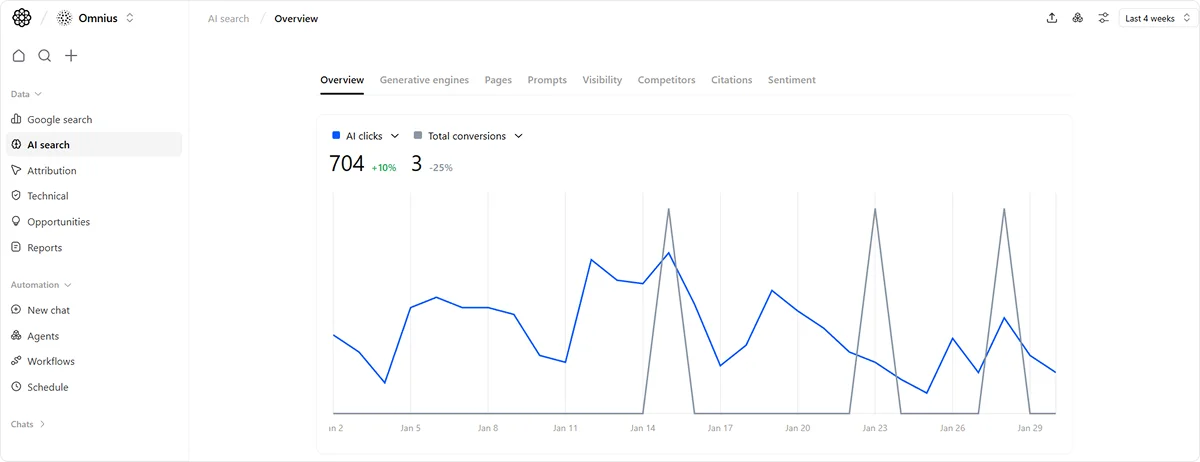
These tools allow you to:
- Monitor specific queries and see when your site gets cited
- Compare your citation frequency against competitors
- Identify which content types perform best in AI responses
- Get alerts when your brand is mentioned or dropped from results
- Track citations even when users don't click through
This data helps you refine your AEO strategy based on actual performance, not guesswork. If certain pages aren't getting cited, you know where to focus your optimization efforts. If competitors are dominating specific queries, you can analyze their approach and improve yours.
Key idea: AEO is iterative. Track what's working, double down on successful content patterns, and continuously optimize based on real citation data.
Conclusion
The way people search for information has fundamentally changed, and that shift is not slowing down. AI answer engines are no longer a side channel; they are becoming the primary way users find, evaluate, and act on information.
If your content isn't positioned to be cited by these systems, you're not just missing clicks. You're losing relevance.
But AEO isn't about chasing a new algorithm or abandoning what already works. It's about understanding that authority, trust, and content quality, the foundations of good SEO, now need to be visible to a different kind of reader: one that doesn't browse, but extracts, synthesizes, and cites.
The brands that will win in this new part of the search market are the ones that connect these dots early. They structure content so AI can use it.
They build authority so AI trusts it. They cover the full range of related questions, so AI has no reason to look elsewhere. And they do all of this while continuing to strengthen their traditional search presence.
AEO is not the future of search. It's already here. The only real question is whether your content is ready for it.
If implementing these strategies feels complex or time-intensive, consider working with an AEO agency such as Omnius, which specializes in optimizing content for AI answer engines and can help you establish authority quickly and effectively.
FAQs
What’s the Difference Between AEO and GEO?
There's no difference; AEO and GEO are the same thing. Both terms refer to optimizing content for AI answer engines.
Is AEO Worth It?
Yes. AI answer engines handle billions of queries daily, and early adoption gives you a competitive edge. Getting cited frequently reinforces your authority in future responses.


.png)

.svg)
















.svg)



























.svg)