Services
Company
Industries
Knowledge
Projects

UK


When this client came to us, they had a great product but no scalable way to get it in front of users.
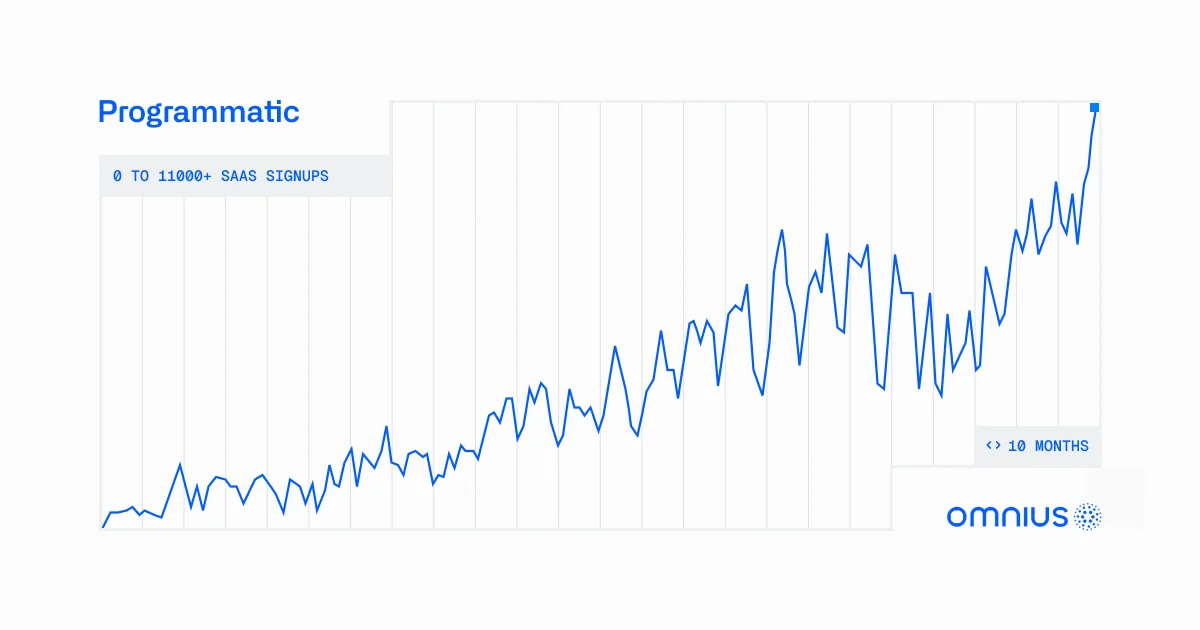
In just 10 months, we helped them grow from 67 to over 2,100 monthly signups using a fully automated programmatic SEO engine.
This case study breaks down exactly how we did it. 👇
The client is an Al image generator that helps creators and marketers AI images for different purposes and platforms without design knowledge.
Providing high-quality, customizable image templates for various use-cases, their simple creation process helps any business create 100s of visuals in no time.
With a strong product in hand but limited organic visibility, they approached us to scale their growth through a scalable and data-driven SEO strategy.
Before partnering with us, the client was seeing just 67 signups per month.
Despite a compelling tool and a solid product-market fit, they lacked:
Their existing SEO content strategy relied on general blog posts and a handful of landing pages that had the potential to rank for intent-rich, long-tail keywords, which hadn’t been used completely.
Their growth was bottlenecked by:
Before we started working on SEO execution:
They were just at the start.
So, we decided to help them grow their user base using proven programmatic SEO tips that we previously tested on our internal projects.
Overall, the results over 6 months from implementing the programmatic SEO strategy have been impressive:
👉 Within 10 months, signups exploded from 67/month to over 2,100/month (a 3,035% increase in monthly signup conversions)
👉 Peaked at 571 unique users in a single week (Jan 20, 2025)
👉 11k+ total signups added by Jan 2025
👉 Increased from 10.4% to 24.81% “from visitors to signups” average CR. The monthly conversion rate from visitor to trial held steady above 23% in the last 3 months
👉 Monthly organic traffic grew by 850% (from 102 to 8.5k)
👉 220.65% organic traffic growth in Q1 2025(17.7k) compared to Q4 2024(5.52k).
👉 300+ unique daily organic clicks on average
👉 5,742+ organic keywords the website ranks for
👉 305+ organic keywords on the first page
👉 42+ organic keywords in the top 3 positions

We identified programmatic SEO as the ideal growth channel for the client with lots of potential within the niche.
As a programmatic SEO agency, we developed and deployed a comprehensive programmatic SEO strategy designed to attract their ICP and convert and scale their growth.
Here are the core programmatic SEO tools we’ve used in our tech stack to make these efforts happen:
Here’s how we executed the strategy step by step.
Step 1. Our process began with scraping and auditing their existing library of use-cases and templates to identify naming conventions, popular product categories, and usage scenarios.
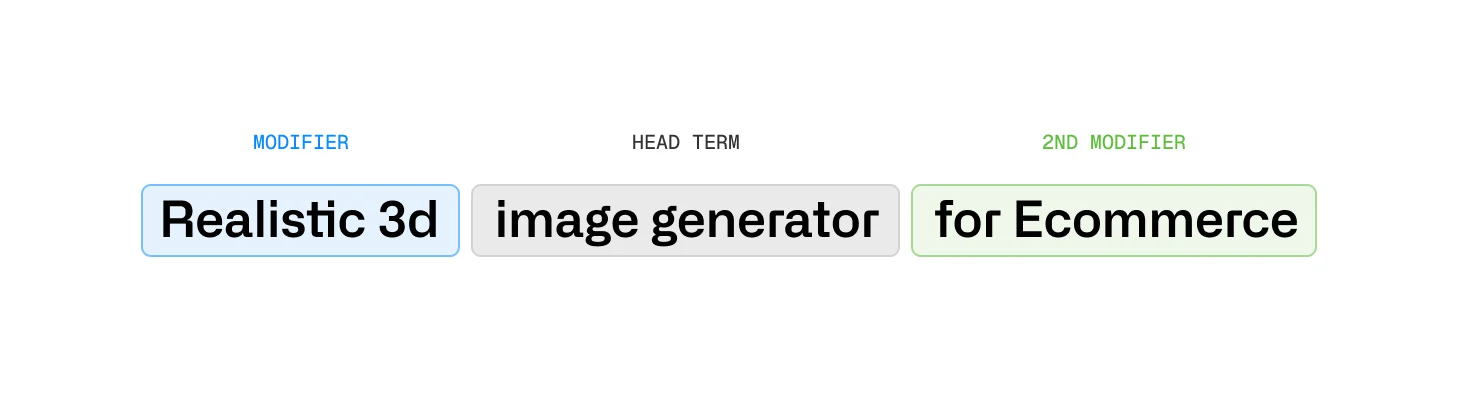
Step 2. Based on it, we identified thousands of long-tail, high-intent keywords with commercial relevance and different modifiers, such as:
Let's take a look at some example pages in this area, and how much organic traffic they generate each month:
| Keyword/clusters example | Monthly organic traffic |
|---|---|
| ai image generator for ecommerce | 7,000 |
| ai image generator for designers | 5,000 |
| ai image generator for marketers | 3,000 |
Only these three keywords have over 15k searches/month.
But we haven’t focused on them from the start - they were one of our long-term goals.
To rank for each of them, we focused on the specific long-tail keywords targeting each of those clusters.

Ultimately, ranking for these keywords strategically helped us surpass big players like Canva, Kittl, which are excelling with their programmatic SEO pages.
Step 3. To get a new dimension for producing tons of specific pages, we built a keyword matrix in Google Sheets with variables like object type, format, orientation, use case, and modifiers (e.g. "free", "realistic", "anime")
Step 4. We cross-referenced this data with Google Autocomplete, People Also Ask, and competitors’ indexed pages to expand the list and cover as much queries as possible.
Then, we clustered these keywords by group, search intent, and search volume.
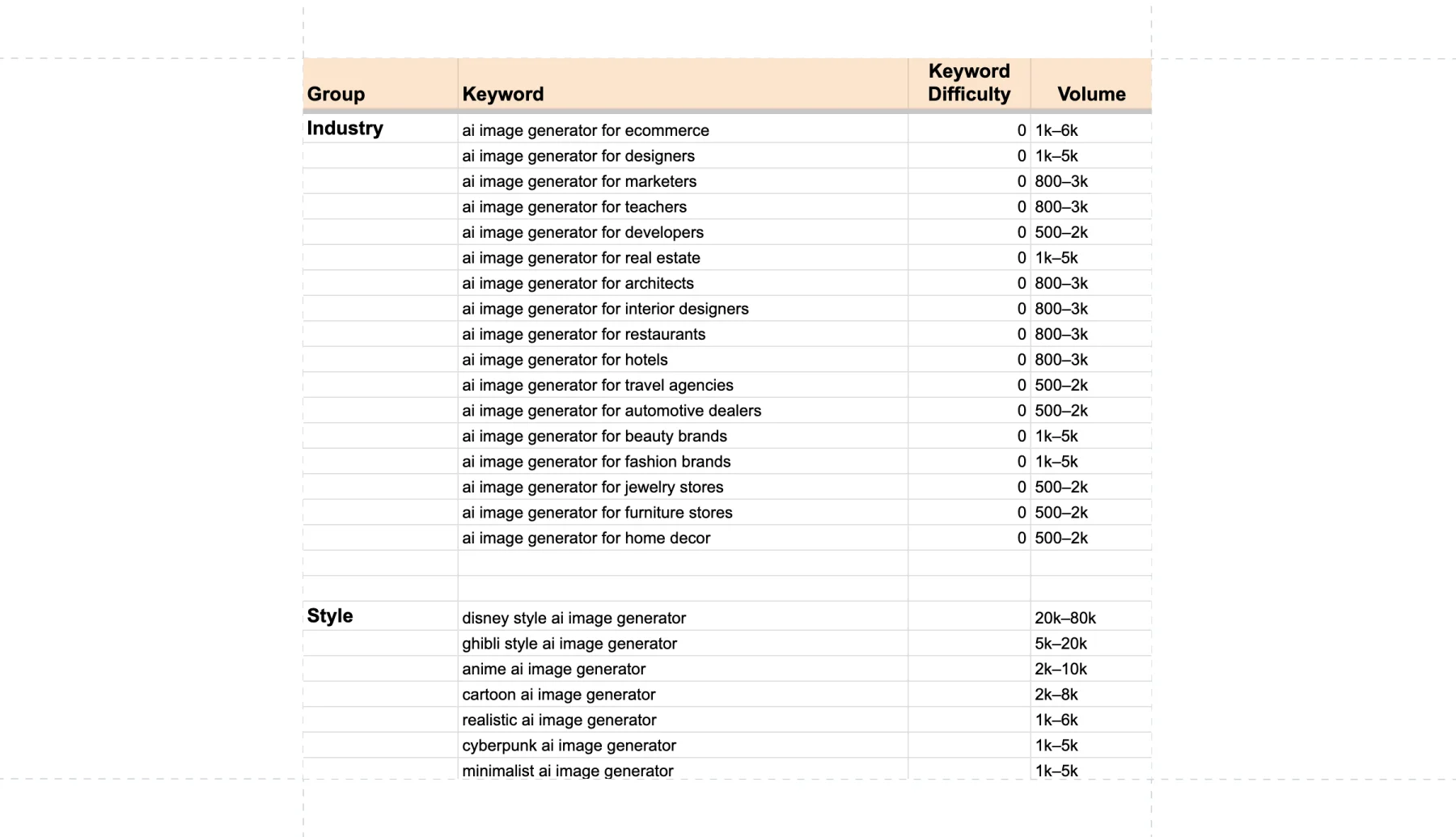
These search terms had low competition, high buying intent, and clear alignment with the client’s product offering.
So the next step was to create a content plan mapped to dynamic landing page templates, each targeting a specific keyword cluster.
Firstly, we designed a modular and SEO-optimized landing page template in WordPress that could be reused across thousands of variations.
But one type of page wasn’t enough. We needed to build dynamic templates for pages that could be populated with image categories, device types, and usage intents.
The structure within all those pages was engineered for both search engine crawlability and user conversion.
The idea for these pages was to have dynamically populated meta titles, headers, alt text, and content with keyword variations, while ensuring they aligned with UX best practices.
That’s why we needed a logic on how that dynamic content will be created and automated.
These pages were crafted in WordPress, enabling flexible content blocks and schema integration, which was a great start.
So, we needed to design the logic for each landing page to populate with keyword-specific elements from the matrix automatically:
Based on this template, we designed it to auto-instrate meta titles, descriptions, FAQs, and CTAs based on keyword intent.
Once we sorted everything, the next step was publishing the pages and releasing the batches.
Using WP All Import, we built a repeatable system to launch fully-optimized landing pages directly from our keyword matrix spreadsheet. Here’s how we did it:
This approach allowed us to launch over 15k+ pages in less than 90 days. Each page was:
To help these pages get discovered by search engines and index, and grow faster, we needed to make sure to create the proper internal linking strategy.
To ensure efficient crawlability and distribute link authority evenly across the new programmatic pages, we implemented a hub-and-spoke internal linking architecture.
This strategy helped Google index new pages faster, kept users on-site longer through suggested navigation, and maximized the flow of PageRank across the programmatic stack.
So what were the results?
👉 Within 10 months, signups exploded from 67/month to over 2,100/month (a 3,035% increase in monthly signup conversions)
👉 Peaked at 571 unique users in a single week (Jan 20, 2025)
👉 11k+ total signups added by Jan 2025
👉 Increased from 10.4% to 24.81% “from visitors to signups” average CR. The monthly conversion rate from visitor to trial held steady above 23% in the last 3 months
👉Monthly organic traffic grew by 850% (from 102 to 8.5k)
👉 220.65% organic traffic growth in Q1 2025(17.7k) compared to Q4 2024(5.52k).
👉 300+ unique daily organic clicks on average
👉 5,742+ organic keywords the website ranks for
👉 305+ organic keywords on the first page
👉 42+ organic keywords in the top 3 positions
Want to turn SEO into your biggest growth channel? Let’s talk.
Need Similar Results?
Let’s chat and see how we can help you develop a growth strategy for your SaaS/Fintech business.
6 Best Programmatic SEO Examples To Steal Ideas From
6 Best Programmatic SEO Tools To Grow at Scale
What is Programmatic SEO? Everything to Know in 2026 [Guide]
Learn how to scale user acquisition without scaling costs from our findings. We spent years exploring, so you don't have to.
Omnius is an AI-native SEO & GEO agency maximizing the probability of B2B SaaS & Fintech companies being included in AI answers, selected by agents, and chosen by humans.