.png)

.webp)
Most marketing leaders can tell you exactly how their Google rankings are doing. Ask the same person how their brand is doing inside ChatGPT, and you’ll usually get a shrug.
That gap is the biggest operational problem in B2B marketing right now. Buyers are asking AI platforms for vendor shortlists before they ever open Google. If your GEO (generative engine optimization) strategy has no measurement system behind it, you have no way to know if it's working, where the gaps are, or what to fix first.
This guide gives you that system. It covers what to measure, how to measure it without expensive tools, how to connect AI citations to actual pipeline, and how to report all of it to a leadership team that's used to seeing Google Analytics screenshots.
Key takeaways
- GEO doesn't have rankings, clicks, or search volume the way SEO does. You need a different KPI set built around citation rate, share of voice, sentiment, and AI-referred conversions.
- Start manual, with a fixed set of 20 to 50 buyer-intent prompts tested weekly across ChatGPT, Perplexity, Gemini, and Claude. Automate later.
- Set up a custom GA4 channel for AI referral traffic today. It takes about 20 minutes and the data becomes retroactive once you save it.
- Attribution is the hardest and most valuable part. Combine GA4 tracking with self-reported "how did you hear about us" data, since most AI-influenced visits get miscounted as direct or branded search.
- According to Atomic AGI's Q2 2026 dataset of 11,000+ B2B domains, AI search made up 2.48% of combined referral traffic, and nearly half of AI-driven landing pages saw zero-click behavior. Small in volume, material in intent.
What GEO Measurement Actually Means
Generative Engine Optimization (GEO) is the practice of getting your brand cited(mentioned) inside AI-generated answers from tools like ChatGPT, Claude, Gemini, DeepSeek and Perplexity. GEO measurement is the set of KPIs and tracking systems you use to prove that work is happening and driving business results.
SEO measures where you rank. GEO measures whether you get mentioned at all, whether that mention is accurate, and whether the person reading it ever visits your site. It's a different discipline that needs its own scoreboard.
Why Your Old SEO Metrics Don't Work Here
Traditional SEO reporting is built around three things: rankings, impressions, and clicks. None of those exist in a clean, comparable way inside AI search.
Here's why:
- There's no position 1 to 10 - An AI answer either mentions your brand or it doesn't. There's no ranking ladder to climb, so "we moved up two spots" has no equivalent.
- Answers are not deterministic - Ask ChatGPT the same question twice and you can get two different answers, with different brands mentioned, different framing, and different sources cited. A single test tells you almost nothing. You need repeated sampling across dozens of prompts to see a real pattern.
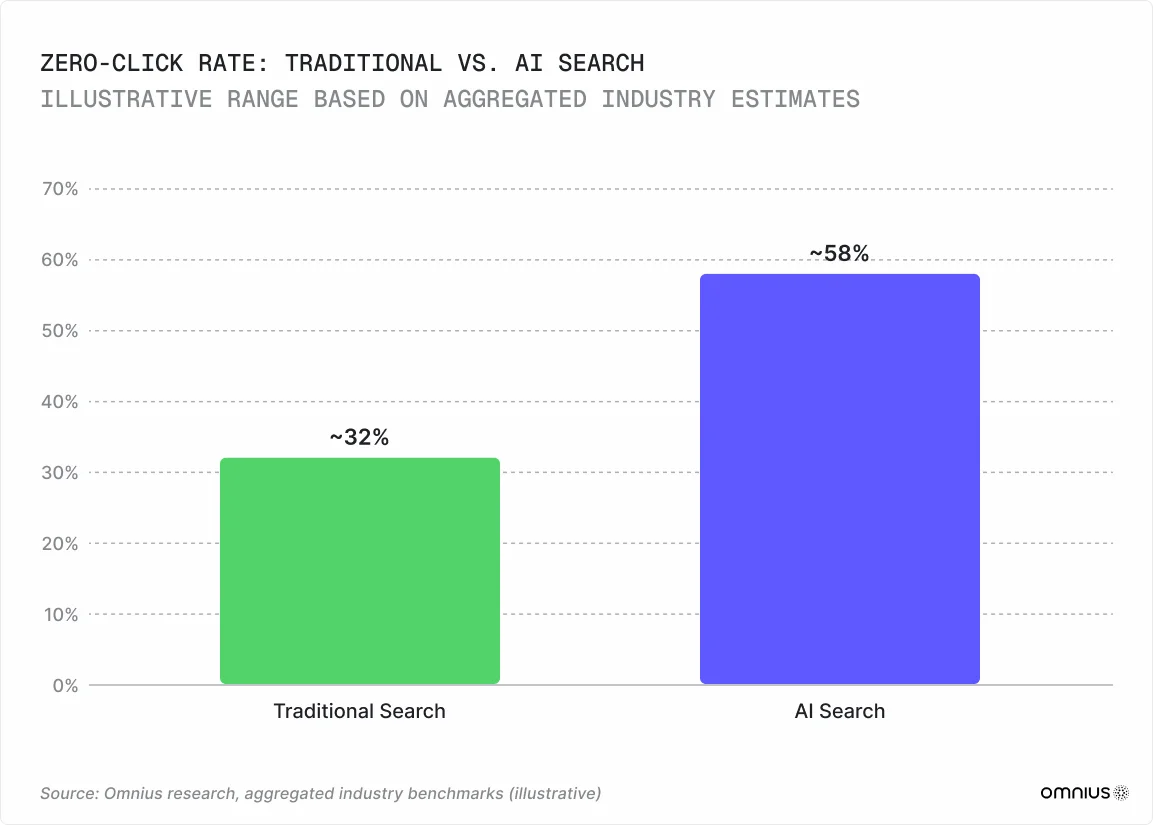
- Zero-click is the default, not the exception - When an AI platform answers the question directly inside the chat window, the user often never visits a website at all. For example, AI search made up 2.48% of combined referral traffic, and nearly half of AI-driven landing pages saw zero-click behavior. Your traffic dashboard will show nothing happened, even though your brand was just shown to a buyer.

The table below shows how the old SEO scoreboard maps onto GEO.
You don't need to throw out your SEO stack. You need a second layer built specifically for how generative engines behave.
The Most Crucial Metrics You Need to Track
GEO measurement breaks down into four layers. Skip any one of them and you get an incomplete picture.
1. Visibility metrics: are you in the answer at all
When it comes to AI search visibility metrics, here are the most important ones to track:
1. AI Visibility rate (AI mention rate) - The percentage of tracked prompts where your brand gets mentioned. This is the closest thing GEO has to a page-one ranking.
Formula: (number of prompts where your brand is shown ÷ total prompts tested) × 100
For B2B SaaS, a citation rate of 8 to 15% typically means minimal presence. 20 to 30% means your content is gaining real traction. 40%+ puts you in category-leader territory.
2. Citation share (Share of voice) - Your citations divided by total citations across your top competitors, for the same prompt set. Citation rate tells you if you're getting cited within the answers. Share of voice tells you if you're winning.
Formula: (your citations ÷ total citations across all tracked brands) × 100
To put those two more into perspective, here are the examples:
- Across 100 tracked AI prompts:
- Brand is mentioned in 30 answers = roughly 30% AI visibility rate
- Those answers contain 200 total citations
- Brand receives 20 of those citations = 10% citation share
3. Average position - Being cited is not enough if your brand consistently appears near the bottom of a prompt list. Average position measures where your brand ranks within responses that mention multiple companies, products, or sources. For example, a brand appearing first in a “best accounting software for startups” response has greater visibility and influence than one appearing eighth.
4. Prompt coverage - Not every user question is worth the same amount of attention. Prompt coverage tracks what percentage of your priority prompt clusters (comparison queries, "best X for Y" queries, pricing questions, integration questions) return your brand at all. This tells you where the content gaps sit, not just whether you're visible overall.
5. Branded vs. category citations - Split your tracking into prompts that already include your brand name ("is [brand] good for enterprise teams") versus category prompts where you're competing to be discovered ("best fintech infrastructure for marketplaces"). Category citations are harder to earn and worth far more, since that's where net-new demand gets created.
2. Quality metrics: how you're being described
Getting mentioned isn't enough if the AI platform gets your positioning wrong.
6. Sentiment - Track whether AI answers describe you as a category leader or a budget option, whether the pricing and feature information cited is current, and whether the framing matches how you actually want to be positioned.
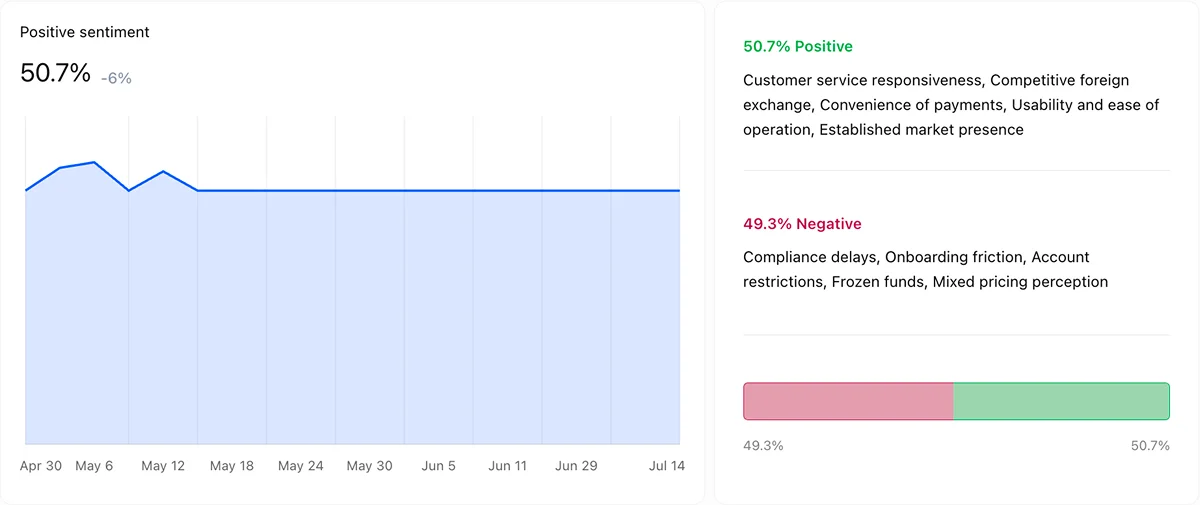
A brand with a high mention rate and stale or negative framing is often worse off than a brand with no mentions at all, since prospects are being handed inaccurate information before your sales team ever gets a chance to correct it.
7. Platform share - Citation and visibility patterns differ wildly by engine. ChatGPT, Claude, Gemini, DeepSeek, and Perplexity each pull from different sources and weight recency differently. A brand that's strong on ChatGPT can be nearly invisible on Perplexity in the same week. Track each engine separately, not as one blended number. Several AI search monitoring tools allow you to track the performance from 10+ LLM platforms.
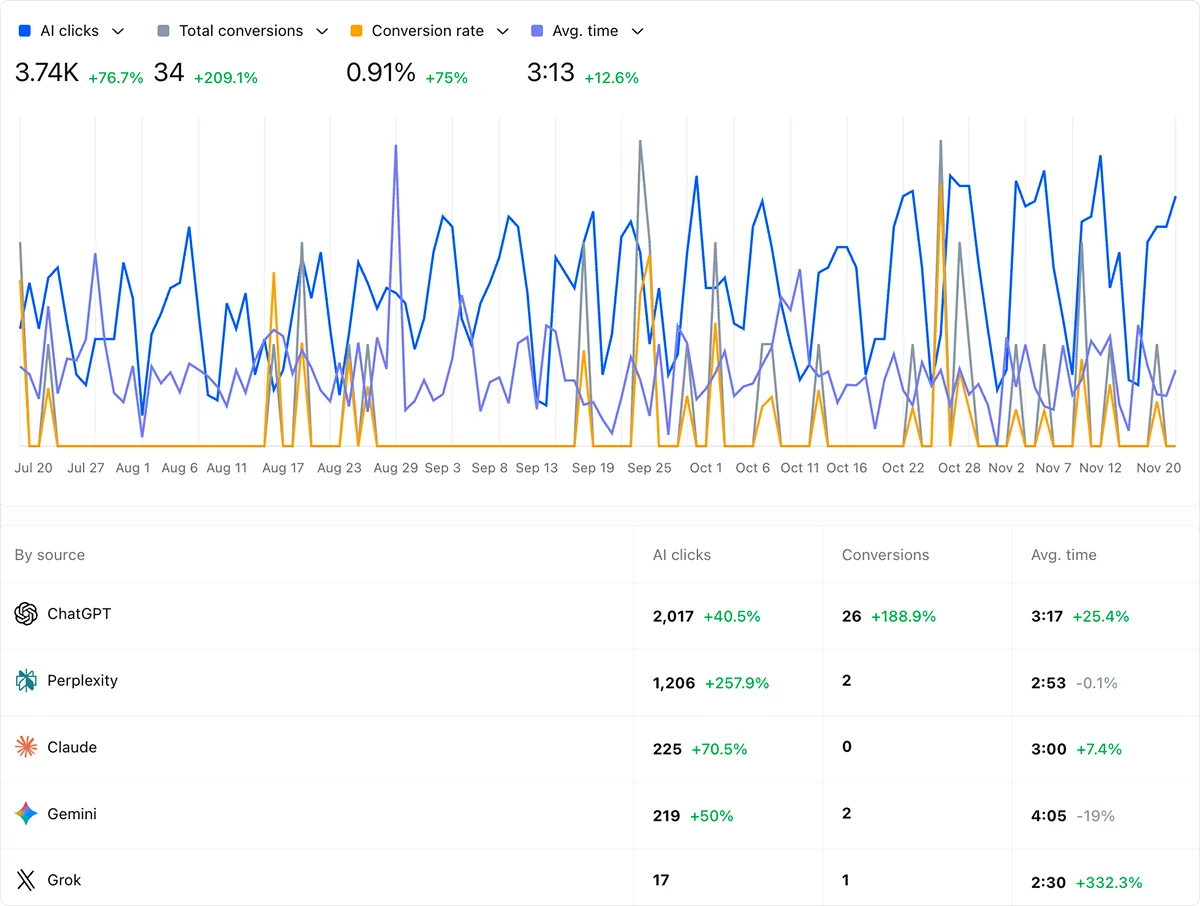
This way, you precisely track which platform performs the best from a traffic, engagement, and conversion perspective, so you can adapt your GEO strategy accordingly.
3. Traffic and conversion metrics: what happens after the click
8. AI traffic/AI sessions - Visits that arrive from a citation link inside an AI platform's answer. This is your most direct behavioral signal, and it needs to live as its own channel in your analytics, not buried inside generic "Referral" traffic.
9. Conversion rate - Compare how AI-referred visitors behave against organic and paid traffic. AI-referred visitors typically arrive later in the buying journey, since the platform has already answered their initial questions, so they tend to convert at a meaningfully higher rate even when the raw traffic volume is smaller.
4. Proxy signals: what you can't track directly
Some of the most valuable GEO impact never shows up in a clean attribution report.
10. Branded search lift - When someone gets your name from ChatGPT, a common next step is typing your brand name into Google to verify. Watch branded impressions and clicks in Google Search Console for correlation with rising AI visibility.
11. Direct traffic growth - Users who hear about you in an AI answer often type your URL straight into the browser instead of clicking a link. If direct traffic is climbing and nothing else about your channel mix has changed, GEO is a reasonable explanation.
How to Actually Measure AI Search Traffic
You don't need six tools on day one. You can build this in layers.
Option 1: Manual prompt testing (start here)
Write down 20 to 50 real buyer questions, phrased the way a prospect would actually ask them, not as keywords. "What's the best email marketing and newsletter tool for a startup team", which is more logical than "email marketing software”, for example.
Run each prompt across ChatGPT, Claude, Perplexity, Gemini, and other AI search engines that are important for you.

Check whether you appear, whether you're cited with a link or just named, what the sentiment is, and who else shows up. A simple spreadsheet with columns for date, platform, prompt, and result is enough to start.
Do this weekly. Do a deeper monthly pass where you also ask the AI to summarize your brand's strengths, weaknesses, and positioning directly, then check that summary for accuracy.
Option 2: Set up GA4 to catch AI referral traffic
GA4 does not have a built-in channel for AI platforms, so this traffic gets swallowed into generic "Referral" by default. Fix it:
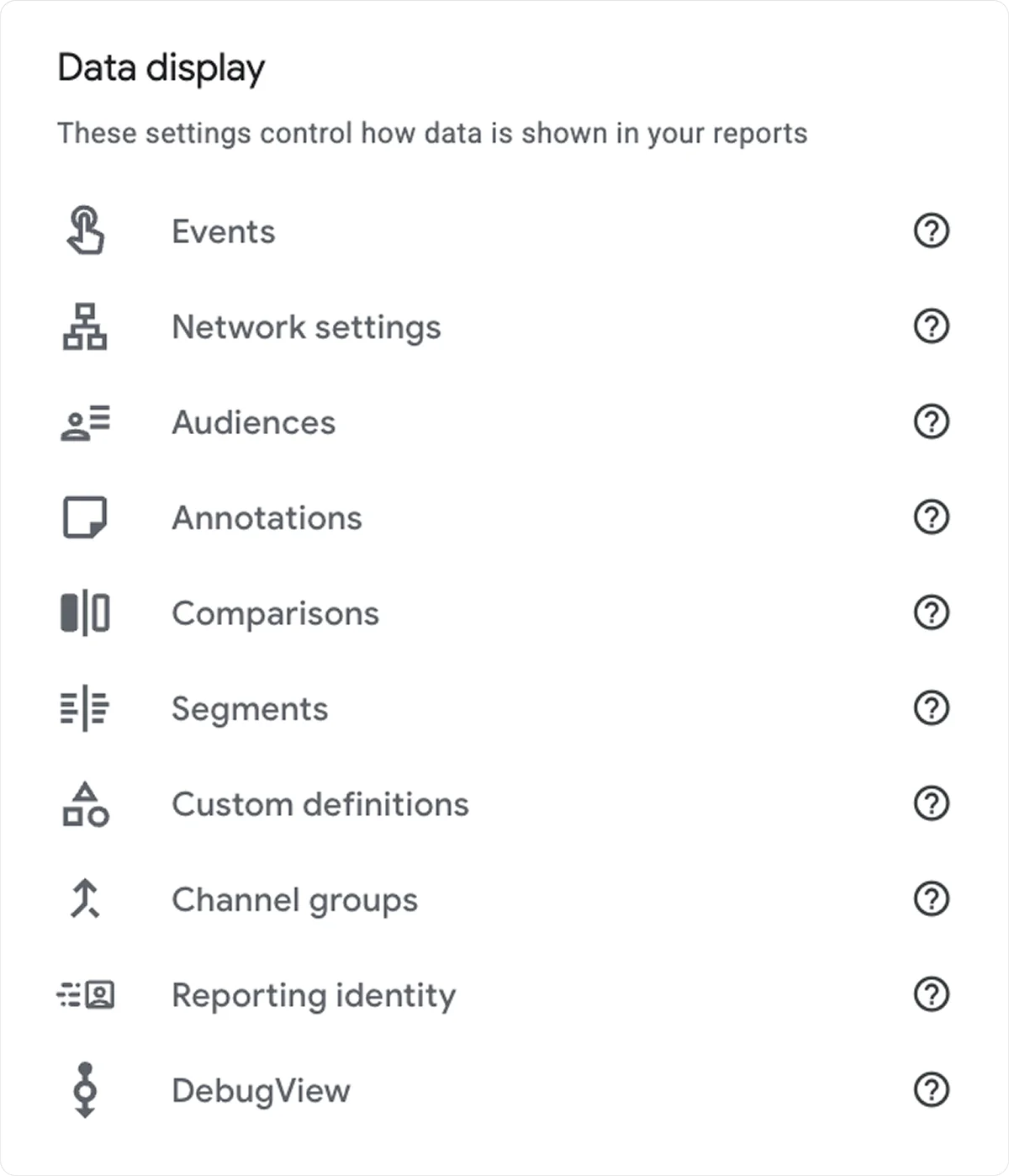
1. Go to Admin > Data display > Channel groups
2. Click Create new channel group
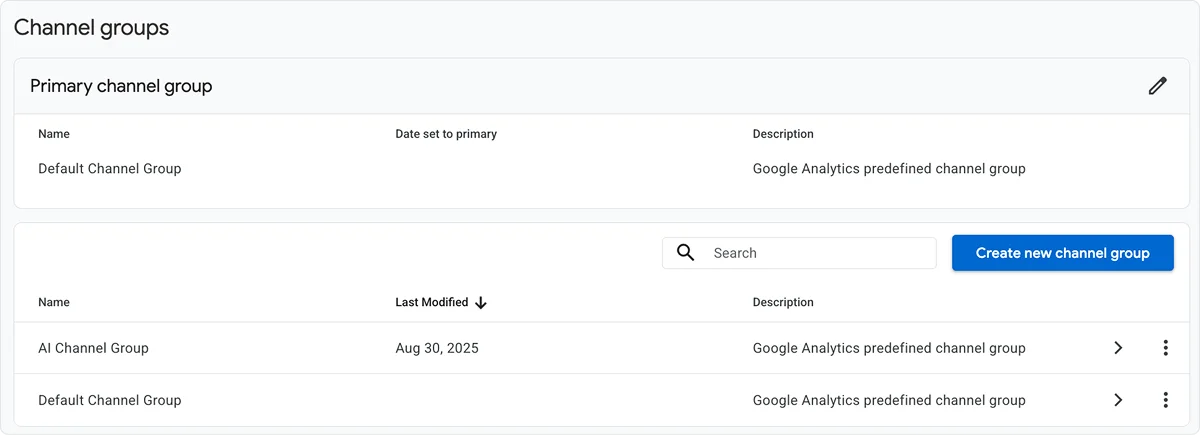
3. Add a new channel named "AI / LLM Referrals"

4. Set the rule: Session source contains regex match and copy/paste this pattern covering the major platforms: chat\.openai\.com|chatgpt\.com|perplexity\.ai|copilot\.microsoft\.com|gemini\.google\.com|bard\.google\.com|claude\.ai|poe\.com
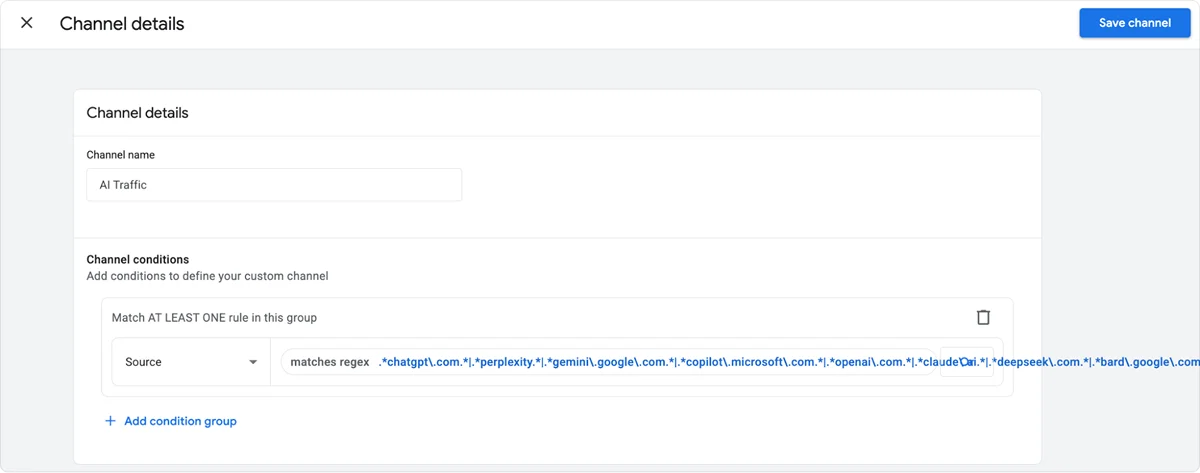
5. Save. GA4 applies channel groupings retroactively, so your historical AI traffic should populate right away.
Once you’re done, build one exploration showing sessions and conversions by AI source and landing page. That landing page data tells you which prompts and pages are actually driving AI-referred visits, which is the closest thing you'll get to keyword-level insight in this channel.
Option 3: Automate it
Manual testing works for a handful of prompts, and it breaks down fast once you're tracking 50+ prompts across five engines for multiple products or competitors. That's where a dedicated platform earns its keep.
Atomic AGI runs your full prompt set against every major engine on a recurring schedule, scores citation rate and share of voice automatically, flags sentiment and outdated information, and connects that synthetic data to your real GA4 traffic in one dashboard.
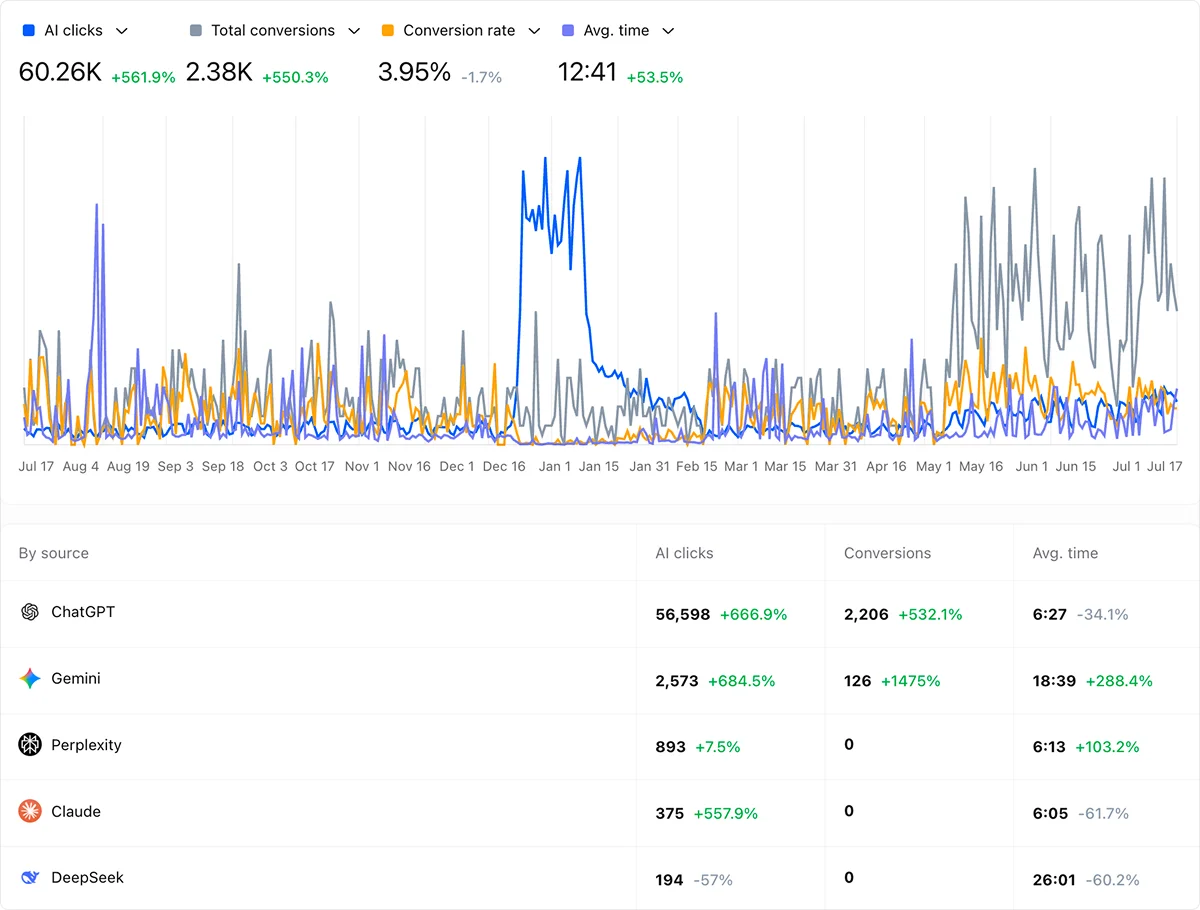
It's the same data layer we used to improve our project's performance and grow Omnius AI search traffic by 106%, so instead of building this pipeline from scratch, you get it running against your own domain from day one.
What "Good" Looks Like Right Now: Q2 2026 Benchmarks
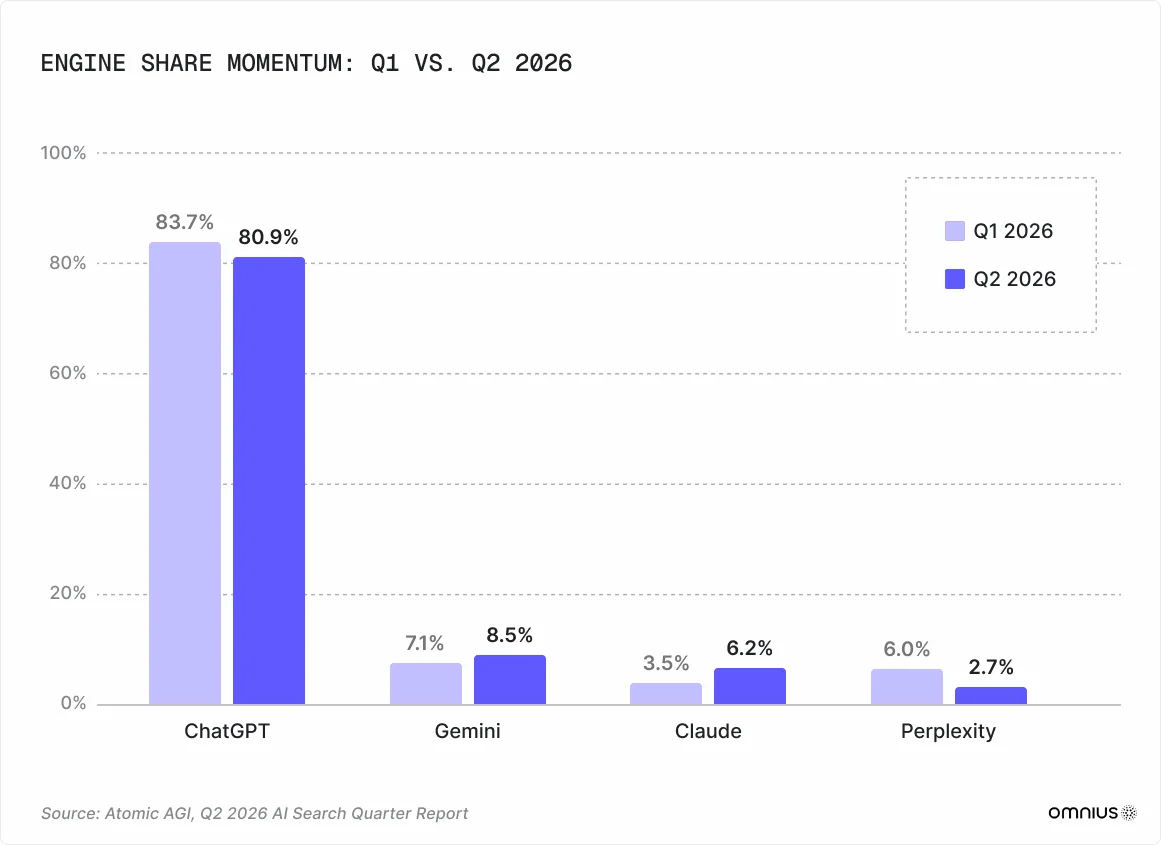
Before you set targets, it helps to know what a real, connected dataset actually shows. Atomic AGI, the AI search analytics platform we built and run internally at Omnius, tracks AI search performance across more than 11,000 domains, mostly in B2B SaaS, fintech, AI, and Web3. Here's what Q2 2026 looked like.
Two things stand out. First, AI search is still a small slice of total traffic for most B2B companies, under 3%. Second, the composition inside that slice is shifting fast. Claude nearly tripled its share of AI traffic in one quarter. Perplexity lost meaningful ground on both traffic and citations. And prompt intent is moving from pure research toward comparison and purchase behavior, which means the buyers showing up in AI answers today are further down the funnel than they were three months ago.
The most cited domains in the dataset weren't brand websites. Reddit alone captured over 16% of citation share, ahead of YouTube, Medium, and category-specific community sites. If your GEO strategy only touches your own domain, you're optimizing for a smaller slice of what actually gets cited.

Pro tip: This is exactly the kind of data most teams can't get on their own. Atomic AGI runs this sampling continuously across your buyer-intent prompt set, so instead of guessing whether Claude is worth watching this quarter, you get the actual share shift the moment it happens.
Connecting GEO to Pipeline: The Attribution Problem
This is where most GEO measurement efforts fall apart, and it's the part that actually gets you budget.
The core problem: a prospect asks ChatGPT for a recommendation, gets your brand name, and then either clicks a citation link (rare, since a large share of AI answers are zero-click) or opens a new tab and searches your brand name directly. In both cases, your analytics tools record "direct traffic" or "branded organic search," and ChatGPT gets zero credit for starting the journey.
Three things fix this:
- Self-reported attribution. Add an open-ended "How did you hear about us?" field to every lead form. Not a dropdown, since dropdowns bias people toward whatever option sits at the top. Open text gets you answers like "asked ChatGPT for the best tool and it recommended you," which is worth more than any analytics dashboard for confirming AI influence.
- UTM tagging on third-party citations. When you submit content to sites that AI platforms cite frequently (Reddit threads, G2 reviews, industry roundups), tag those links with UTM parameters. This separates "traffic referred directly by AI" from "traffic that discovered you because AI cited a third-party source about you."
A three-tier attribution model in your CRM:
- First-touch attribution: deals where the very first recorded touchpoint came from an AI referral source
- Influenced attribution: deals where an AI referral or self-reported AI mention shows up anywhere in the journey, even if it wasn't the first or last touch
- Revenue attribution: total pipeline value and closed revenue tied back to AI-sourced discovery, using either of the above as the qualifying event
Train your sales team to ask one follow-up question on every discovery call: "What were you searching for when you found us, and which AI tool were you using?" That single question, asked consistently, turns a vague "AI search" tag on a form into an actionable data point about which prompts are actually driving pipeline.
Reporting GEO to a C-level Who's Used to Seeing Google Analytics
Leadership doesn't want to see raw citation counts. They want to know if the channel is working and whether it's worth more investment. Structure your monthly report around business outcomes, not vanity metrics.
Lead with the trend lines and the pipeline number. Save the platform-by-platform breakdown for an appendix slide. Most leadership teams care about one question: is this worth the budget, and the citation rate, conversion rate, and pipeline figures answer that directly.
Where Most GEO Measurement Efforts Go Wrong
A few patterns show up again and again in teams just starting out:
- Waiting for rankings that will never come - GEO has no position ladder. If your reporting is still framed around "did we move up," you're measuring the wrong thing entirely.
- Testing five prompts once and calling it an audit - AI answers are non-deterministic. A single test tells you almost nothing about your real visibility. You need repeated sampling across a real prompt set to see a pattern instead of noise.
- Only tracking ChatGPT - It's the largest engine, but as the Q2 2026 data shows, Claude nearly tripled its share of AI traffic in a single quarter while Perplexity lost ground. A single-engine view will miss shifts that matter to your business.
- No GA4 channel for AI traffic - Without the custom channel setup above, every AI-referred session gets buried inside generic Referral traffic, and your reporting will chronically undercount the channel (if you’re not using any 3rd party monitoring tool).
- Skipping self-reported attribution - This is the single highest-leverage, lowest-effort fix available. Most teams that skip it are missing the majority of their actual AI-influenced pipeline.
- Treating GEO and SEO as separate strategies - AI platforms still pull heavily from well-ranking, well-structured content. Strong technical SEO and clean content architecture remain the foundation GEO is built on top of, not a separate track.
If you want to improve how your brand performs across both AI search and traditional search, Omnius can help you build the strategy, content, technical foundation, and tracking needed to grow your GEO and SEO visibility.
We help SaaS, AI, and fintech companies earn more citations in LLMs, strengthen organic rankings, and turn search visibility into measurable pipeline.
Ready to learn more about our process and the results we’ve achieved?
Schedule a free call and let’s discuss how we can help you grow your business!
FAQ
How often should I test my GEO metrics?
Weekly for your core prompt set, with a deeper monthly audit that reviews sentiment and positioning changes. AI answers shift often enough that a quarterly check will miss meaningful movement.
Do I need a paid tool to get started?
No. Manual prompt testing, a GA4 custom channel, and a self-reported attribution field cover the essentials for free. A dedicated platform like Atomic AGI becomes valuable once you're tracking 50+ prompts across multiple engines and need historical trend data without the manual overhead.
What's a realistic citation rate to target?
For B2B SaaS and fintech, 8 to 15% is a common starting baseline, 20 to 30% shows real traction, and 40%+ represents genuine category leadership. Context matters more than the raw number, so track it against your own baseline and your competitors' share of voice.
Why does GA4 show almost no AI traffic even though I know I'm getting cited?
Two reasons. First, without a custom channel group, AI referrals get buried inside generic Referral or Direct traffic. Second, a large share of AI-driven visibility never generates a click at all, since the platform answers the question directly inside the chat window. Citation tracking and traffic tracking are separate signals and both are needed.
How is GEO measurement different from SEO measurement?
SEO measurement is built on rankings, impressions, and clicks. There's no equivalent data source for AI search, so GEO measurement combines synthetic prompt testing (are you cited, how often, by whom) with behavioral data (AI-referred sessions and conversions) and self-reported attribution to fill in what analytics tools can't see on their own.


.png)

.svg)
















.svg)



























.svg)