.png)

Programmatic SEO for SaaS is when you automatically create lots of pages targeting different keywords using data and templates instead of writing each page manually. For example, a SaaS tool might generate pages like “best invoicing software for freelancers,” “for startups,” “for small businesses,” etc., using the same structure. It helps you rank for many search terms quickly and bring in more organic traffic.
Programmatic SEO for SaaS is one of the fastest ways to scale organic growth, but also one of the most misunderstood.
At its core, it means creating many landing pages using templates and structured data instead of writing each one manually. For example, instead of one article on “best invoicing software,” you can generate pages like:
- Best invoicing software for freelancers
- Best invoicing software for startups
- Best invoicing software for small businesses
Each targets a different search intent, but follows the same structure.
This matters because SaaS buyers don’t search in broad terms, they search with context: industry, use case, integrations, competitors. Individually, these keywords may have low volume, but together they represent a large share of high-intent demand.
Done right, programmatic SEO becomes a compounding growth channel, helping companies increase organic traffic by 35–50% in a relatively short time.
But it’s not about publishing more pages, it’s about building a system that scales value. The companies that win focus on clear keyword patterns, structured data, and pages that actually match search intent.
That’s what this guide will break down.
Key Takeaways
- It’s a system, not just content
Programmatic SEO combines keyword patterns, data, and templates into a scalable growth engine. - Template + data drives scale
A repeatable template powered by structured data enables hundreds of targeted pages. - Best for long-tail, high-intent keywords
Works especially well for integrations, comparisons, alternatives, and use-case queries. - Intent and value matter more than volume
Pages must match search intent and provide unique value to rank and convert. - It compounds over time
When done right, it becomes a long-term acquisition channel with consistent growth.
What is Programmatic SEO for SaaS
Programmatic SEO for SaaS is the process of creating large numbers of pages that target specific search queries using templates and structured data.
But that definition alone is too simplistic.
It’s not about generating pages at scale, it’s about building repeatable page systems that capture search demand across many variations of the same query.
Instead of targeting individual keywords one by one, programmatic SEO focuses on keyword patterns.
For example:
- “[Tool] alternatives”
- “[Tool A] vs [Tool B]”
- “[Software] for [industry]”
- “[Tool] integrations”
- “[Action] + [object]” (e.g., “convert PDF to Word”)
Each of these patterns can expand into dozens or hundreds of pages, all targeting slightly different, but highly relevant, search intents.
The Core Idea
At its core, programmatic SEO works on a simple formula:
Template + data = scalable pages
Instead of writing every page manually, you:
- Create a reusable page structure (template)
- Feed it with structured data (tools, industries, features, etc.)
- Generate pages automatically for each variation
This allows you to cover a large number of search queries efficiently, while still keeping pages relevant and targeted.
The Three Building Blocks
Every programmatic SEO strategy is built on three key components:
1. Keyword pattern (structure)
A repeatable search format that can scale (e.g., “CRM for [industry]”).
2. Modifiers (variables)
The elements that change across pages: industries, tools, competitors, use cases.
3. Data source
The structured information that fills each page and makes it unique (features, integrations, comparisons, etc.).
How It Differs From Traditional SEO
Traditional SEO focuses on creating individual, high-effort pages.
Programmatic SEO focuses on scaling structured content across many variations.
In practice:
- Traditional SEO → depth, authority, fewer pages
- Programmatic SEO → scale, coverage, long-tail traffic
The best SaaS strategies combine both, using programmatic SEO to capture long-tail demand, and traditional content to build authority and trust.
Why It Works So Well for SaaS
SaaS search behavior is naturally structured.
Users don’t just search for “CRM software.” They search for:
- CRM for startups
- CRM that integrates with Slack
- HubSpot alternatives
- Salesforce vs Pipedrive
Each of these represents a different intent, and programmatic SEO creates a dedicated page for each.
Individually, these keywords may have low volume. But at scale, they add up to significant, highly qualified traffic, often closer to conversion than broad queries.
How Programmatic SEO Works
Programmatic SEO works by combining a repeatable keyword pattern, structured data, a scalable template, and a clear site structure. When those parts fit together, you can create many pages at once without making each page feel random or disconnected. The whole idea is to scale relevance, not just volume.
It usually starts with a head term and a set of modifiers. The head term stays the same, while the modifier changes the page. For example, a SaaS company might use “CRM for” as the base, then pair it with industries like startups, agencies, or real estate. That creates pages such as CRM for startups and CRM for agencies, each aimed at a specific search intent, but built from the same underlying framework.
The pages also need a data layer. This is what makes them useful instead of repetitive. For SaaS, that data might be integrations, pricing, features, competitor comparisons, use cases, or templates. The stronger the data, the more the page feels like something made for the searcher rather than something generated for the sake of scale. That is why successful programmatic pages are usually built around real product data, not generic copy.
Here is a simple example of how the structure works:
The template is what ties everything together. It gives every page the same basic structure, but allows the variables to change. A good template usually includes a dynamic headline, a short intro, a data-driven section, and internal links to related pages. The important part is that it should feel consistent without feeling copied. If the template is too rigid, the pages become repetitive. If it is too loose, the whole system loses scale.
Finally, the pages need a site structure that helps search engines crawl and understand them. This is usually done through hub pages and internal linking. For example, a main CRM hub can link out to all the industry-specific pages, while each individual page links back to the hub and to related pages. That creates a connected cluster rather than a pile of isolated URLs.
In short, programmatic SEO works when keyword patterns, data, and templates are all aligned around real search intent. That is what makes it scalable, and what makes it rank.
Building a Programmatic SEO Strategy for SaaS
Building a programmatic SEO strategy is less about producing pages and more about setting up a system that can scale without breaking. The best SaaS teams do not start by asking how many pages they can create. They start by asking which search patterns are worth building around, what data they already have, and how to turn that into pages that are actually useful.
1. Start with a real keyword pattern
The first step is identifying a repeatable search pattern. That means looking for queries like [tool] alternatives, [tool A] vs [tool B], [software] for [industry], or [tool] integrations. These are strong because they can expand into many pages without changing the core structure. A pattern like CRM for [industry] becomes CRM for startups, CRM for agencies, and CRM for real estate, all with the same intent, but different modifiers.
2. Build around intent, not just keywords
Once the pattern is clear, the next step is understanding what the searcher actually wants. A page for alternatives should help people compare options. A page for integrations should show compatibility and use cases. A page for software for [industry] should speak to that industry’s specific pain points. When the intent is clear, the template can be built around it properly. When it is not, the pages feel forced and do not perform well.
A simple way to think about it:
3. Build a usable data layer
Programmatic SEO needs data, not filler. That data might be integrations, competitors, templates, pricing, feature sets, customer segments, or industry use cases. The point is that the page should feel specific because it is grounded in structured information, not because it has a lot of repeated text. This is also where most weak strategies fail, they rely on automation without enough real data behind it.
4. Design the template carefully
The template is where scale becomes real. It should include a strong H1, a short intro, the main data block, and internal links to related pages. It also needs enough flexibility so the pages do not all feel identical. A good template standardizes the structure while still letting the content change based on the modifier. That is what keeps the pages both scalable and relevant.
A good example would be an alternatives page layout like this:
5. Connect everything with internal linking
Once the pages are built, they need to live inside a structure. Hub pages help with this. A hub can introduce the category and link to all related pages, while the individual pages link back to the hub and to each other where relevant. This makes the whole section easier to crawl and easier for users to navigate. Without this layer, even good pages can end up isolated.
6. Launch small, then scale
The smartest strategy is not to launch thousands of pages at once. It is to start with a small batch, test what gets indexed and what gets traffic, then expand from there. That approach reduces risk and helps you improve the template before you scale. In the source material, a pilot batch of 20–50 pages, or even 50–100 pages, is presented as a better starting point than a huge launch.
In practice, a strong SaaS programmatic SEO strategy looks like this: find a valid keyword pattern, match it to the right intent, build a data-backed template, connect it through internal linking, and scale only after the first batch proves it works. That is what turns programmatic SEO from an idea into a repeatable growth system.
Programmatic SEO Examples for SaaS (With Case Studies)
Understanding the theory behind programmatic SEO is one thing.
Seeing how it works in practice is what makes it click.
Below are real examples of how companies use programmatic SEO to scale organic traffic, including both industry leaders and our own implementation.
1. Airbnb - Location-Based Pages
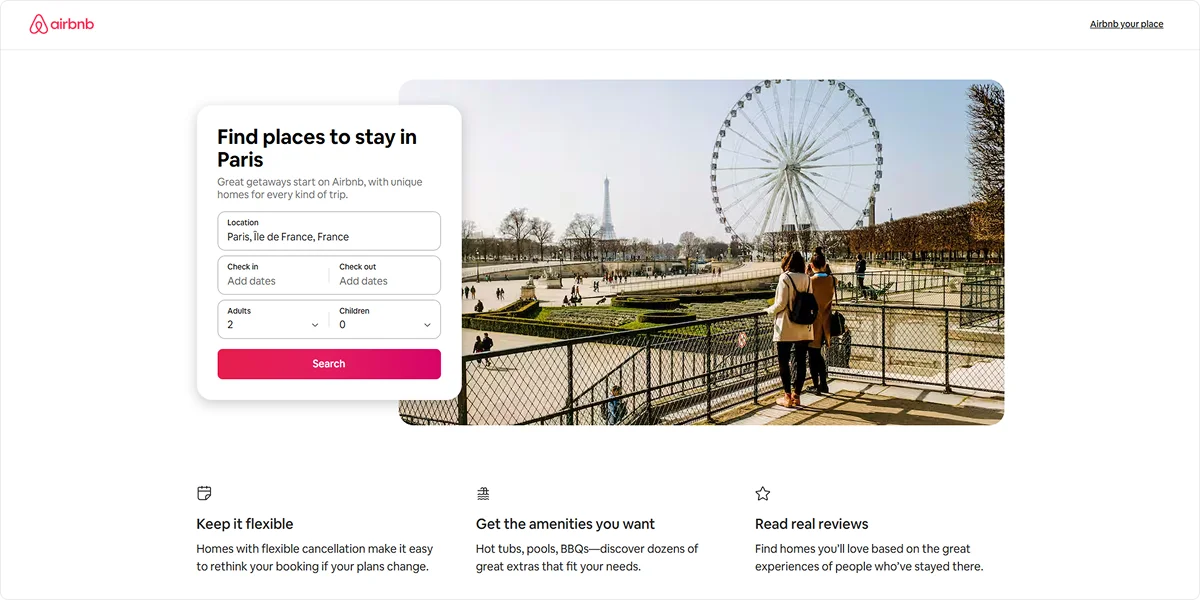
One of the most well-known programmatic SEO examples is Airbnb.
They built a massive SEO footprint by creating pages for:
- Cities
- Neighborhoods
- Property types
Each page is powered by structured data like:
- Listings
- Pricing
- Availability
- Reviews
Why it works
- Strong data layer (real listings)
- Clear search intent (find a place to stay)
- Scalable page structure
- Continuous data updates
Instead of writing content manually, Airbnb built a system that generates value dynamically.
Full breakdown: Airbnb SEO Case Study - Road to $80B with Programmatic SEO
2. Omnius Case Study: Building Programmatic Pages That Convert
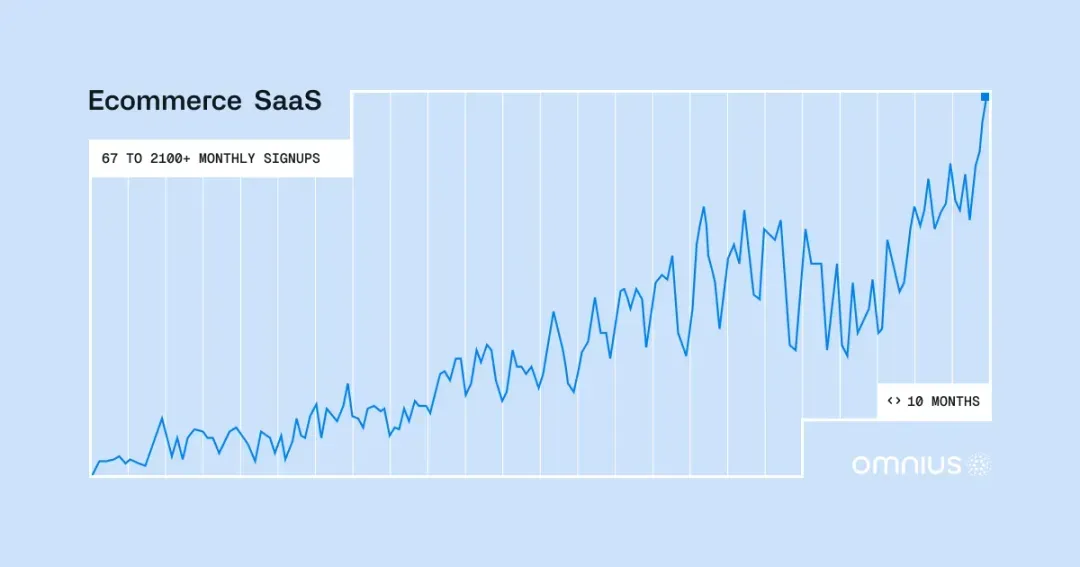
In our own case study, we applied the same principles, but adapted them specifically for SaaS.
You can read it here: Programmatic SEO Case Study: How our AI Client Grew from 67 to 2100+ Monthly Signups in 10 Months
What we did
Instead of creating random pages, we focused on:
- A clear keyword pattern
- Pages aligned with buyer intent
- Structured data to support scalability
- Templates designed for both SEO and conversion
What made it work
The key difference was not just scale, it was intent + structure.
We ensured that:
- Each page targeted a real search use case
- Content was not purely templated, but enriched
- Internal linking created topical clusters
- Pages supported conversion, not just traffic
Key takeaway
Programmatic SEO doesn’t have to sacrifice quality.
If done correctly, it can generate:
- Scalable traffic
- High-intent visitors
- Real business results
Not just impressions.
3. Zapier - Integration Pages
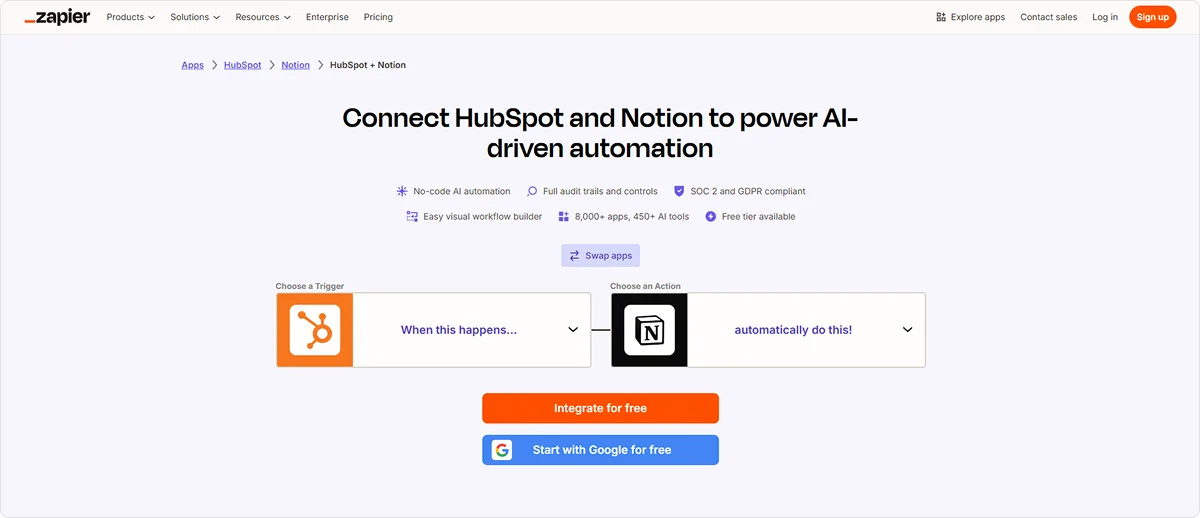
Zapier built its SEO strategy around integrations. Instead of targeting generic terms, it focuses on specific combinations of tools.
Why it works
Each page solves a very specific problem. According to the source, this approach helped Zapier reach millions of monthly visitors by targeting long-tail, high-intent queries.
Canva - Template Library
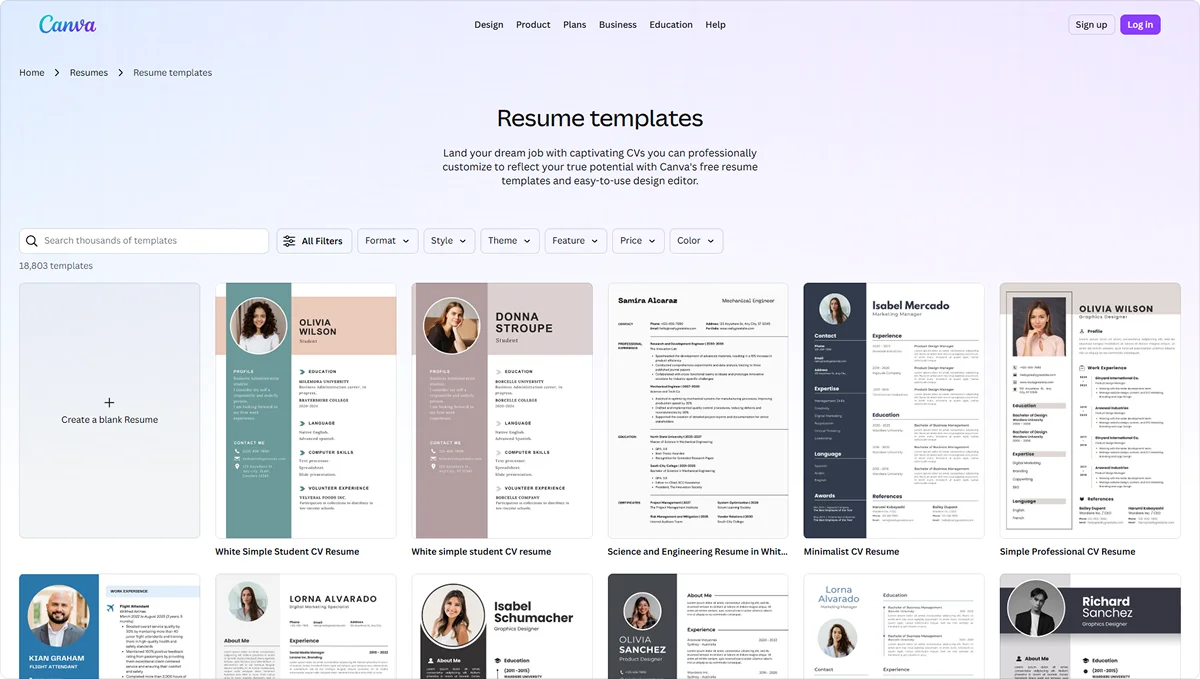
Canva uses programmatic SEO to rank for template-based searches. Every page is built from its template library.
Why it works
The page is not just content, it is the product. Users land and immediately use what they searched for.
G2 - Comparison Pages
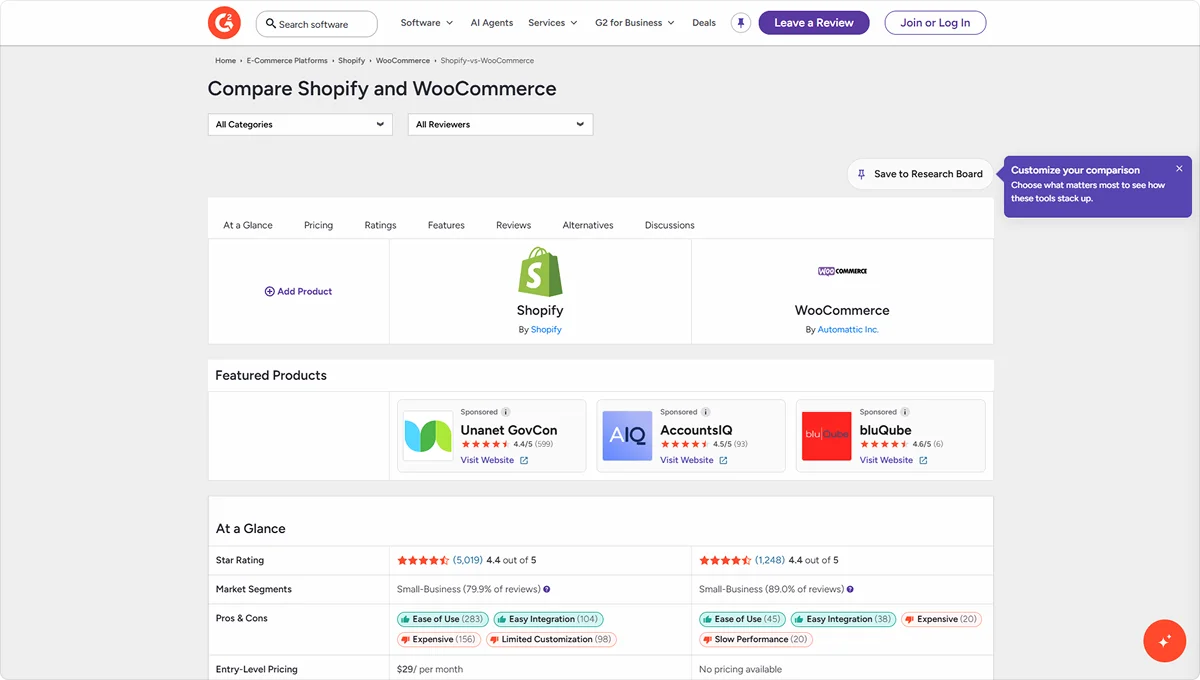
G2 dominates comparison and “best software” queries using structured review data.
Why it works
Pages are built on proprietary data (reviews, ratings), which makes them hard to replicate and highly valuable for decision-stage users.
What all of them have in common
Across all these examples, the structure is the same:
- A clear keyword pattern
- A scalable data source
- Pages that directly match intent
They are not creating pages just to increase volume. They are building systems that turn real product data into searchable, useful pages, and that’s why they scale successfully.
Mistakes to Avoid
Programmatic SEO can be extremely effective, but it also has one of the highest failure rates in SEO when teams treat it like a bulk content shortcut instead of a system. The biggest mistake is simple: scaling pages before proving that the keyword pattern, data, and intent actually work together.
A common example is launching hundreds or thousands of pages with generic or AI-filled copy. On paper, it looks like scale. In practice, it usually creates thin pages that Google ignores. The source material is clear that pages need real, structured data and unique value, otherwise the entire strategy collapses into duplicate content.
The most common mistakes
Another big issue is forcing keyword patterns that do not exist. If there is no real search demand, programmatic SEO has nothing to work with. A pattern only becomes valuable when it can expand into meaningful combinations that users actually search for, not combinations that merely look scalable on a spreadsheet.
Intent mismatch is another problem. A page built for alternatives should help users compare options. A page built for integrations should explain how tools connect. If the template does not match the intent, the page feels off immediately. That is why the source material keeps stressing that search intent should shape the structure, not the other way around.
One of the strongest warnings in both texts is not to treat programmatic SEO as set and forget. The pages need maintenance, the data needs to stay current, and the template should evolve as you learn what performs. Without that, even a good system decays over time.
The safest approach is to start small, validate a pilot batch, improve the structure, and only then scale. That is what separates a real programmatic SEO system from a pile of pages.
Conclusion
Programmatic SEO for SaaS is not a shortcut. It is a way to turn structured data, repeatable search patterns, and scalable templates into a long-term organic growth system. When it works, it helps SaaS companies capture high-intent traffic across thousands of searches that would be impossible to cover manually.
The companies that do this well do not focus on page count alone. They focus on intent, data quality, internal structure, and usefulness. That is why examples like Zapier, Canva, Airbnb, and G2 work so well: each one builds pages around a real pattern, powered by real data, and tied to a clear user need.
The biggest lesson is simple: scale only what already has value. Start with a validated keyword pattern, build a strong data layer, test a small batch, and improve the system before expanding. That is what turns programmatic SEO from an idea into a growth engine.
Book a 30-minute call with Omnius to see how we help SaaS companies design, build, and scale programmatic SEO systems that drive real traffic and conversions.
FAQs
1. What is programmatic SEO for SaaS?
Programmatic SEO for SaaS is the process of creating large numbers of SEO-optimized pages using templates and data to target long-tail keywords and scale organic traffic efficiently.
2. How does programmatic SEO work for SaaS companies?
It works by combining structured data (like integrations, locations, or use cases) with page templates to automatically generate hundreds or thousands of landing pages that target specific search queries.
3. Is programmatic SEO effective for SaaS?
Yes, programmatic SEO can be highly effective for SaaS when done correctly. It helps capture long-tail traffic at scale, but success depends on creating valuable, unique content and avoiding thin or duplicate pages.


.png)

.svg)
















.svg)



























.svg)
%20for%20B2B%20SaaS%20%5BFull%20Guide%5D.webp)

.webp)