.png)

Across industry datasets, AI search engines drive roughly 9% of total traffic compared to Google's 91%. If you stop analysis here, the conclusion seems obvious: prioritize the 91%.
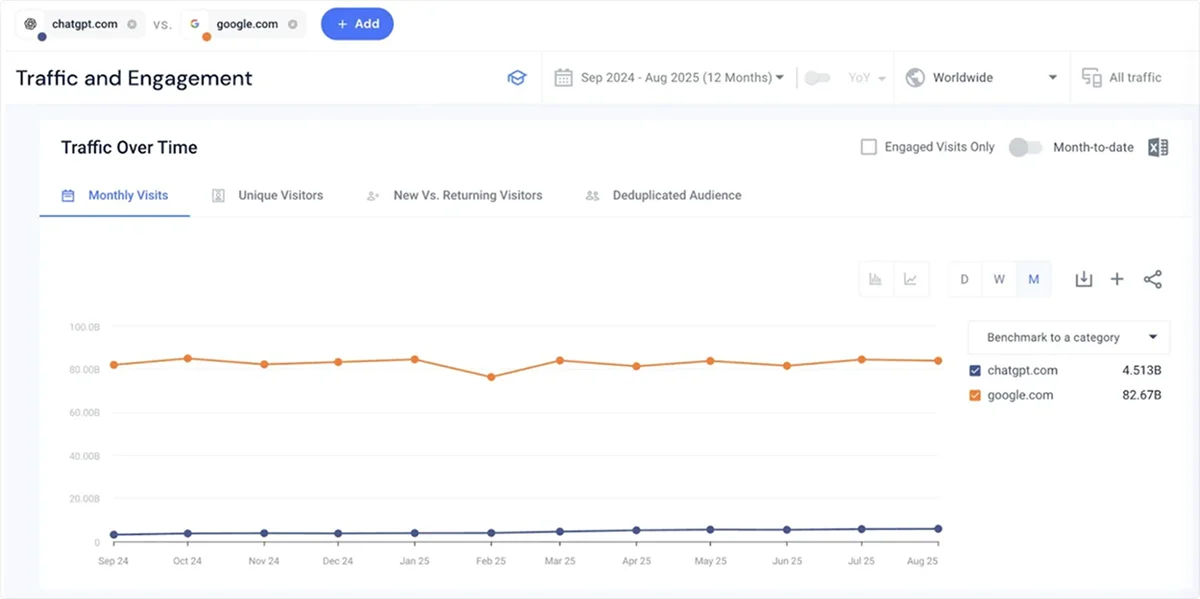
But conversion data suggests otherwise.
Microsoft Clarity analyzed over 1,200 publisher and news sites and found AI traffic converting at 11 times the rate for sign-ups compared to traditional search.
Ahrefs discovered that AI visitors, representing just 0.5% of their total traffic, generated 12.1% of all signups.
Adobe's data shows AI conversion rates running 16% higher than non-AI, with the gap widening since Fall 2024. The pattern holds across other platforms and industries, too.
Semrush found AI visitors 4.4 times more valuable than organic search traffic based on conversion rates.
Superprompt's analysis of 12.3 million visits showed a 5-times conversion advantage.
Vercel reports ChatGPT now drives 10% of new signups - up from 1% six months ago. The numbers aren't isolated anomalies. They're evidence of a systematic shift in traffic quality that traditional volume metrics fail to capture.
This creates a measurement paradox.
Marketing teams allocate budgets based on traffic volume, treating 9% as marginal and 91% as strategic. But when 9% converts at rates 3-23 times higher than the 91%, the volume-based framework breaks.
The question isn't whether AI search matters at low volume - it's why measurement systems still count clicks instead of value per visit. The industry is optimizing for the wrong metric.
How AI search creates pre-qualified visitors
The conversion advantage starts before the click. When someone searches Google for "project management software," they type 2.8 words on average and scan a list of ten blue links.
When someone asks ChatGPT the same question, the query averages 12.3 words and often includes context: budget constraints, team size, specific features needed, and integration requirements. The difference isn't just length, it's specificity.
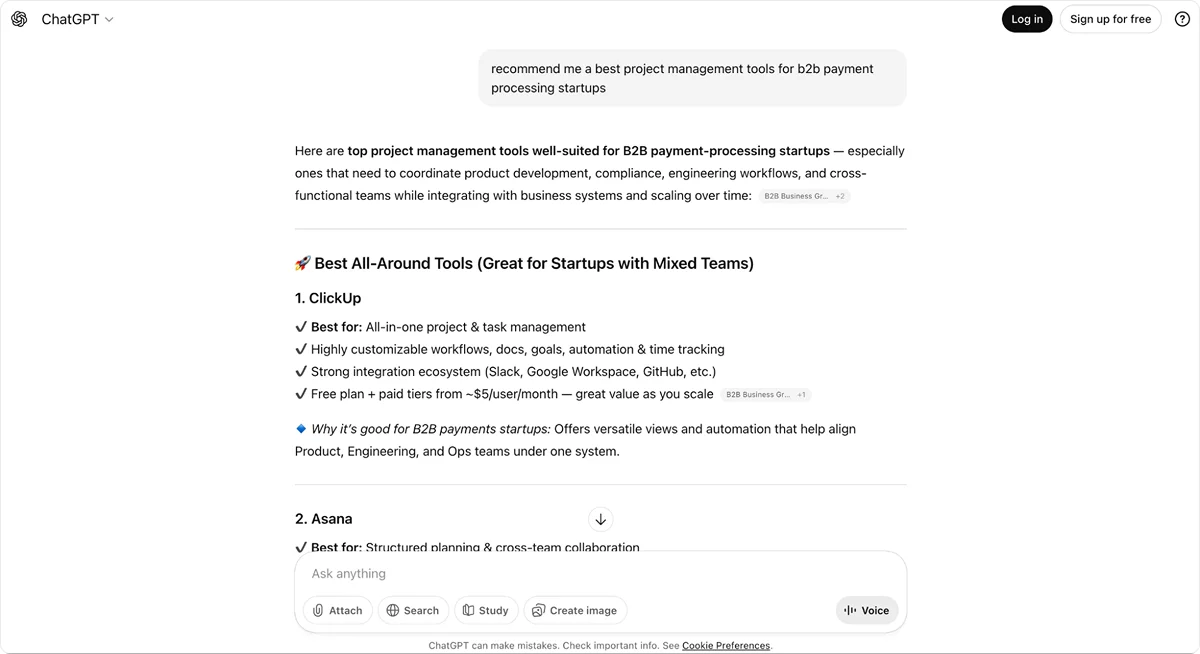
AI search operates as a conversational filter, with LLMs that personalize anwers based on chat history & users who refine their requirements through dialogue - before they ever see a link. They ask follow-up questions, compare options, eliminate poor fits, and clarify constraints.
By the time LLM surfaces a company's website, the user has already done research that would take a dozen Google searches. They arrive knowing whether the product matches their needs.
The behavioral data confirms this.
Perplexity users spend an average of seven minutes per session - not browsing multiple sites, but engaging with AI-generated answers that synthesize information from dozens of sources. When they do click through to a website, they're not exploring.
It’s not only a process of searching for information, but also a validation.
Microsoft Clarity's study of 1,200+ sites found that while AI visitors had slightly higher bounce rates than traditional search, they visited 50% more pages when they did engage, suggesting they weren't window shopping, but confirming a decision already shaped through the interaction with an LLM.
This pre-qualification explains why conversion rates diverge so dramatically.
Traditional search delivers exploratory traffic. Users click multiple results, compare options across tabs, and return to search repeatedly. Most never convert because they're still in discovery mode.
AI search delivers interest-defined traffic, from users who've already completed discovery.
The economic implications are straightforward.
Traffic volume becomes secondary to qualification & conversions.
The conversion data across industries
LLMs’ conversion advantage appears consistently across sources, platforms, and measurement methodologies. We can clearly see a pattern in multiple independent datasets.
Ahrefs provides the most detailed company-level view. Their company official published data from their Web Analytics showing how AI search visitors convert at their website in relation to their equity in complete web traffic.
AI-originated traffic represented 0.5% of total visitors over 30 days but generated 12.1% of all signups. That's a 24-fold efficiency advantage; a channel delivering half a percent of traffic shouldn't generate 12% of conversions unless something fundamental has changed about visitor quality.

The behavioral metrics reinforce this. AI visitors to Ahrefs bounced at 67.8% compared to 63.7% for search visitors - slightly higher, but in its essence, a statistical error.
But when AI visitors did engage, they went 50% deeper, visiting more pages per session than traditional search traffic. The page depth suggests those who stay are genuinely interested, suggesting filtered traffic that self-selects based on relevance before even arriving.
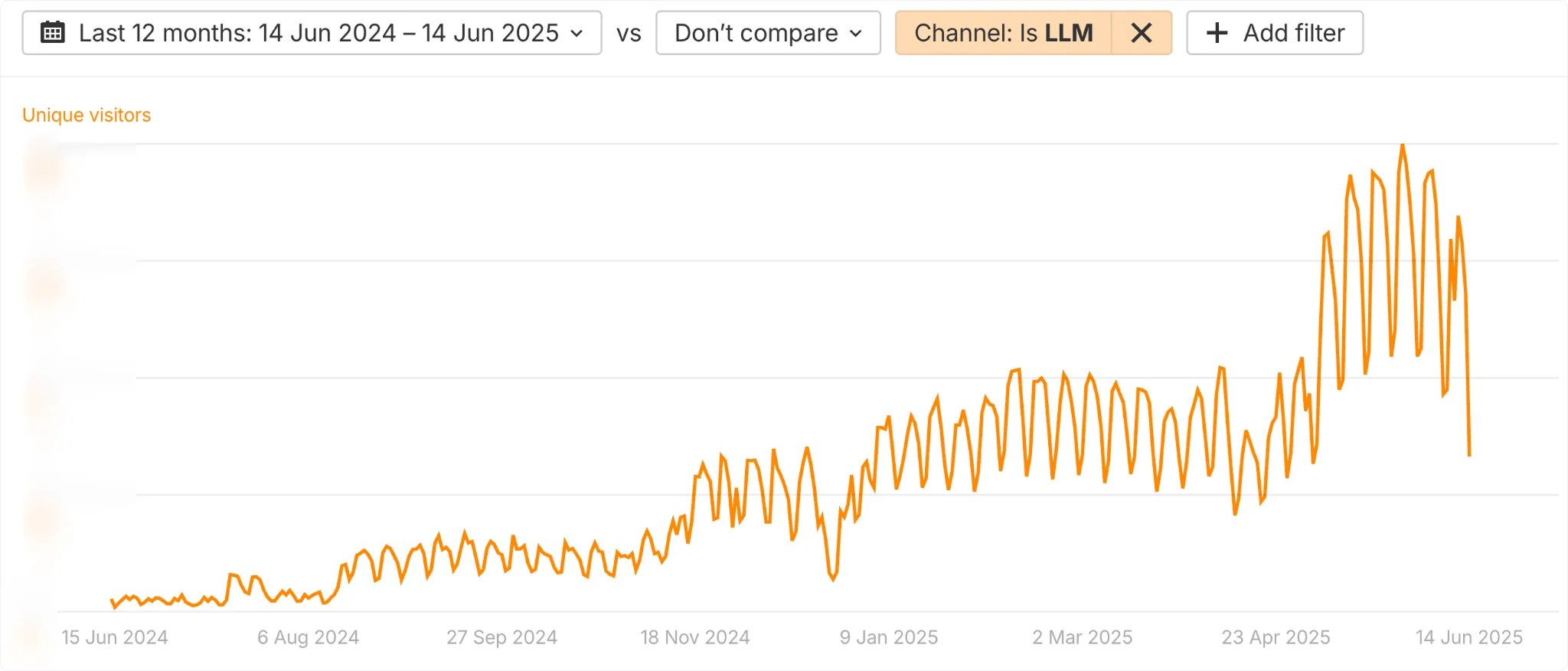
Besides the click quality component that LLMs are undoubtedly improving, the quantity of traffic has also seen a very stable, positive trend.
The company saw previous increases in August 2024 and November 2024, with ChatGPT driving the majority of AI referrals. The growth pattern shows month-over-month increases exceeding 20% in some periods, with AI traffic share rising from 0.3% year-to-date to 0.5% in the most recent 30-day period measured.
While still a small absolute percentage, it’s logical to conclude that trajectory matters more than the current share. A channel growing at this rate while converting at 23 times traditional search efficiency can't be dismissed as marginal.
Microsoft Clarity analyzed a much broader sample - over 1,200 publisher and news websites across eight months, and found similar patterns. AI traffic grew 155.6% while traditional search grew just 24%, social grew 21.5%, and direct grew 14.9%.
But the quantity tells half the story.
When it comes to the conversion rate, AI search has:
- 11-times advantage over traditional search,
- 12.8 times over direct, and
- 3.6 times over social.
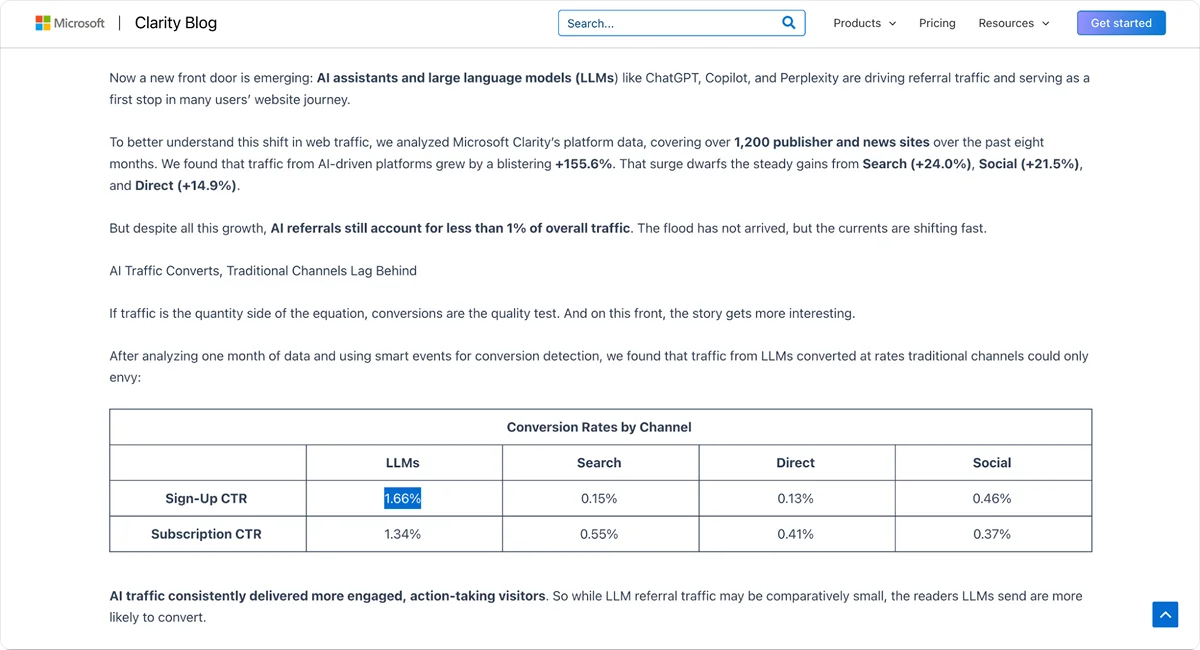
The scale of Microsoft Clarity's dataset - with 1,277 domains analyzed, showing 52% successfully converting AI traffic in the past month proves the point and makes it pretty obvious that AI search has grown beyond early adopters and/or tech-heavy industry, and has matured into a marketing channel worth optimizing for, in general.
Adobe's data shows the trend accelerating, as well.
AI conversion rates climbed steadily through the first three quarters of 2024. Then, beginning in Fall 2024, something changed - traditional conversion rates fell while AI conversion rates increased ahead.
The gap that had been narrowing started widening. Adobe's data shows AI referrals now converting 16% higher than non-AI, with the divergence increasing each month.
.webp)
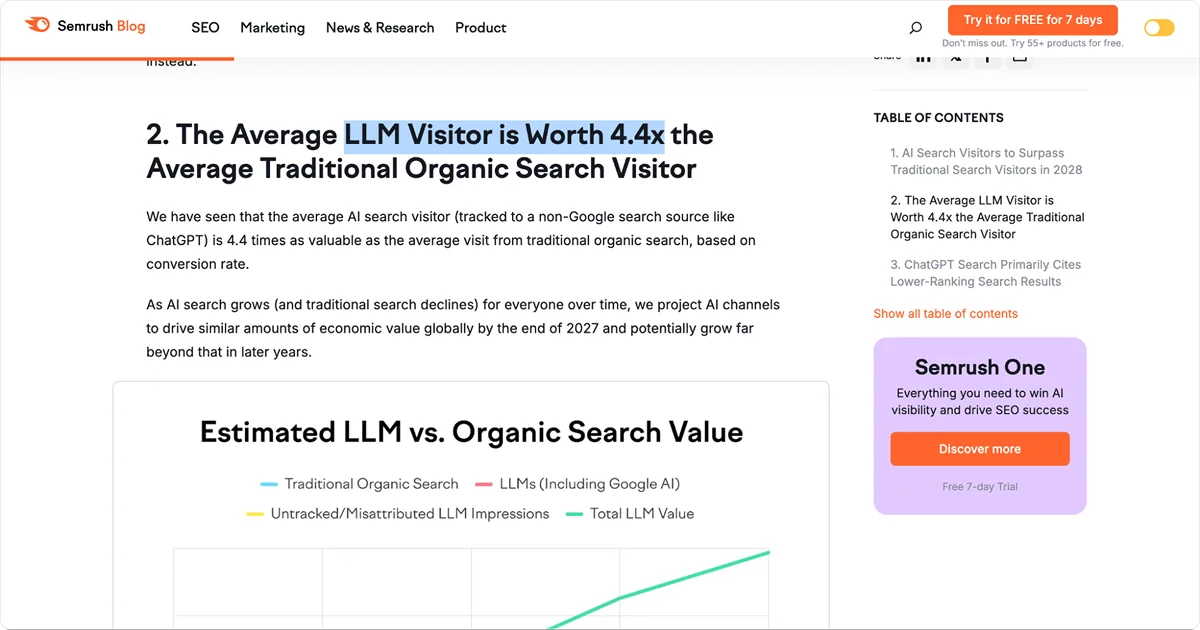
Semrush's analysis across multiple sites found AI search visitors 4.4 times more valuable than traditional organic search visitors based on conversion rates.
Their study tracked the full customer journey from traffic source through conversion, using actual conversion data rather than proxies like engagement time. The 4.4x multiple sits in the middle of the range reported by other sources.
Platform-specific conversion rates vary but cluster in predictable ranges.
Data from a study that included 12.3 million visit analysis has shown that:
- Claude converts at 16.8%,
- ChatGPT at 14.2%,
- Perplexity at 12.4%, and
- Google organic search at 2.8%.
The consistency across these independent sources clearly exists, of course, with certain deviations. The exact multiples vary based on methodology, industry, and what counts as a conversion.
But every source shows the same pattern: AI traffic converts at multiples of traditional search traffic, with advantages ranging from 3x to 23x depending on measurement approach and conversion definition.
Why volume metrics isn’t optimal for AI traffic
The math breaks when traffic quality varies by orders of magnitude.
If Channel A delivers 1,000 visitors at 3% conversion, it generates 30 conversions.
If Channel B delivers 100 visitors at 30% conversion, it also generates 30 conversions.
Traditional analytics dashboards show Channel A with 10 times the traffic, leading most marketing teams to allocate more resources there.
But the unit economics tell a different story.
Channel B requires one-tenth the bandwidth, one-tenth the server load, and one-tenth the support resources for the same conversion output.
If customer acquisition cost is calculated per visitor rather than per conversion, Channel A looks efficient. If calculated per conversion - the metric that actually matters, Channel B is dramatically more efficient.
Marketing teams optimizing for traffic volume maximize the wrong variable. The volume bias persists because measurement infrastructure was built for a different era.
Google Analytics tracks sessions, pageviews, bounce rates, and time on site. These metrics made sense when traffic quality was relatively uniform across channels.
A visitor from organic search converted at roughly the same rate as a visitor from social media or email. Optimizing for volume meant optimizing for conversions because the conversion rate was stable.
That assumption no longer holds. AI search traffic converts at rates 3 to 23 times higher than traditional marketing channels, depending on measurement methodology and industry. The infrastructure hasn't caught up, as most analytics platforms don't separate AI referrals from traditional organic traffic. ChatGPT and Perplexity appear as referral sources, but many analytics configurations misattribute them as direct traffic.
Without clear visibility into which traffic sources convert at multiples of others, budget allocation defaults to the most visible metric: volume.
The channel sending 91% of traffic gets 91% of attention, even if the channel sending 9% of traffic delivers equal conversion output at a fraction of the cost.
The economic logic extends beyond individual companies. At the industry level, rising customer acquisition costs make traffic quality more valuable than traffic quantity.
Average CAC for B2B SaaS reached $700 to $1,200 per customer by 2024, with CAC increasing 222% over the previous eight years.
When acquisition costs rise, conversion efficiency becomes critical, and a channel that converts at 5 times the rate of another channel is effectively 5 times cheaper per acquisition, even if traffic volume is lower.
Patterns visible in the data provided suggest an addition in how SEO is thought of in terms of KPIs, and perhaps the smartest conclusion to be made here is to measure organic channels primarily by conversion output and cost per acquisition, and secondarily by traffic volume.
What our data reveals about AI traffic
Data from our internally developed proprietary AI search tracking platform, called Atomic AGI confirms these conversion patterns across dozens of websites.
The platform monitors traffic from ChatGPT, Perplexity, Claude, and Gemini, measuring not just volume but behavioral quality: time-on-site, pages per session, conversion rates, and intent signals that traditional analytics miss.
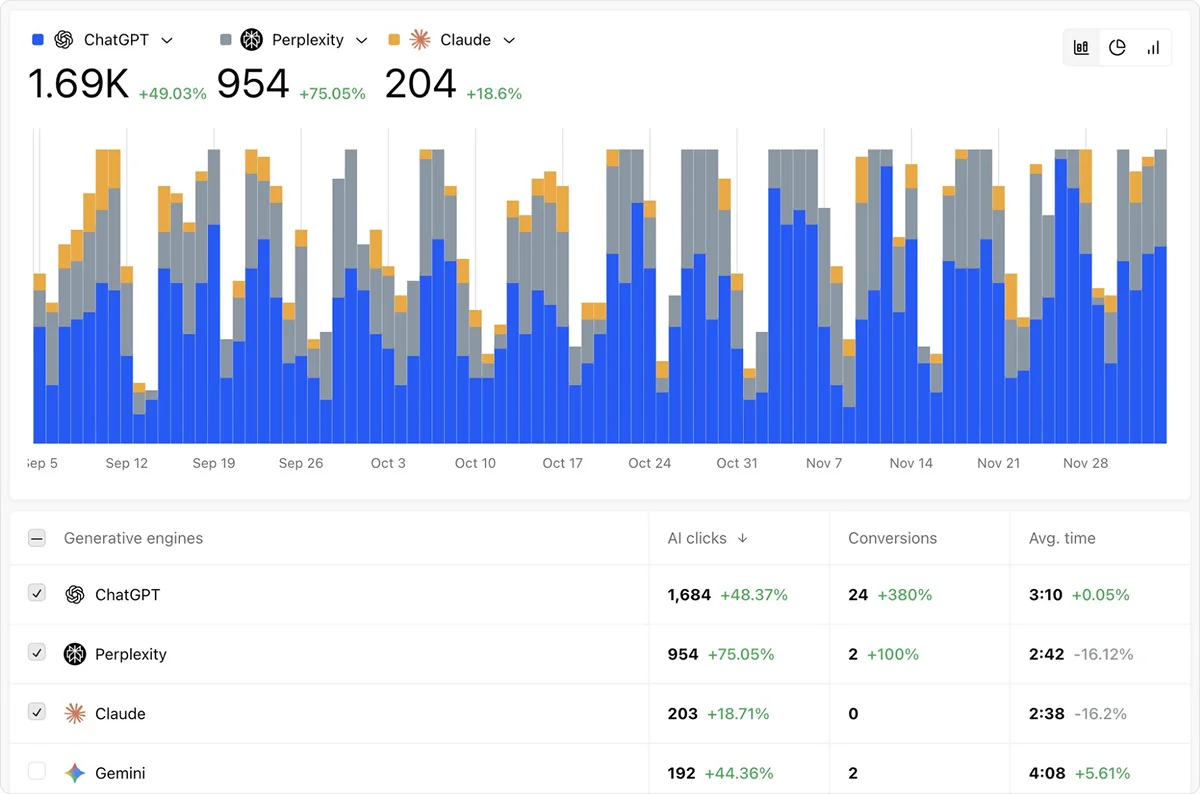
The data shows AI-originated traffic behaving fundamentally different from traditional organic search across every measured dimension:
- Time-on-site: AI visitors consistently spend 2-4 times longer on websites than Google organic visitors
- Engagement depth: More sessions per visitor and deeper page sequences indicate genuine research behavior
- Conversion rates: 2×-4× higher on average compared to traditional organic traffic
- Intent signals: Behavioral patterns reveal users arriving with pre-formed evaluation criteria
Data suggested that, by the time they land on a website, users are meaningfully more qualified than a typical first organic visit. This isn't speculation - it's visible in the engagement metrics.
Traditional Google searches arrive with questions.
AI searchers arrive with validated hypothesis, ready to convert.
The measurement challenge is making this visible, as traditional analytics platforms (unintentionally) hide the conversion differential.
On the other hand, Atomic AGI makes it explicit: not just how much AI search traffic you receive, but how valuable each of those visits is. This visibility changes optimization decisions.
Practical examples of dual SEO
SEO has been a mostly Google-only for the the good part of the last 25 years, so it doesn’t surprise that companies have hard time adjusting to multi-engine SEO ecosystem. Unlike most, Vercel has utilized AI search in all the good ways.
When they implemented AI traffic tracking, ChatGPT represented 1% of signups. They shifted some optimization effort from traditional search to AI visibility - ensuring documentation was crawlable, information was structured clearly, and content answered questions AI platforms were likely to encounter.
Six months later, ChatGPT drove 10% of signups. The traffic volume from ChatGPT never reached 10% of total visitors, but the conversion efficiency was high enough that signup share climbed steadily.
This wasn't a binary shift from Google to AI (as it shouldn’t be).
Vercel continued investing in traditional SEO, but they allocated marginal optimization hours based on conversion efficiency rather than traffic volume. When a channel converts at multiples of another channel, small improvements to that channel generate disproportionate returns.
A 10% increase in AI traffic converting at 15% generates more conversions than a 10% increase in Google traffic converting at 3%, even if the absolute visitor counts differ by orders of magnitude.
Another good example is Tally, that took this even further, making AI search their largest acquisition channel by conversion output.
The company grew from $2 million to $3 million in ARR in four months, with AI search contributing over $1 million of that growth.
They optimized content specifically for AI visibility - creating comprehensive comparison pages, detailed feature explanations, and use case documentation that AI platforms cited when users asked about form builders. Google still sent more total traffic, but AI search generated more paying customers per visitor.
This creates a portfolio approach.
Companies need traffic volume from Google because even at 3% conversion, large numbers matter. But they also need high-efficiency channels like AI search that convert at significantly higher rates.
The optimal budget allocation isn't 100% to either channel. It's weighted by both volume and efficiency, with marginal dollars going to whichever channel offers the best return on the next dollar invested.
The timing component is playing a big role here, as well.
AI search has grown 155% every eight months (so far) while maintaining conversion rates 3 to 23 times higher than traditional search. Companies optimizing for this channel now establish measurement systems and optimization processes while the channel is still undervalued by competitors.
As more companies recognize the conversion advantage, competition for AI citations will intensify, and the companies with 12-18 months of optimization experience and measurement data will have compound advantages.
A good conclusion we can make here is that early measurement creates early optimization opportunities. Then, the measurement advantage compounds: better data enables better optimization, which generates better results, which provides more data to refine optimization further. Classical example of data network effects.
Where measurement frameworks are heading
The change from volume to value measurement represents more than just better analytics configuration - it indicates a wider trend in how marketing performance gets measured: one that mirrors the transition from traditional advertising to digital marketing two decades ago.
Traditional advertising measured reach and frequency.
Digital marketing measures clicks and conversions.
AI search requires measuring influence & quality.
Companies track how often AI platforms mention them, how accurately those mentions frame their positioning, and whether brand search and direct traffic increase after AI citation improvements.
These metrics don't fit into last-click attribution models, but operate on longer time horizons and require correlation analysis rather than direct attribution, and are focused on tracking both what happens on the website, but in the LLMs, as well.
This creates new metrics that matter.
Inclusion frequency measures how often AI platforms cite your company when answering relevant queries. You can't rank-check a ChatGPT response the way you check Google rankings, but you can systematically query AI platforms with questions your target customers ask and track whether you appear in responses.
Framing accuracy measures whether AI platforms describe your company correctly – matching your positioning, highlighting relevant features, and representing pricing accurately.
Brand search lift measures whether branded queries and direct traffic increase in periods where inclusion and framing improve.
The attribution models are evolving to match. Traditional models, such as first-click, last-click, linear, time-decay - assume a trackable path from initial awareness to conversion. AI search breaks that assumption.
Users get recommendations without clicking, research through conversations that don't generate pageviews, and convert through channels that appear unrelated to the AI interaction.
The new models focus on correlation rather than causation: Did brand search increase after AI visibility improved? Did conversion rates rise for users who entered through branded search? Did direct traffic lift correlate with changes in AI citation frequency?
It looks more similar to how companies measure PR impact. When a company gets mentioned in major media, the impact shows up as increased brand search, higher direct traffic, and improved conversion rates - not as attributable clicks from the media outlet.
The measurement requires establishing baselines, tracking multiple correlated signals, and using statistical methods to isolate the effect. AI search measurement is heading in the same direction. Companies will track portfolios of signals rather than single attribution paths.
The long-term prediction points toward value-per-visit becoming the primary traffic metric, with volume serving as a secondary consideration.
The absolute number of conversions determines revenue, not the absolute number of visitors, which will be visible in the next iteration of marketing dashboards, that will eventually default to conversion-weighted views rather than volume views.
Conclusion
This shift from volume to value measurement means marketing teams should weigh AI traffic by conversion rate, not visitor count. When measurement captures value per visit instead of visit count, resource allocation decisions change fundamentally - 9% of traffic can warrant equal or greater investment than the other 91%.
B2B SaaS companies should implement AI search tracking segments in analytics platforms to separate traffic that converts at 3-23x rates from traffic that doesn't.
So, the paradox that companies that will be leading the multi-engine SEO transition will need to solve is simple:
- AI makes traffic harder to measure but more valuable when measured correctly.
- Traditional analytics count what's easy: clicks, sessions, impressions, while the highest-converting traffic hides in "direct" and "referral" categories because attribution systems weren't built for conversational search.
As AI traffic continues growing exponentially, while converting at multiples of traditional marketing channels, the measurement gap between volume and value will widen until analytics platforms rebuild around value metrics.
The reality is clear - companies implementing value-based measurement now establish data foundations that competitors can't match later. Marketing teams that wait for standardized reporting miss the pattern while it's still exploitable.
So, the big question for companies isn't whether AI traffic matters at 9%, (based on everything we can see, it surely does) - it's whether your measurement system can see that 9% is worth equivalent or more than the other 91%.
Omnius gives you clear visibility into AI-driven visits and how they perform compared to traditional search. Contact Omnius to start measuring AI traffic and focus your SEO on real value, not just volume.


.png)

.svg)
















.svg)



























.svg)