


Agentic SEO agency that gets software chosen by AI agents Recommended, installed, and used in
AI agents now research software, install it, and call its tools on a person's behalf. We optimize websites, docs, and MCP listings so agents choose the product.

Agent Experience Audit
We record an agent working through a task such as reaching pricing, score how readily agents can discover, access, and use the website, and rank every fix.

Agent Access by Bot Role
We set robots.txt and firewall rules by bot role, since firewalls refused GPTBot's user agent on 7.1% of the software websites we crawled.

Requirement Facts & Comparisons
We put price model, plan limits, security, integrations, and hosting regions in page text, worded as on sales calls, with a source for each comparison claim.

Agent-Operable Flows
We build demo, trial, and signup flows that a browser agent can finish, with labeled fields, real buttons, and a handover to the person at any CAPTCHA.

Docs Agents Can Fetch
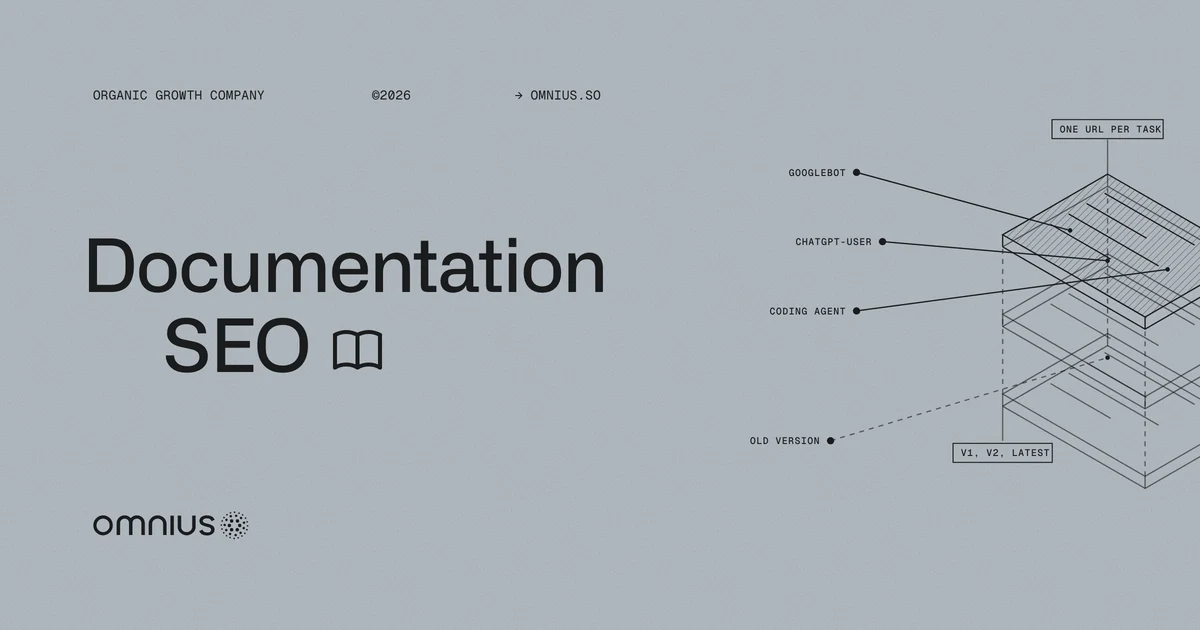
We serve task-named quickstarts and references in server HTML and Markdown, with one canonical URL per supported version and the OpenAPI spec at a stable URL.

Rules Snippets & Skills
We write a copyable snippet for AGENTS.md, CLAUDE.md, and Cursor rules, and an agent skill with the integration rules, in the words developers use.

MCP Optimization
We write the server.json manifest with the server's name, description, version, packages, and remote endpoints, and publish it to the MCP Registry under the company's namespace.

Tool Names & Descriptions
We write tool names, descriptions, and server instructions that open with when to use the tool. 89% of 856 sampled MCP tool descriptions lacked that guidance.

MCP Listings & Tests
We submit listings to the Claude directory and ChatGPT plugins, then test direct, indirect, and negative prompts to see whether the model loads, picks, and calls the tool.





AI agents decide before anyone opens the website.
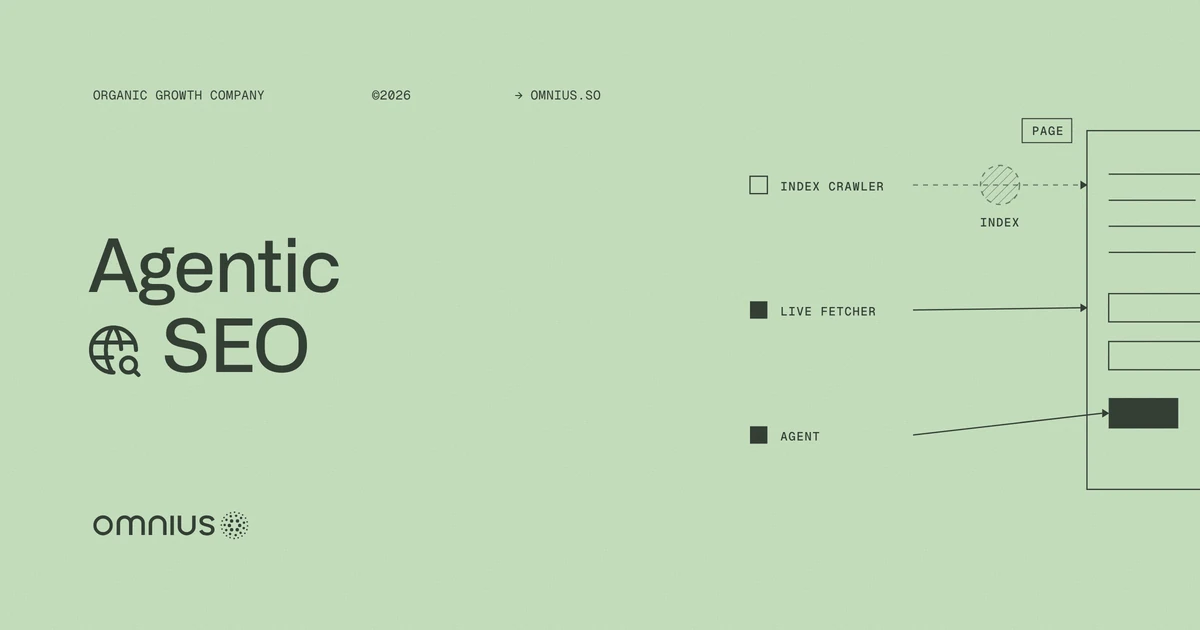
Agentic SEO gets a company chosen by AI agents. AI agents now compare vendors, install software, and call tools on a person's behalf. Agentic SEO makes a product easy for them to find, understand, and use, whether the agent is building a shortlist, setting up a project, or picking a tool for a task.
Agents choose on facts they can confirm. An agent turns a request into hard requirements and drops every product it cannot verify, and a coding agent installs what it already knows. The products agents can read, confirm, and use make the shortlist, and the rest never reach a sales call.
We make websites, docs, and tools work for agents. We audit what each agent reads and where it stops, fix the facts, docs, and listings behind it, and rerun the same tasks after every change. A new economy is forming around agents that research, buy, and build, and it rewards the companies agents can work with.
Automated traffic: more than 53% of web traffic in 2025, including good and bad bots
People
What both read
What Omnius changes
Machines
Agentic SEO starts with the tasks agents receive. Here's how we do it.
01Requirement inventory & baseline
Work starts from the requests agents receive. Strategists pull the hard requirements from sales-call transcripts, RFPs, security questionnaires, review platforms, and lost deals, in the customer's own words, along with the tasks developers hand to coding agents.
Crawler logs and a prompt panel are set up first, so the Day-0 baseline records selection share, fact accuracy, agent traffic, and one recorded agent task, frozen and dated for every later report.
02Access & gap map
Shortlist losses are read beside the evidence behind them: blocked crawlers, facts missing from pages, profiles that disagree, absent listings, and tasks an agent cannot finish.
An entity-belief check asks the major AI engines what the company does and records every wrong or missing fact. Issues are triaged by severity, and confirmed access failures go first, since a firewall can refuse an agent that robots.txt allows.
What the audit delivers
- A requirement inventory: one row per hard requirement, with the page that states it, the source that confirms it, the date it was verified, and its owner.
- A Day-0 baseline: selection share, fact accuracy, agent traffic, and one recorded agent task, frozen and dated.
- Three competitor sets: business rivals, search rivals, and the sources AI answers cite, with the rival that takes the shortlist by engine and by requirement.
- An agent access review: robots.txt, firewall, and status code rules for each search crawler, user agent, and training crawler, confirmed in crawler logs.
- A gap map: each observed failure and evidence gap tied to a proposed fix.
- A listing plan: which catalogs and AI-cited directories, in which order, with which text.
- A fix list ranked by priority: each fix with its page or file, an owner, and the rerun that closes it.
- A walkthrough with the marketing and engineering teams.
03Facts, flows & listings
Writers publish a fact block for every hard requirement and comparison pages whose claims cite a source, each built from a brief based on the pages that rank and the pages AI answers cite for the same request.
Omnius developers ship access rules, server-rendered facts, and labeled forms, or review them when the client's engineers build them. Listings go out from the company's own publisher accounts, and the client approves each change before release.
04Reports & retests
Every month, a purchase-stage prompt panel runs three times per engine, with memory off where possible, and a change counts once it holds across two monthly runs.
The recorded agent task reruns after each fix, listings are retested after every release, and each finding in the monthly report is tied to an action.
Every website is tested with the agents its buyers and developers already use.
Browser agents act on the rendered page, coding agents fetch what the server sends, and each one stops somewhere different.
ChatGPT Work
Fills forms in its own cloud browser and pauses at sign-in pages and bot defenses. We let its signed requests through the firewall and test the demo forms with it.
Claude in Chrome
Works on the open page with the person's own sign-ins, pauses at CAPTCHAs, and is barred from purchases. We label every form field and plan a handover to the person at each CAPTCHA.
Gemini in Chrome
Reads the page content of shared tabs, including text not visible on screen. We keep hidden text and markup in line with the facts on the visible page.
Perplexity Comet
Pulls the visible text, headlines, and metadata of the open page with each request. We state prices and plan limits as visible text, outside images and toggles.
Claude Code
Its fetch tool asks for Markdown, and a second model reads the page and answers. We serve every docs page as Markdown and keep its content in the server HTML.
Codex
Reads AGENTS.md before any work and, in local chats, searches a cached OpenAI index by default. We publish a copyable AGENTS.md snippet with the integration rules.
Cursor
Reads project rules and the docs a developer indexes before it writes code. We write the Cursor rules snippet and keep the docs it indexes in clean Markdown.
Grok Bot
Runs persistent agents on a computer of their own that keep working on a task over time. We keep the pages and flows it returns to reachable, with stable URLs and clear status codes.
Muse
Meta's personal agent opens a browser and fills in forms, and asks before it sends an email or makes a purchase. We test signup and checkout flows so it reaches that approval step.
MCP servers get listed where agents look, with tool text written to get picked.
Each catalog takes its own submission, and the model chooses an installed tool by its name and description.
| Catalog | What it lists | What decides placement | What we do |
|---|---|---|---|
| MCP RegistryThe official catalog of MCP servers | server.json manifestsAn entry whose namespace is verified from the company's domain, with the main job in a 100-character description. | A verified, early entryDownstream catalogs copy registry entries, so an early entry also reaches smaller directories. | We write server.json under the company's namespace and publish it from the company's account. |
| Downstream catalogsGitHub's catalog and other MCP directories | Copied registry entriesCatalogs such as GitHub's copy registry entries instead of taking their own submission. | The source entryEach copy shows what the registry entry says, including an outdated description. | We check the copies after each release and correct the registry entry they come from. |
| ChatGPT plugin directoryOpenAI's directory, shared with Codex | Reviewed plugin listingsEach listing is reviewed before it appears, and the directory has served ChatGPT and Codex since July 9, 2026. | UseChatGPT orders its directory listings by use. | We write the listing copy and submit it from the company's publisher account. |
| Claude directoryAnthropic's marketplace of connectors and plugins | Reviewed connectors and pluginsThe Claude Marketplace opened on September 23, 2026, with more than 2,000 connectors and plugins. | UseClaude orders its directory listings by use. | We check namespace, authentication, and tool annotations before each submission. |
| Coding-agent marketplacesClaude Code, Codex, and Cursor plugins | One-install pluginsPlugins bundle skills and MCP servers into one install. | The product docsDevelopers install from the commands the docs link to. | We package the plugin and put its install command in the docs. |
| The model, after installEvery host that runs the server | Tool names and descriptionsThe model reads each tool's name and description, and the server instructions, before it calls a tool. | When-to-use guidanceA description that opens with when to use the tool, and the case to avoid, helps the model pick it for the right task. | We name each tool by domain and action and write its description in the words users type. |
Five files agents read and call, and how each one is written.
Omnius technology shows what agents do with a product.
We use our technology to record what crawlers, agents, and people do on the website, and our team turns it into fixes.omnius.so/technology
Agent traffic
Visits by purpose
AI bot requests grouped by training, search, and fetches made for a user.
Failure rate
The share of bot requests with a known status that return a 4xx or 5xx.
Pages requested
URL-level logs show which pages each bot requests and where access fails.
Agent selection
Selection share
The share of answers in a fixed prompt panel that shortlist the product.
Fact accuracy
The share of checked requirements that AI answers state correctly.
The rival that wins
The competitor named instead, by engine and by requirement.
Agent Experience
Agent readiness score
The website's technical readiness, scored apart from how the recorded task ended.
Answer from the website
Whether the agent's answer in a recorded task came from the company's own pages.
Fixes shipped and rerun
A fix closes only when the same task, agent, and model confirm it on a rerun.
With Omnius, B2B software companies grow conversions from Google, AI search, and AI agents.




Guides and research on Agentic SEO and Agent Experience (AX).

Let's build together.
Questions & Answers.
An Agentic SEO agency makes a company findable, understood, and usable for the AI agents that research, compare, and install software. At Omnius, that covers requirement facts on the website, docs and setup steps for coding agents, marketplace listings, and monthly measurement. The term also describes SEO run by AI agents; at Omnius, technology collects the data and people do the work.
Generative Engine Optimization (GEO) earns citations and recommendations in AI answers, and Agentic SEO builds on it so a product makes the shortlist an agent builds from the requirements in a request. Agent Experience (AX) covers how well an agent can find, choose, install, and use the product. Omnius runs all three as one practice.
AI agents choose software from different inputs for research, coding, and tool calls. Research agents compare the requirements in a request with the evidence they retrieve and flag what they cannot confirm. Coding agents draw on the model's training, the project's dependencies, and installed instructions. Assistants match a task to the names and descriptions of the tools connected to them.
MCP optimization improves how a product's MCP server is listed, described, and called on the hosts its users work in. An MCP server exposes tools, a skill supplies instructions, and a plugin can package both for one install. A skill fits products that agents misuse, and a server fits tasks that act on a hosted service. Omnius plans and lists these integrations and reviews what the company's engineers build.
Markdown gives coding agents a readable copy of the docs, and llms.txt points the agents that fetch it to the right pages. Claude Code requests Markdown directly, and agents reached llms.txt in about a third of runs in Vercel and Ora's study. In that study's controlled tests, Markdown copies did not change whether agents found an answer already in the HTML, and Google Search needs no AI text files, so the facts go in the page first.
Search crawlers and agents acting for a person need access to public product facts, and training crawlers follow the company's content policy. ChatGPT-User and Claude-User fetch pages for a person's request, and OpenAI runs separate crawlers for search and for training. Access decisions follow each provider's identity guidance, robots.txt, and firewall rules, and agents are verified before anything is blocked.
Omnius measures Agentic SEO through selection share in AI answers, fact accuracy, crawler access, and recorded website tasks. Selection share is the share of answers in a fixed prompt panel that shortlist the product; fact accuracy is the share of checked requirements stated correctly. Results are compared with the Day-0 baseline every month, a change counts once it holds across two monthly runs, and the affected prompts rerun after logs show a crawler visit.
An Agentic SEO engagement starts with a requirement inventory and a Day-0 baseline, inside an ongoing engagement. The client team supplies product, commercial, and technical context and names the approvers for planned changes. Omnius does not use fixed packages: scope and pricing are set around the company, the market, and the opportunity.
Omnius is a full-stack AI SEO agency. Explore more of our services.
Crawling, indexing, website architecture, and performance across the whole website.
How AI engines understand the website, where the visibility gaps are, and what to fix first.
Visibility and citations in ChatGPT, Perplexity, Claude, and Gemini.
Rendering, crawler access, and metadata fixes for websites on any JavaScript framework.
Company information resolved into entities, relationships, and evidence that Google and LLMs understand.
The data, workflows, and AI infrastructure behind our strategy, execution, and measurement.

Omnius is an AI-native SEO & GEO agency maximizing the probability of B2B SaaS & Fintech companies being included in AI answers, selected by agents, and chosen by humans.