.png)

A generative engine optimization checklist keeps your efforts organized and ensures you've covered every factor to achieve and maintain visibility in AI search.
G2's April 2026 survey of 1,076 B2B software buyers found that 51% now begin vendor research in an AI chatbot before opening Google. That figure was only 29% less than a year earlier. The survey also revealed that 85% of buyers view a vendor more favorably when a chatbot includes them in a recommendation.
The evaluation starts before a prospect visits your site. If your technical setup, content structure, and brand signals aren't optimized for AI retrieval, you're being excluded from shortlists you didn't even know existed.
This free GEO checklist walks you through the steps that together determine whether AI engines recommend your brand or skip it entirely.
Key Takeaways
- If AI crawlers can't access your content, nothing else in this checklist matters.
Robots.txt restrictions, Cloudflare's settings, and JavaScript-dependent rendering are the most common reasons SaaS sites are invisible to AI engines despite having strong content. Fix these first. - Third-party validation helps build brand authority in AI search.
AI models prioritize sources that are mentioned consistently across external publications, review platforms, and community forums. Wide topical coverage and original material help establish your brand as an expert and get it mentioned. - AI search prefers content structured for extraction.
Question-based headings, direct answers, and coverage of adjacent sub-questions give AI engines the format they need to pull from your pages. Prompt targeting replaces keyword targeting as the core unit of content optimization. - GEO demands ongoing measurement across platforms.
Snapshots tell you little, and manual testing doesn't scale. Automated tools deliver the trend data, search metrics, and platform-level breakdowns you need to understand what's working and where competitors are outperforming you. - The sooner you start optimizing, the greater the impact.
68% of Google searches end with zero clicks, and AI-referred traffic converts at four times the rate of organic. By investing in GEO now, you will capture high-intent buyers that competitors haven't even started tracking.
Generative Engine Optimization Checklist Across 4 Key Dimensions
GEO is a coordinated effort that spans technical infrastructure, strategic positioning, content operations, and measurement:
The Technical Checklist
Three technical areas require most attention. First, your robots.txt and CDN settings must allow AI bots to crawl your site. Cloudflare blocks crawlers by default, and many SaaS sites discover this only after it impacts their marketing ROI.
Second, schema markup (e.g., FAQ, Organization, Product, HowTo) provides AI systems with signals about page content and improves citation eligibility. A poorly implemented schema can harm your search performance. Common errors include missing required fields, FAQ schema that contradicts visible page content, and outdated Organization data.
Third, SearchVIU’s 2025 analysis found that 69% of AI crawlers can’t execute JavaScript. So, if your site relies on JS for core content, bots may not be able to view it the same way users do.
Here’s a breakdown of your technical must-dos:
- Confirm crawlers like GPTBot and ClaudeBot are not disallowed in your robots.txt file.
- Disable AI crawler blocking under Cloudflare's Bot Fight Mode if active.
- Review server logs to verify AI bots receive 200 status codes on priority pages.
- View the page source on top pages and confirm that headings, body text, and key data appear in raw HTML.
- Confirm that your XML sitemap is up to date and covers all pages you want AI systems to index.
- Implement schema markup, including FAQ, Article, Organization, and Product schema.
- Validate your schema using Google’s Rich Results Test.
- Run URL inspection on priority pages and compare crawler-rendered output against browser output.
- Move essential content out of JavaScript variables into server-rendered HTML.
The Authority Checklist
Before referencing your content, AI engines assess whether your brand registers as a legitimate entity across the web. One way to achieve recognition is by maintaining consistent information about your brand across your website, social profiles, and software review sites.
Contextual descriptors in brand mentions also help. For example, "Acme, a billing automation platform for mid-market SaaS" provides AI engines with useful context, whereas a bare brand name does not.
Brand information consistency, accuracy, and context remain necessary foundations, but you need third-party validation to ensure AI models prioritize your brand over others. To achieve that, you need backlinks and digital PR, which rely on your ability to provide real value to the industry, such as original data or unique perspectives.
Topical coverage also matters. AI responses often draw from multiple pages on a domain, particularly when queries branch out into sub-questions. Comprehensive clusters signal depth that earns repeated citations.
Improve your citation chances with the following strategies:
- Audit brand consistency across your website, LinkedIn, Crunchbase, Wikipedia, G2, Trustpilot, and other relevant sources.
- Ensure internal and external mentions include contextual business descriptors alongside your brand name.
- Publish original research or industry reports that attract third-party citations and backlinks.
- Pursue guest placements and expert commentary in authoritative publications.
- Participate in conversations on Reddit and LinkedIn where your audience asks evaluative questions.
- Build content clusters with a pillar page and 8–12 supporting articles, including reviews, comparisons, and how-to guides.
- Interlink pages bidirectionally with descriptive anchors.
- Create free linkable assets like tools, templates, and calculators that earn backlinks through standalone value.
The Content Checklist
AI favors content with a specific structure and wide coverage. Here’s the why and how.
Compared to Google queries, AI queries are usually longer, more specific, and more conversational, and come with follow-ups. Instead of matching keywords, AI engines reconstruct intent from prompts. Reverse-engineering these from live AI sessions reveals which questions influence the pipeline.
AI engines also expand prompts into sub-questions via query fan-out, so pages addressing adjacent topics within a single article become reusable sources across responses.
When AI engines assemble a response, they pull concise, verifiable fragments from pages that are structurally easy to parse. Content that buries key points under lengthy preambles rarely gets selected.
Freshness also matters because AI engines deprioritize outdated sources when newer alternatives exist. According to AirOps’ 2026 findings, pages that aren’t updated quarterly are three times more likely to lose citations.
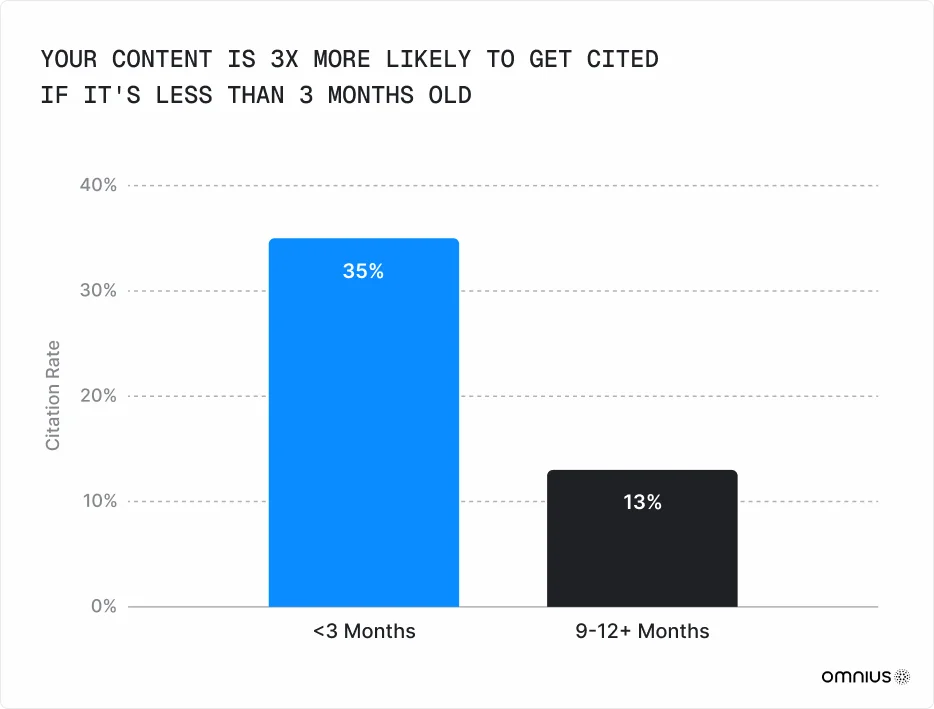
Here’s how you can keep your content GEO-friendly:
- Run prompt discovery sessions in relevant AI models to identify high-value query patterns.
- Use question-based H2s and H3s that carry meaning as standalone statements.
- Keep sections under 250 words before the next heading.
- Add 2–3 FAQ items per page, matching natural conversational phrasing.
- Cover adjacent sub-questions within the same article to satisfy query fan-out.
- Include structured micro-sections (best for, strong for, not ideal for) for categorization clarity.
- Update articles, statistics, examples, and references quarterly.
The Monitoring Checklist
Without ongoing measurement, GEO is guesswork. AI visibility is probabilistic. Your brand might appear in position two today, drop to six tomorrow, and vanish next week. Snapshots reveal almost nothing, whereas trend data across multiple runs shows whether your work is producing results.
Manual tracking can offer valuable insights into search behavior at the outset, but you need an automated solution like Atomic AGI for comprehensive, ongoing monitoring. Automated tracking tools can run structured prompts across engines thousands of times and deliver accurate data on metrics such as citation frequency, position, and referral traffic or conversions.
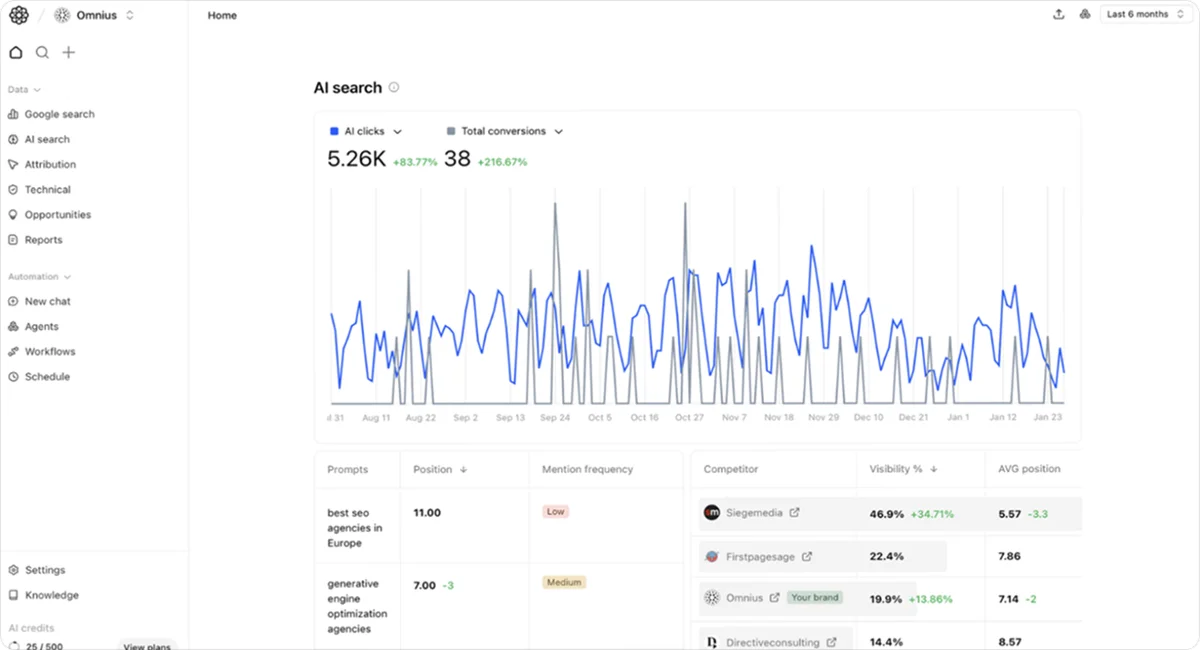
Platform segmentation is useful because each engine cites differently and converts at different rates. Competitive benchmarking completes the picture. Tracking which competitors appear alongside or above you reveals exactly where positioning needs adjustment.
Follow these steps to monitor and improve your GEO performance:
- Use a tool like Atomic AGI to automate the tracking process and access reliable, granular insights to fine-tune your GEO strategy.
- Configure GA4 to track AI referral traffic as a dedicated channel group.
- Segment AI traffic by platform to surface differences in conversion and engagement.
- Run 15–20 synthetic prompt tests monthly across LLMs like ChatGPT or Perplexity to track citation frequency, position, and accuracy.
- Track average visibility and citation count growth over time, not point-in-time snapshots.
- Prioritize bottom-of-funnel prompts that correlate with qualified leads over vanity metrics.
- Benchmark citation frequency against competitors on your highest-value prompts monthly.
- Adjust content and positioning language for prompts showing declining visibility or position below five.
- Map which AI models and prompt patterns your buyers use to prioritize optimization targets.
Why Your B2B SaaS Brand Needs GEO Yesterday
SparkToro's June 2026 study found that 68% of US Google searches ended without a click in early 2026, up from 60% two years earlier. Fewer than 280 of every 1,000 searches reach the open web. That shrinking click pool is the backdrop against which AI search is expanding.
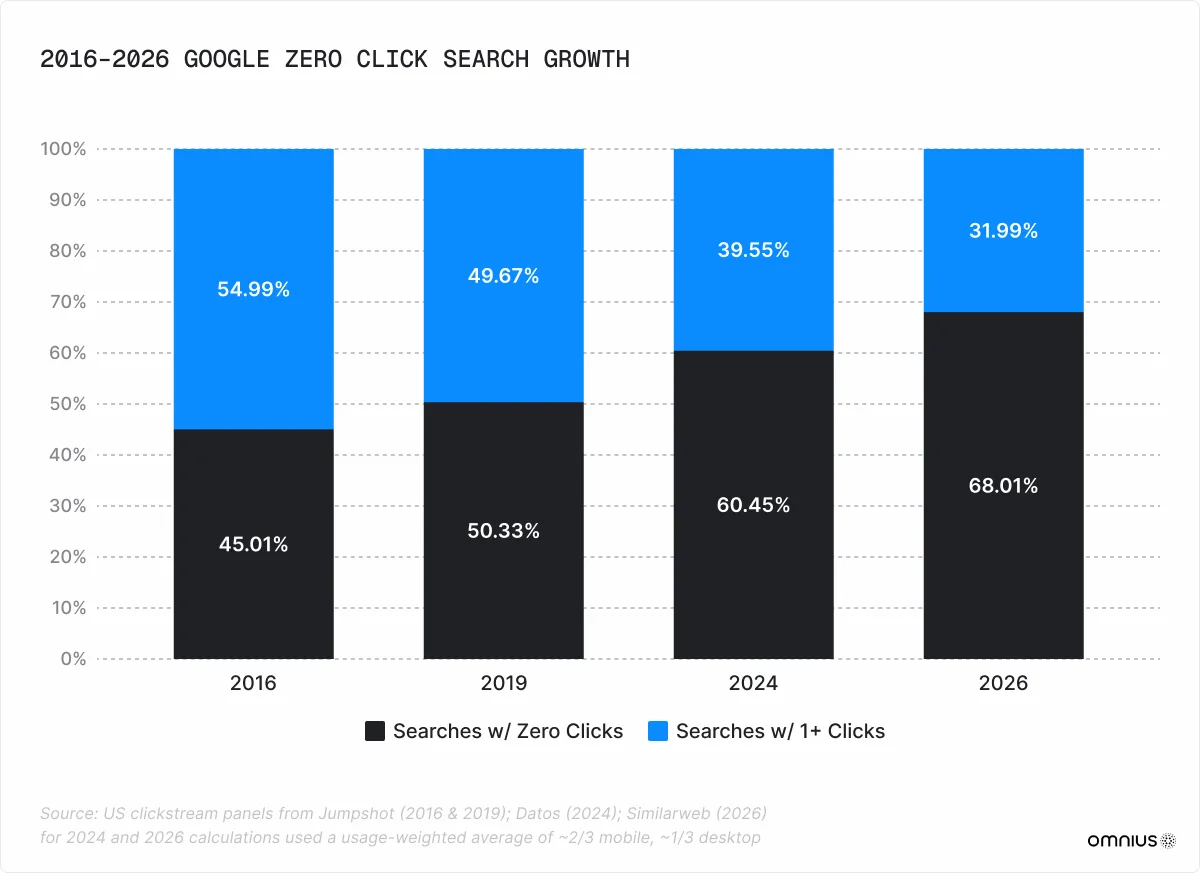
Traffic from AI engines carries disproportionate value. Semrush's 2025 cross-industry data shows that AI-referred visitors convert at 4.4x the rate of standard organic. Users clicking through from an AI recommendation have already compared options and evaluated fit, so they arrive further down the funnel.
G2's 2026 data underscores the stakes. Nearly 69% of B2B buyers chose a different vendor than planned following AI’s guidance. A third purchased from a brand they'd never encountered before.
Final Thoughts on GEO
Achieving GEO success requires work across four interdependent dimensions. Brand authority means nothing without technical access. Content quality without measurement won't scale. Treat these as a unified system and iterate on citation data to compound visibility across AI-driven discovery.
If you need help building a GEO strategy that delivers results, reach out to Omnius, a marketing agency specializing in B2B SaaS, fintech, and AI brands. With a holistic approach and over a decade of experience in B2B search optimization, we can help your brand yield never-before-seen results across engines.
Frequently Asked Questions
What is generative engine optimization?
Generative engine optimization is the practice of adapting your content, technical setup, and brand presence to improve performance in AI search. GEO helps you end up in the LLM’s answer for relevant user queries.
Some sources also define GEO as a subdiscipline of AI search optimization that focuses on landing among citations of generative AI engines that cite multiple sources, such as Perplexity.
What's the difference between SEO and GEO?
SEO improves fixed-rank positions in traditional search results, while GEO gets you mentioned in AI-generated answers, which draw from multiple sources and vary with each run. Both depend on technical parseability, content quality, and brand authority, but GEO places greater emphasis on structural clarity and prompt targeting.
What's a generative engine optimization audit?
A GEO audit evaluates how well your site is positioned for AI search visibility. Brands usually conduct a comprehensive audit every three months for maintenance, or monitor monthly if actively optimizing. A GEO audit should cover key areas such as:
- Crawler access
- Structured data
- Content rendering
- Content formatting
- External mentions
- Topical coverage
- Citation frequency
- Competitive benchmarking


.png)

.svg)
















.svg)



























.svg)


.webp)